Union Flag Burned, 1,600 Officers Deployed, and England Stunned by 2 Late Argentina Goals in Atlanta
A World Cup semifinal guarded by 1,600 officers ended with a 2-1 comeback, 2 assists from Lionel Messi, and another political controversy after the final whistle.
Atlanta expected a tense soccer match on July 15. What the city received was a 90-minute collision of sport, history and national identity, capped by Argentina scoring twice in the final 7 minutes to eliminate England from the 2026 World Cup.
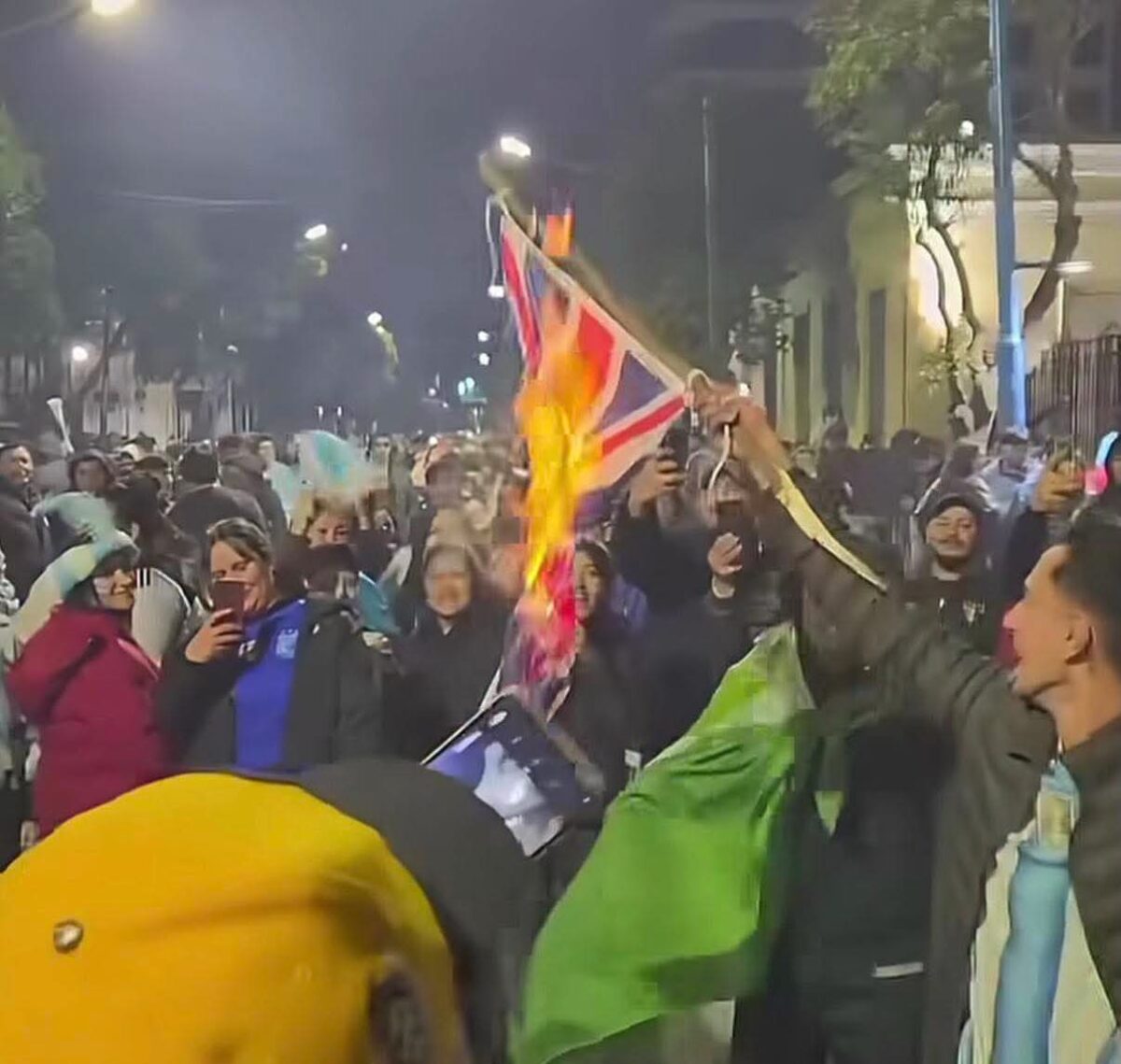
The drama began before the first whistle. A small group of Argentina supporters in Escobar, near Buenos Aires, was filmed burning a Union flag as anticipation grew for the nations’ first World Cup meeting in 24 years and their first match of any kind since 2005.
That video did not represent the millions of peaceful Argentina fans following the tournament, but it became an inflammatory symbol attached to a rivalry shaped by at least 5 famous World Cup meetings, the 1982 Falklands War, and more than half a century of disputed soccer moments.
Atlanta placed 1,600 officers around a historic American semifinal.
Around 1,600 officers were deployed as thousands of England and Argentina supporters arrived in downtown Atlanta. Police increased patrols near Atlanta Stadium, entertainment districts, fan gathering areas, and other high-traffic locations as part of a security operation developed over several years.
For the first time during the 48-team tournament, the 2 groups of supporters were directed through separate stadium entrances. Authorities hoped the divided gates would reduce flashpoints outside the venue, although FIFA’s ticketing system meant complete segregation inside the roughly 68,000-seat stadium was not possible.
Despite the enormous police presence, Reuters reported that the atmosphere was largely peaceful on the morning of the match. There were isolated reports of minor disorder, but most fans spent the final hours before kickoff gathering in bars, eating, playing cards, and singing in downtown Atlanta.
England’s 1-0 lead disappeared in just 7 minutes.
After a tense first half, Anthony Gordon put England ahead in the 55th minute. Morgan Rogers delivered the cross, and Gordon guided the ball beyond goalkeeper Emiliano Martínez to move England within 35 minutes of its first World Cup final since 1966.
Instead of chasing a second goal, England dropped deeper. Argentina increased the pressure until Enzo Fernández equalized from about 20 meters in the 85th minute after Messi found him outside the penalty area. The goal transformed a controlled England performance into a desperate fight for survival.
Only 7 minutes separated Argentina’s equalizer from its winning goal. Lautaro Martínez, introduced as an 81st-minute substitute, headed in Messi’s cross in the 92nd minute after Alexis Mac Allister had struck the post during another wave of Argentina pressure.
Messi did not score, but the 39-year-old captain created both goals and pushed his tournament total to 8 goals and 4 assists. It was also Messi’s first senior international appearance against England, adding another unusual statistic to a career that has stretched across 5 World Cups.
Argentina’s supporters vastly outnumbered England’s contingent inside the stadium, according to Reuters. The sky-blue-and-white crowd whistled through England’s pregame songs and turned a venue located more than 4,600 miles from Buenos Aires into something resembling an Argentina home game.
England’s 60-year wait survives another collapse.
England entered the semifinal hoping to reach its first men’s World Cup final in 60 years. Instead, the country suffered its third semifinal defeat, following losses to West Germany in 1990 and Croatia in 2018.
The manner of the defeat made the result even more painful. England led Croatia 1-0 in the 2018 semifinal before losing 2-1, then took a 1-0 advantage against Italy in the 2021 European Championship final before falling on penalties. Against Argentina, another narrow lead disappeared under late pressure.
England captain Harry Kane admitted the team appeared to focus on protecting its 1-goal advantage rather than extending it. Coach Thomas Tuchel defended his tactical decisions, but Argentina dominated the closing stages, and England barely threatened after Gordon’s 55th-minute breakthrough.
A 907-death conflict still shadows the rivalry.
The rivalry carries political weight because of the 1982 war over the Falkland Islands, which Argentina calls the Islas Malvinas. The conflict lasted more than 2 months and resulted in 907 deaths, including British and Argentine military personnel and 3 civilian islanders.
Britain retained control of the South Atlantic islands after Argentina’s forces surrendered. More than 40 years later, Argentina continues to claim sovereignty, while Britain maintains that the islanders have the right to determine their own political status.
That history explains why a burning Union flag or a Falklands banner carries far greater meaning during this fixture than it would during an ordinary international match. The symbols connect a 90-minute sporting contest to a conflict still remembered by veterans, families and governments on both sides.
One 1966 argument helped change soccer forever.
The sporting hostility dates back at least 60 years. During the 1966 World Cup quarterfinal, England defeated Argentina 1-0 before 90,584 spectators at Wembley after Argentina captain Antonio Rattín was dismissed in the 35th minute.
The language confusion surrounding Rattín’s dismissal helped inspire referee Ken Aston to develop soccer’s yellow-and-red-card system. Aston reportedly drew inspiration from traffic lights, and the cards were introduced 4 years later at the 1970 World Cup in Mexico.
Then came 1986. Diego Maradona scored 2 of the most famous goals in World Cup history during Argentina’s 2-1 quarterfinal victory: the illegal “Hand of God” goal and a brilliant solo run later voted among the tournament’s greatest moments.
Argentina eliminated England again on penalties in 1998 after David Beckham’s red card, while England gained a measure of revenge with a 1-0 victory in 2002. Before Atlanta, those teams had gone 24 years without meeting in another World Cup.
The banned banner still reached the field.
Before kickoff, authorities said banners asserting sovereignty over the Falklands would not be allowed inside the stadium. FIFA’s code prohibits political, offensive or discriminatory flags and apparel, and the 1,600-officer security plan included efforts to stop provocative material at entry points.
Yet after Argentina’s 2-1 victory, players Lisandro Martínez and Giovani Lo Celso were photographed holding a banner reading “Las Malvinas Son Argentinas,” meaning “The Falklands are Argentine.” FIFA did not immediately respond to Reuters’ request for comment about the apparent breach.
The episode created an uncomfortable contrast. Officials had spent days promising to remove political messages from the stadium, but within minutes of the final whistle, 2 members of the winning team displayed one of the most politically sensitive messages connected to the rivalry.
Argentina now stands 1 win from history.
Argentina advances to Sunday’s final against Spain in East Rutherford, New Jersey, after winning all 7 of its matches and scoring a tournament-leading 19 goals. The defending champion is seeking a fourth World Cup title.
A victory would make Argentina the first country to retain the trophy since Brazil won consecutive titles in 1958 and 1962. Spain, meanwhile, has conceded only 1 goal in 7 matches and enters the final on a 37-game unbeaten streak.
The 2026 tournament began with 48 teams, 3 host countries, and 104 scheduled matches. Yet one of its defining nights may be remembered for much smaller numbers: 1 burned flag, 1,600 officers, 2 late goals and a 2-1 score that extended England’s World Cup heartbreak while sending Argentina toward another possible title.