
10 Kitchen Colors and Patterns From the ’70s That Are Coming Back
The decade of avocado appliances, harvest gold, and fearless patterns is quietly making its way back into the kitchen—and this time, it looks surprisingly chic.
For years, people remembered 1970s kitchens as the rooms they wanted to renovate away from. Brown cabinets, orange accents, avocado appliances, and busy patterns seemed hopelessly dated. But decorating trends have a habit of making yesterday’s mistakes tomorrow’s inspiration. Today, designers and homeowners are warming up to the decade’s earthy palette and more expressive approach to decorating, especially as cooler, ultra-minimal kitchens give way to rooms with more personality.
Avocado Green
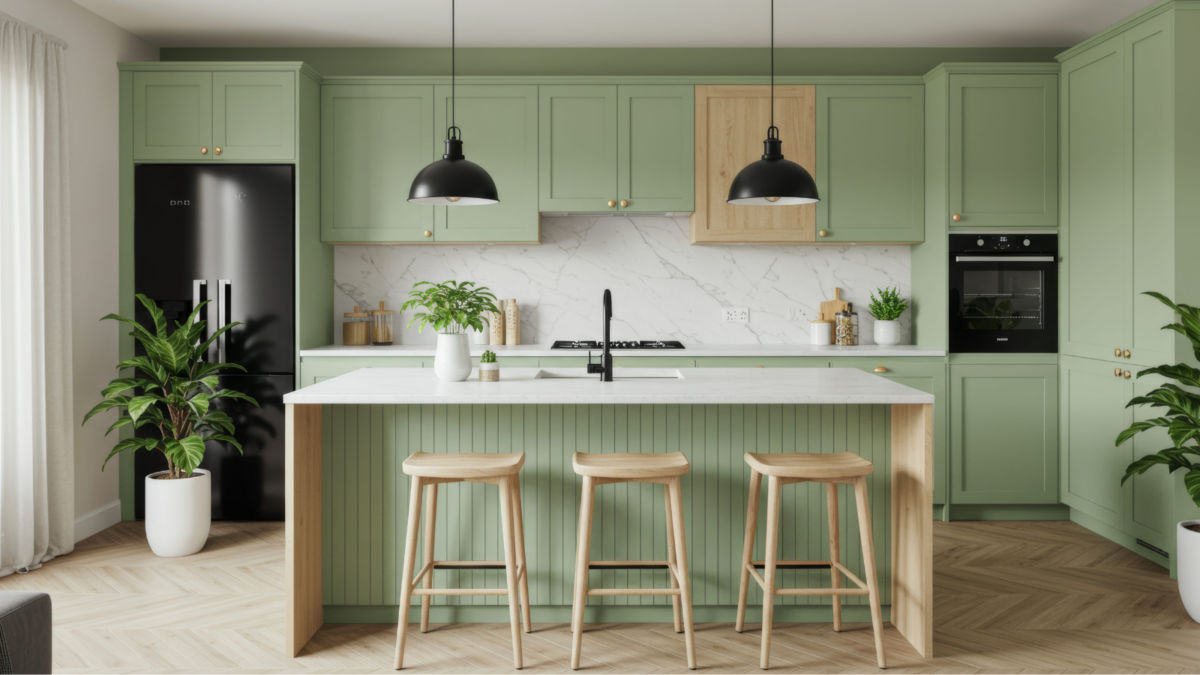
The green refrigerator that once screamed “1974” now looks like a design statement again.
Avocado green was one of the era’s most recognizable kitchen colors, appearing on refrigerators, ranges, sinks, and other appliances. The modern version is usually softer, leaning toward olive or moss rather than the intense green of a vintage appliance. Used on an island, lower cabinets, or a backsplash, it can bring that unmistakable retro warmth without making the entire kitchen look preserved in amber.
Harvest Gold
If avocado green was the star, harvest gold was its equally famous co-star.
This warm yellow-orange shade was everywhere in 1970s kitchens, especially on major appliances and smaller countertop accessories. It worked particularly well beside brown wood and avocado green, creating the earthy combination that instantly dates a room to the decade. Today, a muted mustard or golden backsplash can capture the same feeling without requiring a matching refrigerator and dishwasher.
Burnt Orange
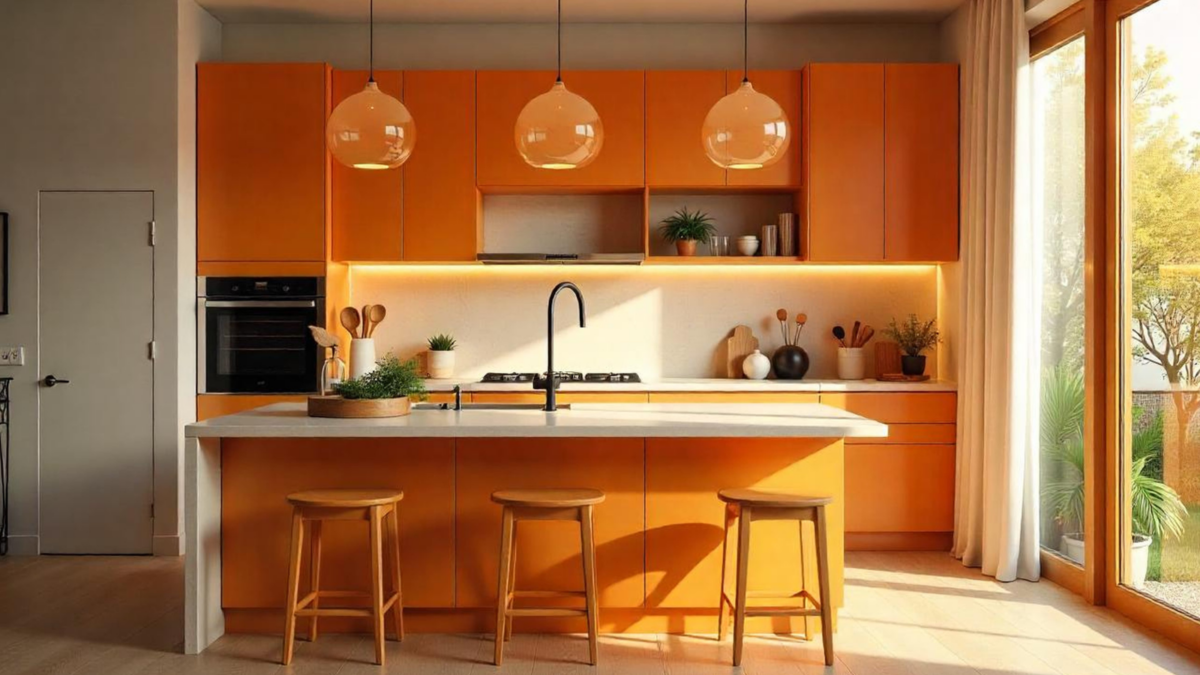
Orange has returned, but thankfully it has learned the value of moderation.
Burnt orange was another defining shade of the decade, and it is particularly easy to reintroduce today. Think terracotta tile, an orange pendant light, a painted pantry door, or a few warm accessories rather than an entire orange kitchen. The color works beautifully with natural wood, cream, and muted green, making it feel more sophisticated than its original reputation suggests.
Related: The Best Colors to Paint a Small Kitchen to Make It Look Bigger in 2026
Chocolate Brown
After years of white and gray kitchens, deep brown suddenly feels wonderfully cozy.
Brown was a major part of the 1970s kitchen palette, grounding brighter colors and reinforcing the decade’s love of natural-looking materials. Modern kitchens are bringing back walnut, chocolate-toned cabinetry, and darker wood finishes, but with more breathing room. The result is warm rather than heavy, particularly when brown is balanced with cream walls, lighter countertops, or brass hardware.
Mustard Yellow
Mustard yellow brings the cheerful side of the ’70s back without demanding that everything else follow along.
It is a close relative of harvest gold but can feel slightly more contemporary when used carefully. A mustard-colored backsplash, bar stool, or set of kitchen textiles can add a warm burst of personality to an otherwise neutral space. It works especially well alongside walnut, oak, cream, and olive green.
Geometric Patterns
The ’70s did not believe a backsplash should sit there quietly—and modern kitchens are beginning to agree.
Circles, diamonds, hexagons, stripes and other geometric shapes were an important part of the decade’s visual language. Those bold geometric patterns are returning on backsplashes, walls, curtains, and floors, although contemporary versions often use cleaner shapes and more controlled color combinations.
The difference is restraint. Instead of covering every available surface in competing patterns, today’s approach might give one backsplash or floor the starring role.
Checkerboard Floors
Few design choices can make a kitchen feel instantly retro quite like a checkerboard floor.
Black and cream are the classic combination, but softer versions in brown, green, burgundy, or beige can create the same vintage effect. Checkerboard flooring also works well with simple cabinetry, letting the floor add personality without turning the whole room into a period set.
Floral and Nature-Inspired Patterns
The ’70s loved bringing nature indoors, but with far more enthusiasm than today’s minimalist interiors.
Large flowers, leaves, vines and botanical motifs appeared on wallpaper, curtains and kitchen fabrics. Floral patterns are returning in more sophisticated forms, especially when they use earthy greens, muted yellows and warm browns. A small wallpapered breakfast nook or patterned window treatment can introduce the look without overwhelming the kitchen.
Woodgrain and Natural Wood
The decade’s love affair with wood may be one of its easiest ideas to bring back.
Woodgrain cabinetry and paneling gave 1970s kitchens their characteristic warmth. Interestingly, designers are now reconsidering retro wood paneling for its ability to make interiors feel cozy and distinctive.
The modern interpretation is lighter and more selective: walnut cabinets, oak shelving, wood islands, or a single paneled wall. Natural materials also pair beautifully with the decade’s earthy greens, oranges, and golds.
Mixed Colors That Do Not Match Perfectly
Perhaps the biggest ’70s comeback is not a particular color at all—it is the freedom to stop making everything match.
The decade happily paired avocado green with orange, harvest gold with brown, and patterned tile with wood cabinets. That willingness to experiment is finding new life as homeowners look for kitchens that feel individual, not showroom-perfect.
Today’s designers are simply turning down the volume. Instead of using five strong colors at once, choose two or three and let warm neutrals do some of the balancing. The result keeps the personality while reducing the visual chaos.
The New ’70s Kitchen Is About Personality
You do not need an avocado refrigerator to bring back the best parts of the decade.
The smartest revival takes the spirit rather than copying the entire room. A warm brown cabinet, an olive island, a geometric backsplash, or a mustard accent can completely change the mood without making your kitchen look like a museum exhibit. It is really about rediscovering the warm, expressive color combinations that made the era so memorable.
And something is appealing about that philosophy beyond decorating: a home does not have to look perfect to feel good. Sometimes a few simple everyday habits and a space filled with things you genuinely enjoy can make a bigger difference than another expensive renovation.
The 1970s kitchen understood one thing particularly well: a kitchen is not just a place to cook—it is one of the rooms where personality gets to show up. If you could bring back just one of these ’70s ideas—avocado green, harvest gold, burnt orange, woodgrain cabinets, or checkerboard floors—which one would you actually put in your kitchen?


