14 Alarming Reasons Five Guys Is Closing U.S. Restaurants
Five Guys is shuttering more than a dozen U.S. locations, and the move is sparking concern because this isn’t a struggling roadside diner; it’s one of America’s most recognised fast-casual burger brands. The closures expose cracks in the seemingly bulletproof fast-casual model, showing that even beloved chains must navigate rising costs, shifting customer behaviour, and tough local economic realities. For loyal fans, these closings are more than inconvenient; they signal the high stakes of operating premium dining locations in 2026.
The closures also highlight a broader story about the fast-casual sector: strong brand recognition alone cannot shield every store from rent spikes, labour pressures, and changing eating habits. These closures reveal how Five Guys and similar chains are forced to adapt aggressively to protect profitability and future growth. From franchisee decisions to urban demographic shifts, every closure has a story behind it that illustrates a highly selective and competitive restaurant economy.
Customer Loyalty Doesn’t Guarantee Location Survival

Despite ranking highly in customer surveys, Five Guys’ closures underscore the gap between loyalty and financial sustainability. Fans may see the brand as affordable comfort food, but rising menu costs and operational complexities mean profitability depends on consistent traffic and average ticket value.
Customers often overlook back-end economics, yet their habits dictate each location’s success. Reduced repeat visits, skipped add-ons, or slower weekday traffic can make a previously profitable store a candidate for closure. This tension between perception and profitability is critical to understanding why even popular chains shut stores.
Franchise Ownership Shapes Closure Decisions
Many of the affected locations are franchise-owned, which adds a critical layer of complexity to the closures. Franchisees evaluate profitability independently, meaning a well-loved location can still close if local revenue fails to cover lease, payroll, and supply costs. Unlike corporate-owned outlets, franchise operators shoulder more immediate operational risks and have less room to absorb losses.
This franchise dynamic helps explain why closures appear scattered rather than clustered; each location faces unique circumstances, from customer traffic patterns to local competition. Understanding this allows readers to see closures not as brand failure, but as strategic pruning by franchisees optimising their individual investments.
Premium Perception vs Profitability
Five Guys’ reputation as a premium burger chain is both a strength and a vulnerability. High-quality ingredients, generous portions, and customizable options define the brand, but also elevate operational complexity. Customers may love the food, yet high operating costs can force closures when revenue fails to meet expectations.
This tension between perception and profitability is a core driver behind the 2026 closures. Brands must balance premium identity with the economics of each location.
Changing Urban Demographics and Remote Work Patterns
Several closures occurred in urban centres, where office foot traffic has not fully rebounded post-pandemic. Remote work trends have permanently altered daytime dining patterns, reducing predictable lunch crowds in downtown locations. Suburban expansion and migration patterns further skew customer flow, leaving some stores underutilised despite strong brand loyalty.
These shifts illustrate how location viability depends on more than brand power. Restaurants now face a dual challenge: competing with alternative dining options while adapting to fundamentally changed neighbourhoods. Urban closures reflect this realignment of the fast-casual footprint to meet where customers are actually eating.
Rising Supply Chain Costs Bite Profit Margins

Premium burger chains are particularly vulnerable to supply chain pressures. Five Guys relies on fresh-cut fries, high-quality beef, and multiple topping options, ingredients that are more sensitive to price volatility than mass-produced fast food. In 2026, inflation in produce, beef, and dairy has increased operational costs, squeezing margins even in high-traffic locations.
These supply chain pressures make it harder to justify maintaining locations with weaker sales. Even a single costly ingredient can tip a store from profitable to unviable, explaining why multiple closures are concentrated in regions with high operating costs.
Strategic Location Pruning Protects Long-Term Brand Health
Far from signalling decline, closures can reflect strategic thinking. By closing underperforming locations, Five Guys can reallocate resources to high-performing sites, invest in digital infrastructure, or expand into new markets with higher potential returns.
This proactive pruning preserves the overall brand reputation and profitability. The lesson is that even popular brands sometimes need to shrink locally to grow globally.
Emotional Impact of Store Closures on Communities
Every closure affects more than revenue; it touches employees, loyal customers, and surrounding businesses. Staff may face job loss or relocation, regular diners lose a routine dining stop, and nearby retailers may feel reduced foot traffic.
Framing closures in this human context adds a compelling narrative layer. For communities, a closed Five Guys location is more than a business decision; it’s a tangible change in daily life.
California’s Cost Challenges Drive Multiple Closures
California has been particularly hard-hit, with several locations shuttered due to high commercial rent, labour costs, and regulatory expenses. Premium fast-casual models like Five Guys struggle in regions where operational costs escalate faster than revenue growth.
Even loyal customers cannot offset high fixed costs. For operators, the calculus is clear: a location can remain open only if it consistently covers expenses and generates a return on investment, which forces tough decisions in high-cost markets.
Competitive Pressures from Other Burger Chains
Five Guys closures are not happening in isolation. Competing premium burger brands, Shake Shack, Smashburger, and regional fast-casual chains are also closing or adjusting locations in response to similar pressures. This industry-wide shift underscores that the challenges facing Five Guys are structural rather than unique to the brand.
Understanding this competitive landscape provides context for readers: closures are part of a larger pattern where even strong chains must adapt to survive in an increasingly demanding market.
Delivery Services Change Traffic Dynamics

Another factor influencing closures is the rise of delivery apps. Some Five Guys locations previously relied heavily on in-person customers but now face high third-party commission fees. Locations that once sustained themselves on walk-in traffic may see profit margins erode when a significant portion of orders is diverted to delivery platforms.
This evolving delivery landscape has forced operators to rethink which sites remain viable. Restaurants with limited parking, constrained kitchen space, or low local demand for delivery may now be less competitive than digital-savvy competitors.
Customer Behaviour Shifts Toward Value and Convenience
Customer dining habits are evolving rapidly. Many diners weigh convenience, price, and perceived value more than brand loyalty. A premium burger meal may be skipped in favour of cheaper alternatives, home delivery, or meal prep, even among loyal fans.
This trend intensifies pressure on fast-casual chains, forcing locations with lower foot traffic to close despite the brand’s overall strength. Understanding this behavioural shift helps explain why closures appear scattered across markets rather than uniform.
Franchise Economics and Local Autonomy
Franchise owners must manage their locations independently, including staffing, supply costs, and marketing. Weak sales or rising expenses can compel closures even when the parent brand is thriving. This autonomy introduces variation: some areas thrive while others cannot sustain operations, creating a patchwork of closures that appear alarming to outsiders.
Franchise autonomy highlights the local nature of the closures, reminding readers that each decision reflects the unique challenges of that community rather than a blanket corporate failure.
Five Guys’ Strategic Pivot Toward Growth
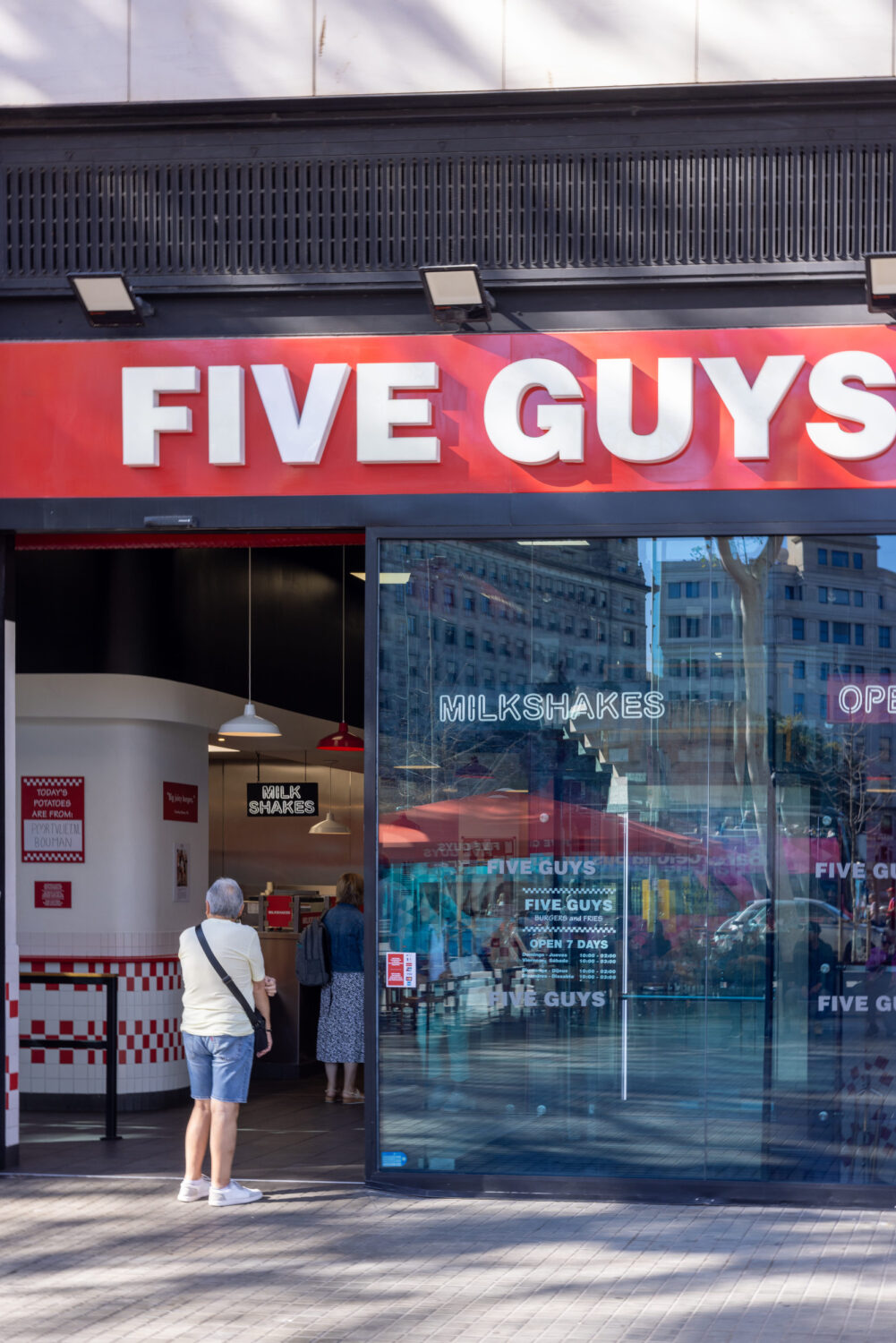
While closures draw headlines, Five Guys continues to expand selectively into high-potential markets. This shift emphasises that the brand is not contracting overall but optimising for long-term performance. By focusing on locations with strong demographics, traffic patterns, and profitability, the chain can maintain brand prestige and operational efficiency simultaneously.
This strategic pivot reassures fans: the closures are part of a deliberate recalibration designed to protect the brand while adapting to a dynamic market.
Five Guys closures demonstrate that brand loyalty alone cannot safeguard every location. Rising costs, shifting demographics, delivery trends, franchise dynamics, and customer behaviour combine to make location management more complex than ever. For fans, closures are a source of inconvenience; for operators, they are a calculated adjustment ensuring the chain can thrive in the long term.
Even in a thriving restaurant industry, strategic pruning is essential. The closures show that surviving in 2026 requires more than popularity; it requires precision, foresight, and adaptation to a market that no longer rewards complacency.