7 Dishes Every 1950s Housewife Could Make From Memory
In the 1950s, a home cook rarely needed to open a cookbook for the family’s regular dinners. The recipes lived in her head, learned at her mother’s elbow, in a high school home economics class or from a well-worn card in a tin box. She knew by heart how much bread to tear into the meatloaf and how long the chicken needed in the skillet.
Many of those dishes were shaped by the decade’s new convenience foods, from canned soup to boxed gelatin. Others were older family recipes that had survived the Depression and wartime rationing. Cookbooks like Betty Crocker‘s 1950 Picture Cook Book helped standardize them in kitchens across the country. Here are seven dishes nearly every 1950s homemaker could make from memory, and why so many families still love them today.
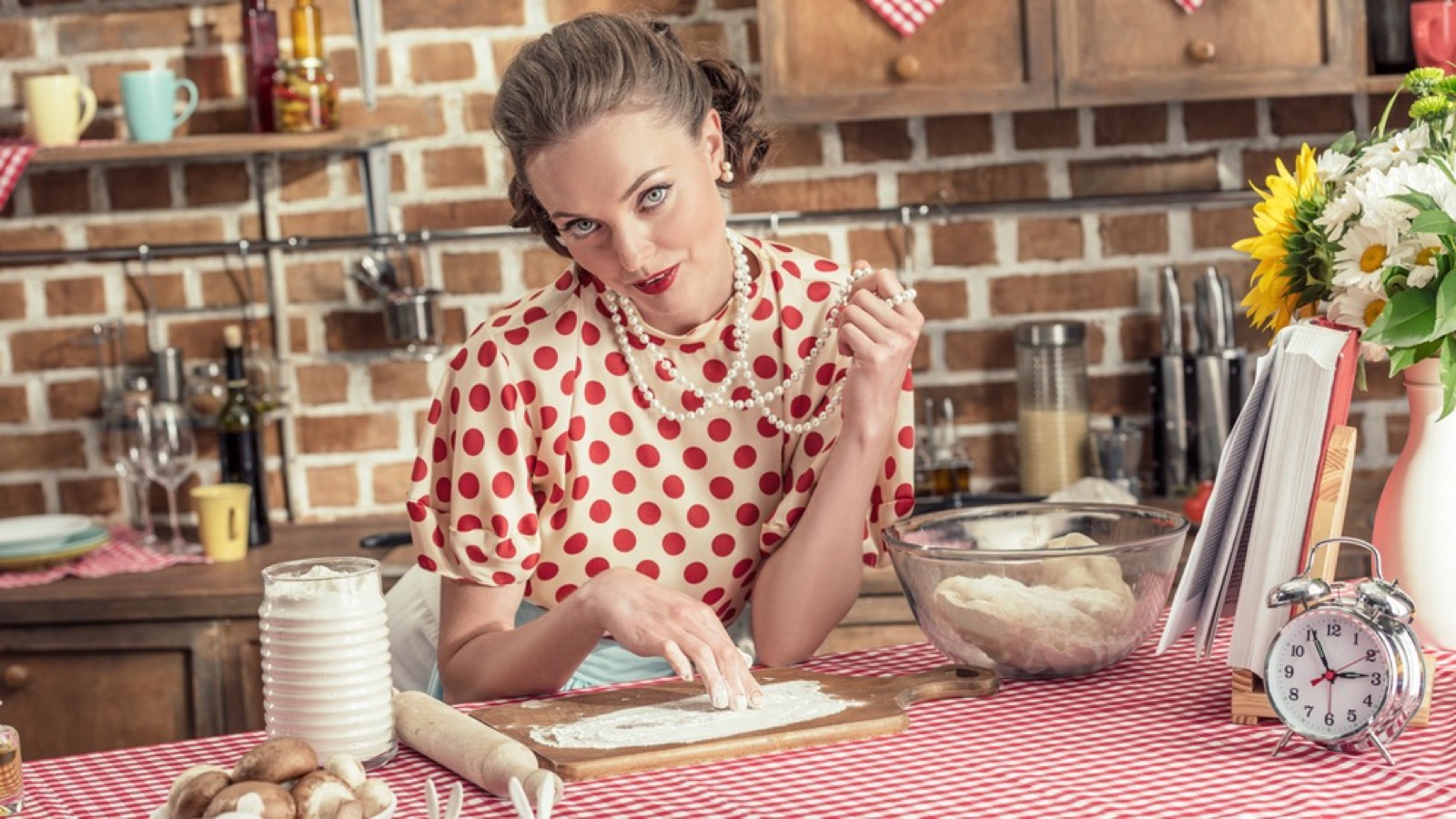
1. Meatloaf
Meatloaf was the ultimate weeknight dinner of the 1950s. A pound or two of ground beef was mixed with an egg, chopped onion and a filler such as bread crumbs, crushed crackers or oatmeal, then shaped into a loaf and baked. The filler was a habit carried over from the Depression, when cooks learned to stretch a small amount of meat to feed a whole family.
Every household had its own version. Some topped the loaf with ketchup, while others used a sweet glaze of ketchup, brown sugar and mustard. Leftovers rarely went to waste, because cold meatloaf sandwiches were a favorite in lunch pails the next day. Some cooks even baked two loaves at once and froze one for a busy night.
2. Tuna Noodle Casserole
Few dishes say “1950s kitchen” quite like tuna noodle casserole. The basic formula was simple: egg noodles, canned tuna, a can of cream of mushroom soup and a handful of frozen peas, topped with crushed potato chips or buttered bread crumbs. It went into the oven until bubbly and golden on top.
Food historians trace early versions of tuna casserole to the 1930s, but it became a true staple after World War II. Campbell’s condensed cream of mushroom soup, introduced in 1934, made the sauce almost effortless. The dish was cheap, filling and perfect for Fridays in Catholic homes that skipped meat.
3. Chicken à la King
Chicken à la king sounded fancy, which is exactly why hostesses loved it. Diced cooked chicken was simmered in a rich cream sauce with mushrooms, green peppers and bright red pimentos. It was spooned over toast points, rice, biscuits or puff pastry shells for luncheons, bridal showers and church suppers.
The dish actually dates to the late 1800s, and its origins are still debated. Some credit a New York hotel chef, while others point to Delmonico’s restaurant, and the competing stories have never been fully settled. By the 1950s, it had become a smart way to turn leftover chicken into something that looked elegant.
4. Swiss Steak
Swiss steak had nothing to do with Switzerland. The name refers to “swissing,” a technique of pounding or rolling a tough cut of beef to tenderize it. Home cooks used inexpensive round steak, dredged it in flour, browned it in a skillet and then simmered it slowly with tomatoes, onions and green peppers.
The long, gentle simmer turned a budget cut into fork-tender meat with its own built-in gravy. It was usually served with mashed potatoes to soak up every drop of sauce. Many families made it in an electric skillet or a heavy Dutch oven, and it filled the house with an aroma that kids never forgot.
5. Southern-Style Fried Chicken
Fried chicken was the star of Sunday dinner in countless 1950s homes. A whole chicken was cut into pieces, soaked in buttermilk or simply salted, dredged in seasoned flour and fried in a cast-iron skillet filled with shortening or lard. A good cook could tell when it was done just by the sound and color.
It was not an everyday meal, since frying a whole chicken took time and attention. That made it special for Sundays after church, family reunions and picnics, where it was often eaten cold. Many grandmothers guarded their exact seasoning blend and passed it down only to family.
6. Deviled Eggs
No 1950s party, potluck or holiday table was complete without a plate of deviled eggs. Hard-boiled eggs were halved, the yolks mashed with mayonnaise, mustard, salt and pepper, and the filling piped or spooned back into the whites. A sprinkle of paprika on top was almost mandatory.
The word “deviled” was used for centuries to describe foods made with zesty or spicy seasonings. Many homes owned a special egg plate with oval wells just for serving them. Deviled eggs remain one of the most requested appetizers at family gatherings, and many people still make them exactly the way their mothers did.
7. Jell-O Salad
The molded gelatin salad was the showpiece of the 1950s table. Cooks combined flavored gelatin with fruit cocktail, shredded carrots, cabbage, cottage cheese, marshmallows or even olives, then set it in a decorative ring mold. Turning it out perfectly onto a lettuce-lined platter was a point of pride.
Gelatin salads actually began in the early 1900s, but Jell-O salads hit their peak in the postwar years. Home refrigerators made them easy to prepare ahead, and they looked impressive for very little money. Some combinations sound strange today, but lime gelatin with pineapple and cottage cheese still has loyal fans.
Why These Recipes Stuck
These dishes stayed in memory because they were made so often. A busy homemaker might rotate the same dozen dinners every few weeks, which meant she could cook them without measuring. Popular cookbooks reinforced those routines, and one writer has described how a single cookbook helped shape expectations for American women at the time.
They were also practical. Most relied on affordable cuts of meat, canned goods and pantry staples that kept well. Many of the 1950s dinner foods that once filled tables have faded, but these seven have held on in kitchens across the country.
Bringing Them Back Today
If you want to recreate these classics, start with the simplest ones. Meatloaf, Swiss steak and deviled eggs need only a handful of ingredients and very little equipment. You can lighten some recipes with leaner meat or homemade cream sauce in place of canned soup, and they’ll still taste like home.
These recipes also make a wonderful way to connect generations. Cooking a parent’s or grandparent’s favorite dish together is a chance to hear stories about the kitchen where it was first made. They belong right alongside the other foods boomers loved growing up. Which of these dishes could your mother or grandmother make with her eyes closed?