7 Dishes Waiters Set on Fire Tableside at Fancy 1970s Restaurants
In the 1970s, a night out at a fancy restaurant came with a show. Diners dressed up, ordered cocktails and waited for the moment when a waiter in a white jacket wheeled a cart to the table, splashed a little liquor into a hot pan and lit it with a match. Flames shot up, the dining room went quiet, and everyone at nearby tables turned to watch.
Tableside cooking, especially flambé, was the height of sophistication for many American families. It was how people celebrated anniversaries, promotions and birthdays. Kids who got to come along remember it as the most exciting part of the evening, even if they weren’t allowed to taste the boozy dessert.
Today, most restaurants have dropped the flaming carts, though a few classic spots still keep the tradition alive. If you grew up in the 1970s, these fiery dishes might bring back memories of white tablecloths and big nights out. Here are the dishes waiters set on fire at the table back then.
1. Bananas Foster
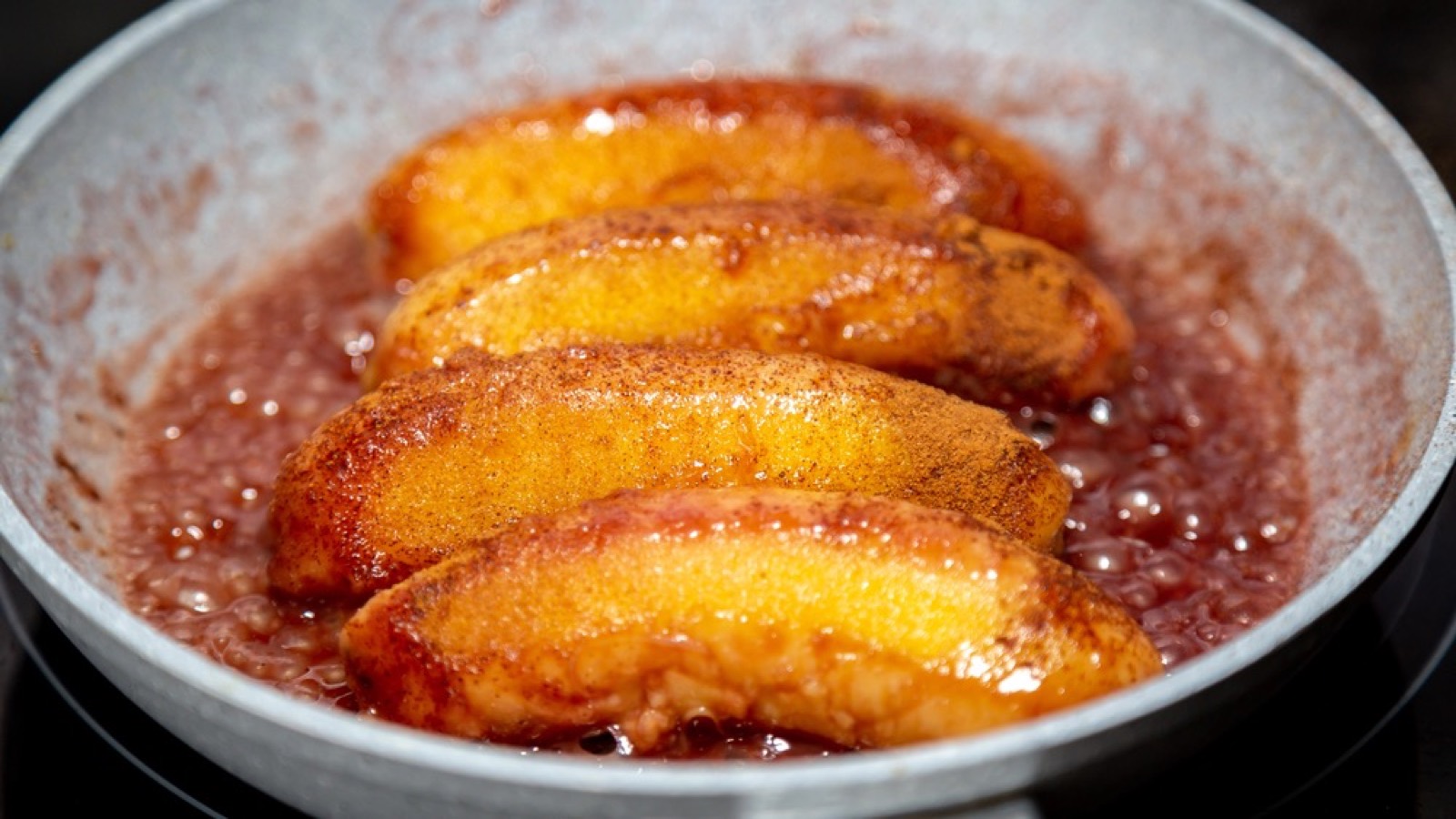
Bananas Foster is one of the most famous flaming desserts in America. It was created in 1951 at Brennan’s restaurant in New Orleans and named for Richard Foster, a friend of the Brennan family. Bananas are cooked in butter, brown sugar and cinnamon, then doused with rum and banana liqueur and set alight.
The flaming bananas are spooned over vanilla ice cream, and the contrast of hot and cold is part of the magic. By the 1970s, Bananas Foster had spread far beyond New Orleans, showing up on menus at steakhouses and supper clubs across the country. Brennan’s still serves it today, flames and all.
2. Cherries Jubilee
Cherries Jubilee was the classic flaming dessert of the era. Dark cherries were warmed in a sauce with sugar and a little juice, then flamed with brandy or kirsch at the table and poured over vanilla ice cream. The dish was elegant, simple and dramatic all at once.
Cherries jubilee is credited to the famous French chef Auguste Escoffier, who is said to have created it for one of Queen Victoria’s jubilee celebrations. American restaurants embraced it in the mid-20th century, and it became a favorite for special occasions. Many home cooks even tried to recreate it for dinner parties, sometimes with nervous results.
3. Crêpes Suzette
Crêpes Suzette were the height of French dining for many Americans. Thin crêpes were warmed in a buttery orange sauce, then flamed with orange liqueur and brandy. The waiter folded the crêpes into neat triangles and served them with plenty of sauce spooned over the top.
The dish has a famous origin story involving a young chef in Monte Carlo and the Prince of Wales, though food historians say the details are hard to prove. Whatever its beginnings, crêpes Suzette became a symbol of fine dining in America. Ordering them made a regular dinner feel like a trip to Paris.
4. Flaming Saganaki
In Greek restaurants, the big moment came when the waiter set a plate of cheese on fire and the whole table shouted “Opa!” Saganaki is a slab of firm cheese, fried until golden, then flambéed with brandy and squeezed with lemon to put out the flames.
The flaming version is widely credited to the Parthenon restaurant in Chicago’s Greektown, which began serving it in the late 1960s. It quickly became a must-order dish at Greek restaurants across the country. For many families, the “Opa!” moment was the highlight of the night, and kids loved shouting along.
5. Steak Diane
Steak Diane was the main-course star of tableside cooking. Thin steaks were seared in a pan right next to the table, then the waiter added butter, shallots, mustard and Worcestershire sauce. A splash of brandy went in and the pan erupted in flames before the sauce was finished with cream.
The dish was a favorite at upscale hotel restaurants and steakhouses in the 1950s through the 1970s. Watching the waiter work the pan made diners feel pampered. Steak Diane fell out of fashion as tastes moved toward simpler preparations, though some old-school steakhouses still make it.
6. Baked Alaska
Baked Alaska seemed almost impossible to many diners: ice cream inside a warm, browned meringue. A layer of cake was topped with a dome of ice cream, covered in meringue and quickly browned in a hot oven. Some restaurants went a step further and poured warm liquor over it at the table and lit it.
The dish has roots going back to the 19th century, and the name is often linked to the United States buying Alaska in 1867. In the 1970s, it was a showstopper for anniversaries and birthdays. Bringing a flaming baked Alaska to the table was guaranteed to earn applause from the dining room.
7. Café Brûlot
For a fiery finish to the meal, some restaurants served café brûlot, a spiced coffee drink from New Orleans. The waiter heated brandy, orange and lemon peel, cinnamon and cloves in a special bowl, set it on fire and ladled the flaming liquid in the air before adding hot coffee.
Some waiters made a show of spiraling the flaming liquor down a long, clove-studded orange peel. It was part dessert, part performance and part coffee. Classic New Orleans restaurants are especially known for keeping this tradition going.
Why the Flames Went Out
Tableside flambé faded for several reasons. It took skilled waiters, special carts and plenty of time, which made it expensive for restaurants. As dining became more casual in the 1980s and 1990s, many restaurants simplified their menus and service.
Safety concerns also played a role. Open flames in crowded dining rooms made some restaurant owners nervous, and fire codes became stricter in some places. Many younger diners also preferred quicker meals over long, theatrical dinners.
A Comeback for Tableside Cooking
In recent years, some restaurants have started bringing back tableside service as a nostalgic treat. Classic spots in New Orleans, Chicago and New York have kept their flaming desserts all along, and newer restaurants have rediscovered the appeal of a little drama at the table.
For people who grew up in the 1970s, though, nothing quite compares to the memory of watching a waiter strike a match and turn dessert into a show. If your parents ordered cherries jubilee on their anniversary, or your family shouted “Opa!” at the Greek restaurant, you know exactly how special those nights felt.