8 Shocking Ways Religion and Politics Are Tearing American Families Apart
Some American families can survive a dry turkey, a loud uncle, a toddler meltdown, and a football game nobody agrees on.
Then someone mentions church, Trump, abortion, guns, immigration, Israel, Pride Month, school boards, or “what this country used to be,” and suddenly the mashed potatoes are the only peaceful thing left on the table.
That is where many households are now. Family arguments are no longer just about who forgot to call Grandma or who still owes money from last Christmas. They are about values, salvation, freedom, identity, patriotism, children, rights, truth, and the kind of America each person believes they are defending.
That is why religion and politics tearing families apart feels so painfully familiar. These fights do not stay on cable news or social media. They walk into kitchens, church parking lots, family group chats, living rooms, weddings, funerals, and Thanksgiving dinners.
Faith Is Becoming a Political Identity at the Dinner Table
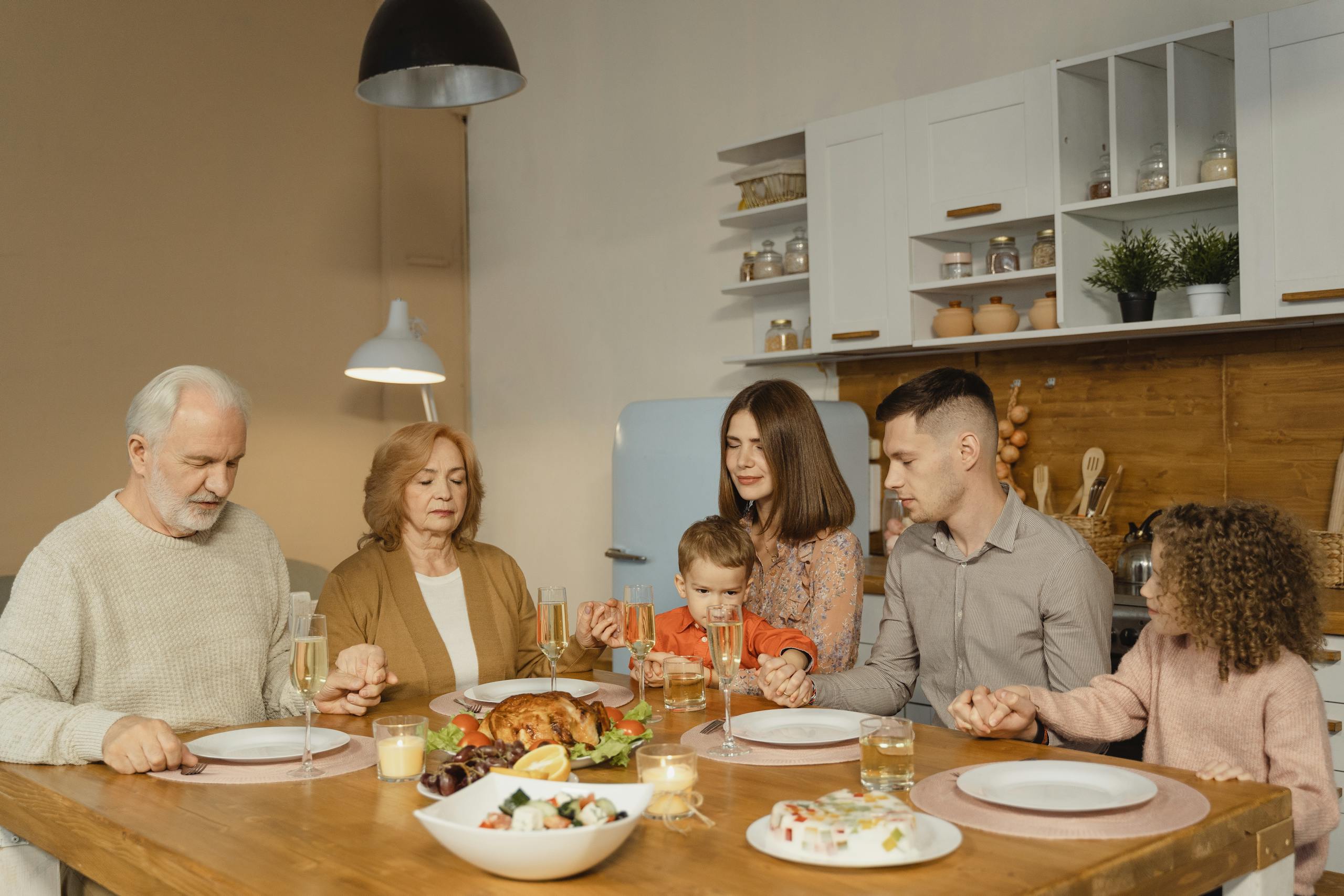
For many families, religion used to mean Sunday service, prayer before dinner, weddings, funerals, baptisms, potlucks, and Grandma’s Bible sitting on the coffee table.
Now, in some homes, faith feels tied to a ballot.
That shift makes arguments sharper. A parent may hear criticism of a candidate as criticism of their faith. An adult child may hear a sermon about “culture” as an attack on people they love. A sibling may see a church’s political stance and decide the whole family no longer understands them.
Religion has always shaped public life in America, but the current divide feels more personal. These disagreements do not stay abstract. They become the mother and daughter fighting over abortion, the father and son arguing over church and government, and the cousin who stops visiting because every meal feels like a campaign rally with casserole.
Church No Longer Feels Neutral to Everyone in the Family
For some Americans, church still feels like home. It is where they were raised, married, comforted, corrected, and surrounded by people who knew their family for decades. It holds memory, discipline, music, ritual, and belonging.
For others, the church now feels politically loaded.
They hear sermons that sound like campaign messages. They see leaders praise one side and condemn the other. They watch relatives treat religious language as proof that their political opinions are morally untouchable. After a while, the pews stop feeling like a place of peace and start feeling like another front in the culture war.
That divide can fracture families quickly. One person sees leaving the church as a form of rebellion. Another sees staying as complicity. One person says faith is under attack. Another says faith has been hijacked. When worship starts sounding like politics, family loyalty can become harder to hold together.
Social Media Turns Family Beliefs Into Public Fights

Family arguments used to happen in private. Now they come with screenshots.
An aunt shares a religious political meme. A nephew replies with a fact-check. A cousin posts a Bible verse under a news story. Someone else posts a Pride flag, a flag emoji, a campaign slogan, or a furious paragraph about “people like you.”
By dinner, the family group chat is on fire. Social media makes these fights worse by rewarding performance. People are not just disagreeing. They are proving something to an audience. They want likes, validation, clapbacks, and moral victory. That makes it harder to back down.
A conversation that might have softened face-to-face becomes permanent online. Everyone can reread the insult. Everyone can screenshot the post. Everyone can recruit allies.
That is one reason religion and politics are tearing families apart faster than before. The fight no longer ends when people leave the table. It follows them on the phone.
Younger Adults Are Rejecting Inherited Beliefs
Many older Americans grew up with a clear family script. You went to church. You respected tradition. You voted the way your community voted. You did not challenge certain beliefs at the table. If you had doubts, you kept them quiet.
Younger adults are less willing to follow that script automatically.
They have greater access to diverse beliefs, family models, political communities, and ways of understanding identity. They listen to podcasts, watch debates, read deconstruction stories, meet people from other religions, and compare their childhood teachings with the lives of the people they love.
That can feel threatening to parents. Inside a family, that shift can sound like betrayal. A parent may ask, “Where did we go wrong?” An adult child may answer, “You taught me to seek truth, and this is where it led.”
That is not a small disagreement. That is a family identity crisis.
Moral Issues Feel Too Personal to Ignore

Some family fights fade because the issue does not touch daily life. Religion and politics do the opposite.
Abortion is personal. LGBTQ rights are personal. Gender roles are personal. Immigration is personal. School curriculum is personal. Race is personal. Guns are personal. Policing is personal. Religious freedom is personal.
That is why these arguments can become so vicious. A relative may think they are defending biblical truth. Another may believe they are defending someone’s dignity, safety, or future. One side says, “This is about right and wrong.” The other side says, “This is about people I love.”
Once a debate becomes moral, compromise gets harder. Nobody wants to “meet in the middle” on something they believe is sacred, dangerous, or deeply unjust.
That is why family dinners blow up. People are not arguing only about policy. They are arguing about what kind of person each relative is.
Patriotism and Faith Are Getting Tangled Together
In many American households, arguments about religion quickly become arguments about the country.
Some relatives believe faith is part of America’s foundation and should guide public life. Others worry that mixing religion and government threatens religious freedom, pluralism, and equal citizenship. These disagreements grow sharper when people start linking “real American” identity to a specific faith or political worldview.
That can leave family members feeling judged at the deepest level.
A Christian conservative may feel that secular relatives are rejecting the country’s moral roots. A nonreligious or religiously different relative may feel pushed out of the family’s idea of America. A moderate believer may feel stuck between the two sides, tired of being told that faith must come with a political uniform.
That national tension becomes personal when it lands in a household. Suddenly, loving God, loving country, and loving family all get tangled in one fight.
Boundaries Are Being Mistaken for Betrayal

A growing number of Americans are setting limits around religion and politics.
No political talk at dinner. No sermons sent by text. No debating someone’s sexuality. No pressuring the kids about church. No campaign videos in the family chat. No calling someone immoral for voting differently.
Those boundaries can save relationships. They can also offend relatives who see them as disrespectful.
A parent may think, “I have a right to speak truth.” An adult child may think, “I have a right to protect my peace.” A grandparent may think silence means the family is losing its values. A younger relative may think the older generation refuses to listen.
This is where many families fracture. The issue is not only the disagreement. It is whether people respect the limits around the disagreement.
When boundaries are ignored, low contact starts to look reasonable. When low-contact is mocked, no-contact becomes easier to understand.
Nobody Knows How to Apologize Anymore
Many family splits do not result from a single argument. They happen because nobody repairs the damage afterward.
Someone says something cruel about a relative’s faith, politics, marriage, sexuality, parenting, or values. The room goes quiet. Later, instead of an apology, the family offers excuses.
That is just how he talks. She did not mean it. You are too sensitive. We are not discussing this again. Why are you bringing up the past?
Those lines do not heal anything. They teach people that the family wants peace without accountability.
A real apology does not require everyone to agree on politics or religion. It requires someone to admit they crossed a line. Families can survive strong disagreement when people still protect each other’s dignity.
Without repair, every holiday becomes a sequel to the last fight.
Conclusion

Religion and politics are tearing families apart because they now carry the weight of identity.
These fights are not just about church attendance or election results. They are about who belongs, who feels judged, whose values matter, whose pain gets dismissed, and whose version of America gets treated as legitimate.
That is why the arguments feel so explosive. A disagreement over faith can sound like rejection. A disagreement over politics can sound like betrayal. A boundary can sound like disrespect. A vote can feel like a personal attack.
Families will not heal by pretending these issues do not matter. They matter deeply.
But families also cannot survive if every conversation becomes a test of loyalty. At some point, people have to decide whether they want to be right so badly that they are willing to eat every holiday meal with fewer chairs at the table.
America is already divided enough. The family home does not have to become another battleground.