10 Extinct Human Species That Reveal the Uncomfortable Truth About Our Origins
Human history is not the clean, victory story most people were taught in school. Before Homo sapiens became the last humans standing, Earth hosted several other human species with strange bodies, tough survival skills, and haunting similarities to us. Some made tools. Some hunted. Some interbred with our ancestors. Others vanished before they had the chance to leave much behind. The uncomfortable truth is simple: we did not rise alone. We survived a long, brutal family drama in which every other human branch disappeared.
The extinction trap left us alone
Lucas Garcia/ Unsplash
Modern humans often act as if we were destined to win, but the fossil record tells a colder story. We are the last surviving human species because every other branch died out. Some vanished after climate shifts. Others faded when small groups could no longer recover. A few may have met Homo sapiens and lost the contest for food, land, or mates. That makes our survival feel less like a crown and more like a warning.
The ancient human family was crowded, clever, and fragile, and we inherited the stage only after everyone else disappeared. That should humble every modern ego. It also proves that extinction can erase intelligence.
Neanderthals were too human for comfort
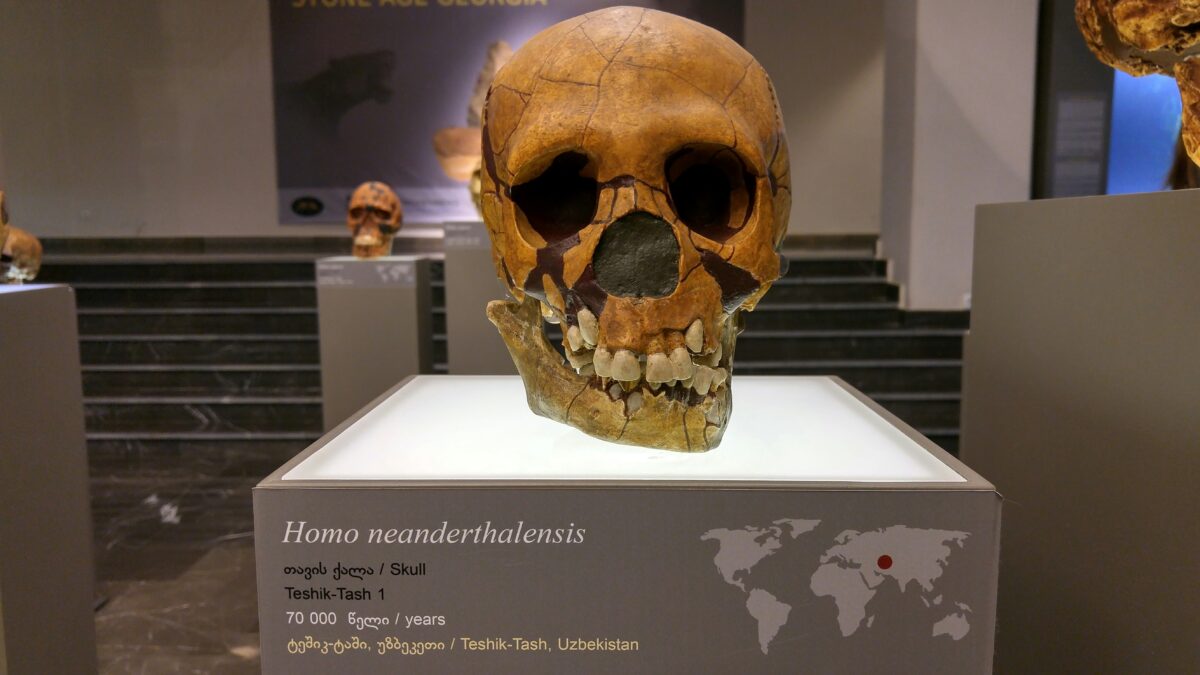
Neanderthals were not the grunting cave brutes that old cartoons sold to the public. They had strong bodies, big brains, skilled hands, and survival habits shaped by cold European and Asian landscapes. They hunted, made tools, used fire, cared for injured group members, and likely understood social bonds in ways that feel deeply familiar. Their heavy brows and stocky frames looked different from ours, but their lives were not empty or simple.
The unsettling truth is that they were close enough to us to love, compete with, and leave DNA inside many people alive today. That closeness is what makes them haunting.
Denisovans became a genetic ghost story
Denisovans are the human relatives who turned science into a detective story. For years, researchers knew them from tiny fossil traces, yet their DNA revealed a major hidden population that once lived across parts of Asia. They did not leave a rich fossil record, so every tooth, jaw, or bone fragment matters.
Their genetic legacy still appears in some modern groups, especially in Asia and Oceania. That makes Denisovans feel like ghosts with receipts: hard to picture, difficult to classify, but impossible to erase from the human story. Their silence still speaks through genes.
Homo erectus outlasted nearly everyone
Homo erectus was not flashy, but this species may have been one of evolution’s toughest survivors. It had more modern body proportions than earlier humans, traveled across vast distances, and lasted for well over a million years. Its long legs helped it move through open habitats, while its tools show practical intelligence that worked for generation after generation.
Compared with Homo erectus, Homo sapiens had a larger brain and a more robust skull, yet it mastered endurance running. If survival time were the scoreboard, modern humans would still look like newcomers. Its success still embarrasses our arrogance.
Homo habilis started the tool habit
Homo habilis sits near the beginning of the Homo story, and its importance lies in a simple yet powerful shift: using tools to change the rules of survival. This species had a smaller brain than ours and a more primitive body, yet its hands helped turn stone into cutting power. That mattered because sharp flakes could open animal carcasses, scrape hides, and unlock food sources that bare teeth could not handle.
Homo habilis did not look like us, speak like us, or build like us, but it helped launch the human addiction to solving problems with objects. That habit still defines us. It turned survival into invention.
Heidelbergensis looked built for hard living
Homo heidelbergensis feels like the heavyweight chapter between older humans and later relatives such as Neanderthals. Its skull was broad and strong, its brow ridge was heavy, and its body likely handled demanding climates with muscle and stamina.
Evidence for this species suggests organized hunting, the use of wooden spears, and the ability to take down large animals. That level of risk required timing, teamwork, and nerve. It was not modern in the full Homo sapiens sense, but it was far from helpless. This was a human built for impact, not comfort. That harsh life shaped later human possibilities.
Homo floresiensis ruined the human blueprint
Homo floresiensis blows up the lazy idea that every human species had to become taller, smarter, and more like us. Found on the Indonesian island of Flores, this tiny species stood roughly child-sized, yet it survived in a challenging island world. Its small brain and short body made it look wildly different from modern humans, but its tools show that survival is not always about size.
Island life may have pushed its body to shrink over time. The result was a real human cousin that looked impossible at first glance and brilliant in an evolutionary context. It made “human” feel wider. It challenged every neat assumption.
Homo Naledi broke the brain size myth
Homo Naledi is a reminder that brain size does not explain the whole human story. This species had a small brain, curved fingers, climbing-friendly shoulders, and a body that mixed ancient and more modern traits. Yet its fossils forced scientists to rethink what kinds of behavior may have existed in small-brained human relatives.
The debate around Homo Naledi remains intense, which makes it even more interesting. It does not fit neatly into the tidy ladder people imagine. It looks more like evolution, testing different combinations and refusing to follow a single clean script. That messiness matters.
Interbreeding made the family tree messy
The old classroom image of human evolution as a straight line is badly outdated. Ancient humans did not simply replace one another in neat order. Some overlapped, met, competed, and interbred. That means the human family tree works more like tangled roots than a ladder.
Neanderthal and Denisovan DNA in living people shows that our ancestors did not live behind clean species walls. They crossed paths in real bodies, real landscapes, and real relationships. Our identity is not pure separation from ancient humans. It is partly made from contact with them. That truth feels beautifully uncomfortable.
Modern humans won through culture, not muscle
Homo sapiens did not become the last humans because we were the strongest bodies in the family. Neanderthals were tougher in many ways, and Homo erectus survived longer than we have so far. Our advantage came from a culture that could move fast: language, symbols, shared learning, flexible tools, trade, planning, and group cooperation across distance.
Once ideas started traveling faster than genes, our species gained a dangerous edge. That edge built art, cities, science, and technology, but it also reminds us that survival depends on how well we adapt together. Culture became our sharpest tool.
Conclusion
The story of past human species is not a dusty museum tale. It is a warning written in bone, stone, and DNA. Neanderthals, Denisovans, Homo erectus, Homo habilis, Homo floresiensis, and other lost relatives prove that being human never had a single shape, brain size, or destiny. They were not failed versions of us. They were different answers to the same brutal question: how do you survive? Modern humans became the final answer for now, but that does not make us invincible. It makes our survival more shocking, more fragile, and far more fascinating.