A 43-Year-Old Died in ICE Custody. Now One Louisiana Facility Faces Hard Questions
A man from the country of Georgia died inside America’s immigration detention system, and the details are raising new questions about what happens behind the walls of facilities that most people never see.
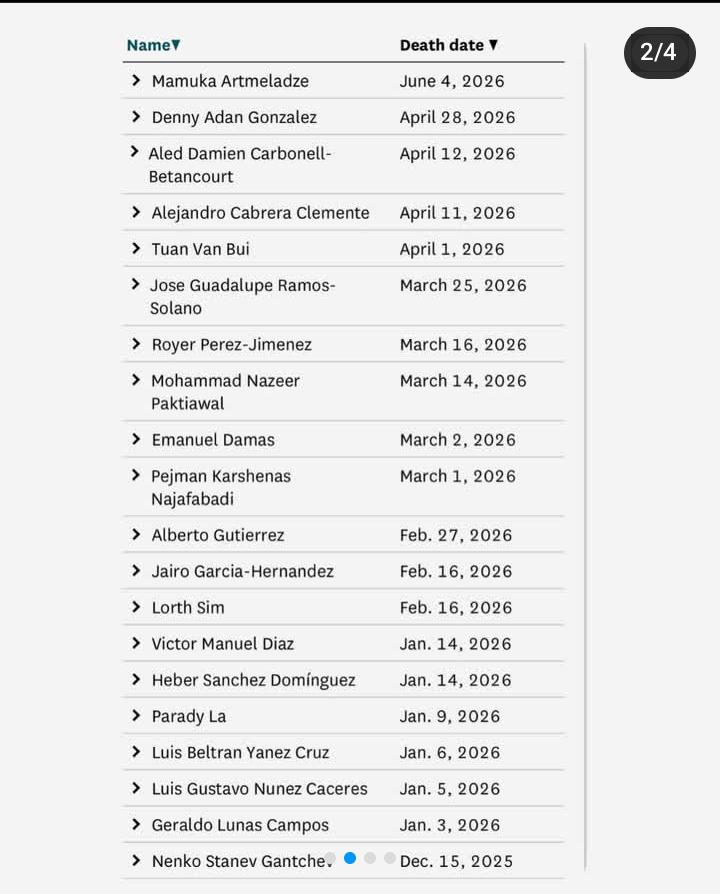
Mamuka Artmeladze, 43, died on June 4 after being found unresponsive at Winn Correctional Center in Winnfield, Louisiana, according to federal immigration officials. ICE said staff began emergency efforts before he was taken by ambulance to Winn Parish Medical Center, where he was later pronounced dead.
The official cause of death has not yet been released. Authorities said it remains pending an autopsy, which means the public still does not know exactly what led to his death.
A Late-Night Emergency Inside Detention

According to ICE, Artmeladze was found unresponsive around 10:37 p.m. inside Winn Correctional Center. Staff reportedly called a medical emergency and began lifesaving measures before he was transported to the hospital.
Medical personnel continued resuscitation efforts after he arrived at Winn Parish Medical Center. He was pronounced dead at about 11:22 p.m., less than an hour after the emergency was reported.
That timeline is short, but the questions around it are not. What happened before he was found unresponsive? Was he showing signs of distress earlier? Did staff respond quickly enough? Those are the kinds of questions that often follow deaths in custody, especially when the cause remains unknown.
Why This Case Is Drawing Attention
Artmeladze’s death is not being viewed as an isolated story by immigration advocates and watchdogs. It comes at a time when ICE detention conditions are already facing intense scrutiny across the country.
Reports have linked the death to a broader rise in ICE custody deaths during the current immigration crackdown. ABC News reported that Artmeladze was the 50th person to die in ICE detention during President Donald Trump’s second administration.
That number gives the case national weight. For many Americans, immigration enforcement is often discussed in political terms. But custody deaths bring the debate back to something more basic: when the government detains a person, it also takes responsibility for that person’s safety.
What ICE Says About His Immigration History
ICE said Artmeladze entered the United States without inspection at an unknown date and time. Officials said U.S. Border Patrol encountered him on Sept. 25, 2022, and released him on parole with instructions to report to ICE within 60 days.
Federal officials said ICE encountered him again on Feb. 5, 2026, near Fackler, Alabama. The agency said the encounter occurred during an operation targeting commercial vehicle drivers whom officials believed posed public safety risks.
ICE said Artmeladze was taken into custody after officials determined he had no lawful status to remain in the United States. Those details explain how he came into federal custody, but they do not answer the central question his death now raises.
The issue is not only why he was detained. The issue is why he died while detained.
A Louisiana Facility Already Under Pressure
Winn Correctional Center is now facing fresh attention because this was not the only recent death connected to the facility. Local reporting noted that another detainee died at the same Winn Parish location in April.
That matters because repeated deaths at one facility can deepen public concern. One death may trigger an investigation. Multiple deaths can raise broader questions about staffing, medical care, emergency response, supervision, and oversight.
The facility had also recently been linked to inspection concerns involving safety, sanitation, and use-of-force issues. Those details do not prove what happened in Artmeladze’s case, but they add context to why the public may demand more answers.
Officials Say Notifications Were Made
ICE said the Department of Homeland Security, the DHS inspector general, and the Georgian consulate were notified after Artmeladze’s death. The agency also said next of kin or designated contacts were notified.
Those notifications are part of the official process after a death in custody. But families, lawmakers, and community advocates often argue that notification is only the first step.
The deeper issue is transparency. Families want to know what happened. Lawmakers want to know whether detention standards were followed. The public wants to know whether the same thing could happen again.
The Bigger Problem Behind One Man’s Death
Deaths in detention carry a heavy public burden because detained people cannot simply leave and seek help elsewhere. They rely on facility staff, medical providers, transportation systems, emergency protocols, and government oversight.
That is why even one unexplained death can become a national story. The person in custody may have immigration violations, criminal allegations, or no lawful status, but none of that removes the government’s duty of care.
Artmeladze’s death also lands in a heated political moment. Immigration enforcement has become one of the most divisive issues in America, and both sides often talk past each other. But a death in custody should not be treated as just another partisan argument.
It should be treated as a test of accountability.
What Happens Next
The next major step is the autopsy. Until that is complete, the public does not have a confirmed cause of death.
Investigators may also review medical records, staff actions, facility logs, surveillance footage, emergency response times, and prior health complaints if any existed. Those details will matter because they could show whether this was a sudden medical emergency, a preventable failure, or something else entirely.
For now, the official record leaves the public with only part of the story. A 43-year-old man was found unresponsive inside a Louisiana immigration detention facility. He was rushed to a local hospital. He died that night.
What remains unknown is the part that matters most: whether his death could have been prevented.