Trump’s SAVE America Act Push Triggers a High-Stakes House GOP Spending Revolt
The most dangerous number in Washington may not be a vote count. It may be a price tag.
President Donald Trump is urging House Republicans to unite behind a $95 billion budget framework designed to advance parts of the SAVE America Act, replenish military resources and help farmers. The proposal has exposed a sharp contradiction inside the GOP: lawmakers who campaign against runaway spending are being asked to approve billions in new costs without guaranteed offsets.
The proposal had cleared the House Budget Committee and survived a key Rules Committee hurdle, but it had not received final House approval. Trump has publicly called on every House Republican to vote yes, turning what might have remained an internal budgeting dispute into a direct test of loyalty to the president’s agenda.
Election Security Now Has a Price Tag

The SAVE America Act is one of Trump’s leading legislative priorities. It would create federal voter identification standards and require proof of citizenship during voter registration, provisions Republicans describe as protections for election confidence.
Democrats and voting rights groups say the requirements could burden eligible voters who lack passports, accessible birth certificates or matching identification documents. The measure passed the House but stalled in the Senate, where Republicans would normally need Democratic votes to overcome a filibuster.
House Speaker Mike Johnson’s answer is budget reconciliation. That process can allow legislation to pass the Senate with a simple majority, but its provisions must have a meaningful connection to federal spending or revenue. Republicans are therefore trying to turn election policy into a budget issue.
The $95 Billion Bundle Is Both Strategy and Risk
The framework would permit $95 billion in additional spending through 2036. It directs $60 billion toward defense, $13 billion toward intelligence, $12 billion toward agriculture, and $10 billion toward election administration.
On paper, the combination looks politically powerful. Defense hawks get military resources, farm state lawmakers get agricultural aid, and election-focused conservatives get a possible route for SAVE America Act policies.
In practice, the bundle creates several opportunities for revolt. A fiscal conservative may support voter identification but reject unpaid spending. A SAVE America Act hardliner may oppose the package if Senate rules strip out its strongest election provisions.
Fiscal Hawks Recognize a Familiar Washington Move
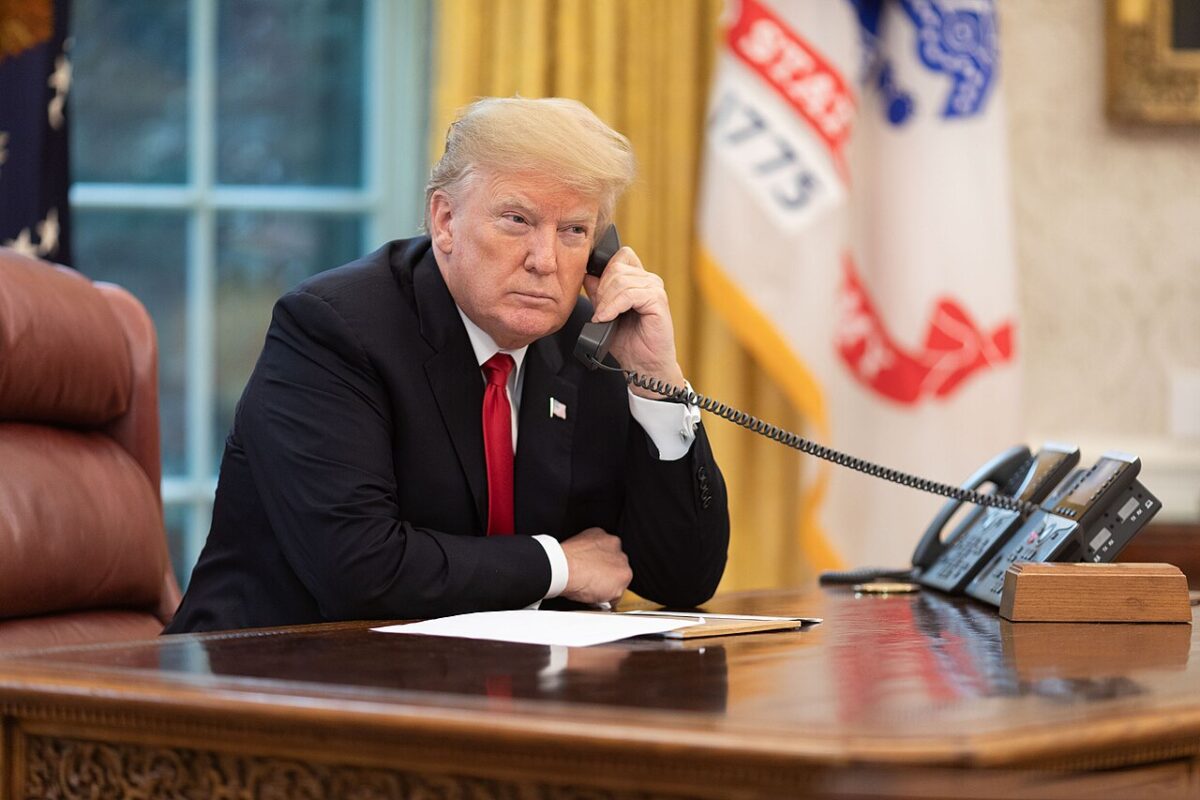
Trump has personally urged House Republicans to vote yes, describing the budget resolution as a first step toward securing as much of the SAVE America Act as possible. Some conservatives remain unconvinced because the framework contains no required cuts or new revenue to cover its cost.
That objection strikes at the Republican brand. GOP lawmakers have spent years warning that Washington bundles popular priorities together, labels them urgent and postpones the difficult question of payment.
Now their leadership is using that same pressure. National security, farmer relief and election integrity each carry political weight, but combining them does not make the bill free.
Voting yes could look like surrender for deficit hawks. Voting no allows leaders to accuse them of obstructing Trump’s agenda during a midterm year. The proposal has become a loyalty test with a federal price tag.
Reconciliation May Not Save the Full Act
Even House passage would not guarantee victory. Senate reconciliation rules can exclude provisions whose policy impact outweighs their budgetary effect, meaning election requirements could be removed during review.
That possibility explains why Trump has spoken about getting “as much” of the act as possible. It also alarms conservatives who fear approving $95 billion in spending only to watch the Senate discard the election policies that won their support.
Senate Republicans have expressed doubts about the package’s cost and structure, while Johnson’s narrow House majority leaves little room for defections.
Trump Raises the Cost of Dissent
Trump’s intervention changes the atmosphere even when it does not change the arithmetic. A disagreement over budget mechanics can now be presented as opposition to the president.
That pressure may pull hesitant lawmakers into line, especially those seeking Trump’s support. It may also deepen frustration among conservatives who believe the party abandons deficit promises whenever leaders need votes for a favored proposal.
The revolt reveals a larger shift in Republican politics. Fiscal restraint remains a powerful campaign message, but Trump’s priorities increasingly determine when that message applies.
That is the uncomfortable truth beneath the spending dispute. Republicans are not simply deciding whether they trust the SAVE America Act. They are deciding whether election security is important enough to justify borrowing more money to pursue it.
A Vote About More Than Elections

The showdown asks Republicans which promise matters most. Is it securing elections, strengthening the military, protecting farmers or preventing the national debt from climbing higher?
Johnson wants lawmakers to see one package containing four urgent solutions. His critics see four popular causes being used to shield one unpaid bill.
Trump may succeed in turning political pressure into enough votes for the framework. But presidential influence cannot guarantee that Senate rules will preserve the election provisions or that fiscal conservatives will remain comfortable with the final legislation.
That difference will determine whether Trump’s push produces unity or exposes a deeper fracture. The decisive question is no longer whether Republicans support the SAVE America Act. It is how much they are willing to spend, and how much of their fiscal identity they are willing to risk, to move it forward.