Where Is My Tariff Refund? The Question Americans Are Asking After a Major Trade Ruling
It started with a question spreading across social media and search bars: Where is my tariff refund? For many Americans, the idea of money coming back after paying higher prices on imported goods sounds straightforward. But the reality behind tariff refunds is far more complicated and far less personal than many expect. This is a nationwide issue, not a regional one. However, Southern California provides a clear example of how tariff policy shows up in everyday economic life because of its major role in U.S. import activity.
The confusion has grown in places like Southern California, where ports, warehouses, and import businesses drive much of the local economy. From Los Angeles to Long Beach, imported goods affect everything from retail pricing to small business inventory costs. But despite the public buzz, there is no federal program sending refund checks directly to consumers.
Why is everyone suddenly talking about tariff refunds?
The renewed attention comes after a Supreme Court ruling tied to the use of the International Emergency Economic Powers Act, often referred to as IEEPA. According to the Court’s decision in Learning Resources, Inc. v. Trump, the statute does not grant unlimited authority to impose certain tariffs. That ruling opened the door for importers to challenge duties that were previously collected.
However, the key detail is often overlooked. Refunds are not going to shoppers. They are going to importers who directly pay the tariffs at the border. That distinction is now at the center of public frustration.
The gap between what people paid and who gets refunded
Many consumers assume that if prices went up because of tariffs, they should receive some form of reimbursement once those tariffs are reversed or refunded. But the U.S. customs system does not work that way.
When imported goods enter the country, tariffs are paid by the importer of record, not the store or the shopper. That importer may be a large corporation, a distributor, or a small business that brings goods into the U.S. for resale.
Once those costs enter the supply chain, they can be absorbed or passed along in retail prices. So, while consumers may have indirectly paid more, they are not recognized as the legal payer of the tariff and therefore are not eligible for refunds. That reality is at the center of growing confusion online.
Why Southern California is watching this closely
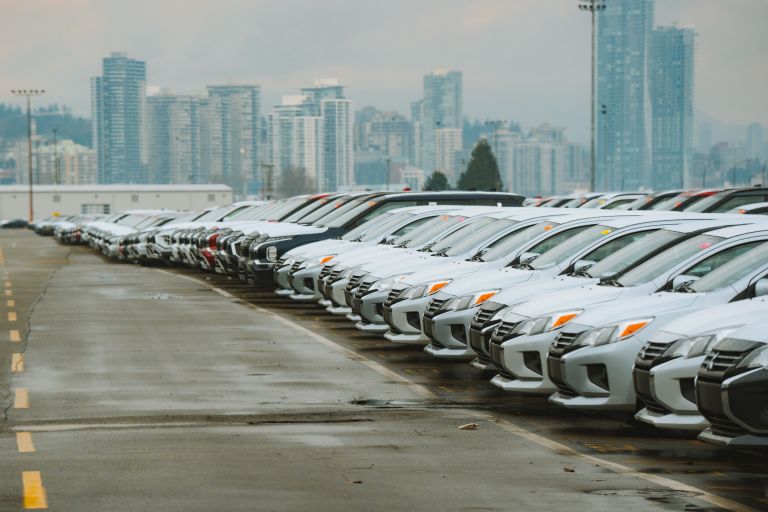
In Southern California, the issue feels especially close to home. The ports of Los Angeles and Long Beach handle a massive share of America’s imported goods, making the region one of the first places where tariff changes show up in real life, from retail shelves to warehouse operations.
Local businesses that depend on imported goods often feel the effects of tariff shifts quickly. But refund recovery operates on a slower, more technical timeline that involves customs filings, legal eligibility, and federal processing systems. For small importers in particular, the process can be difficult to navigate without customs brokers or legal support.
How the refund process actually works
Refunds tied to the Supreme Court decision are being handled through U.S. Customs and Border Protection, using a system known as CAPE, short for Consolidated Administration and Processing of Entries, through the ACE portal. Importers must file claims through the agency’s systems, and eligibility depends on specific entry records, timing, and classification of goods.
Some cases move faster than others. Recent entries are generally easier to adjust, while older or more complex entries may take longer to process. Officials have described the system as being rolled out in phases, meaning not all refunds are handled at the same speed. That is one reason there is no single “release date” for money going back into the system.
How much money is involved
The sums are large enough to affect federal finances.
Reuters reported that customs duty refunds totaled $21.97 billion in May, while gross customs collections were $21.93 billion. That left net customs outflows for the month, according to Treasury data cited by Reuters.
Reuters also reported that, as of a June hearing, CBP had completed $23 billion in refunds and sent them to the Treasury Department for distribution to importers.
The broader refund pool has been estimated in the hundreds of billions. The Penn Wharton Budget Model projected that reversing IEEPA tariffs could generate up to $175 billion in refunds. The U.S. Chamber of Commerce cited roughly $166 billion in duties paid across more than 53 million entries.
For consumers, those numbers sound enormous. But they do not translate into a simple household refund because the tariff system does not track how much of each duty was passed into each final retail purchase.
The big misconception driving frustration
The biggest misunderstanding is the belief that tariff refunds function like a tax rebate. They do not. There is no universal payout. There is no consumer application portal. There is no direct deposit tied to purchases made at the store.
Instead, the process operates entirely within trade and customs systems that most consumers never interact with. That disconnect is why the question “Where is my refund?” continues to trend, even though the answer lies in technical trade law rather than household finance.
Will consumers ever see the impact?
The more practical question may not be whether consumers receive refunds directly, but whether prices eventually adjust. If importers recover high costs, some businesses could stabilize pricing or reinvest savings into supply chains. Others may continue operating under higher long-term costs depending on contracts, shipping rates, and new trade policies. Economists often note that tariff impacts can be uneven and delayed, meaning any consumer benefit , if it comes, would likely appear gradually rather than immediately.
What happens next
For now, the refund system continues to move through federal channels, with importers filing claims and agencies reviewing eligibility under the Supreme Court’s ruling framework. But for the average shopper, the situation remains unchanged: prices reflect past import costs, and refunds are not flowing directly back to consumers.
That gap between expectation and reality is what continues to fuel public debate. And it raises a final question many people are still asking: If tariffs raise prices for everyone, why does the refund go only to a few?