Boyle Heights Fire Leaves Los Angeles Under Pollution Advisory as Smoke Drifts Across the Region
A warehouse fire in Boyle Heights did not end when the flames stopped dominating the skyline. For many Los Angeles residents, the bigger concern became what lingered afterward: smoke, ash, heavy air, and a pollution advisory that stretched beyond the immediate neighborhood.
The fire broke out on Wednesday afternoon at a Lineage cold-storage facility in the 1400 block of South Los Palos Street, setting off a difficult response from the Los Angeles Fire Department. What began as a structure fire quickly became a broader public safety issue, sending dark smoke into the air and prompting officials to warn nearby residents to stay indoors.
By Thursday, a particle pollution advisory remained in effect as crews continued working to fully extinguish the blaze. Authorities lifted the shelter-in-place order for the immediate area, but the air-quality concern did not disappear with it. Smoke from a smoldering warehouse can travel, settle, shift with the wind, and push its way into neighborhoods far from the fire line.
A Fire That Became an Air-Quality Emergency
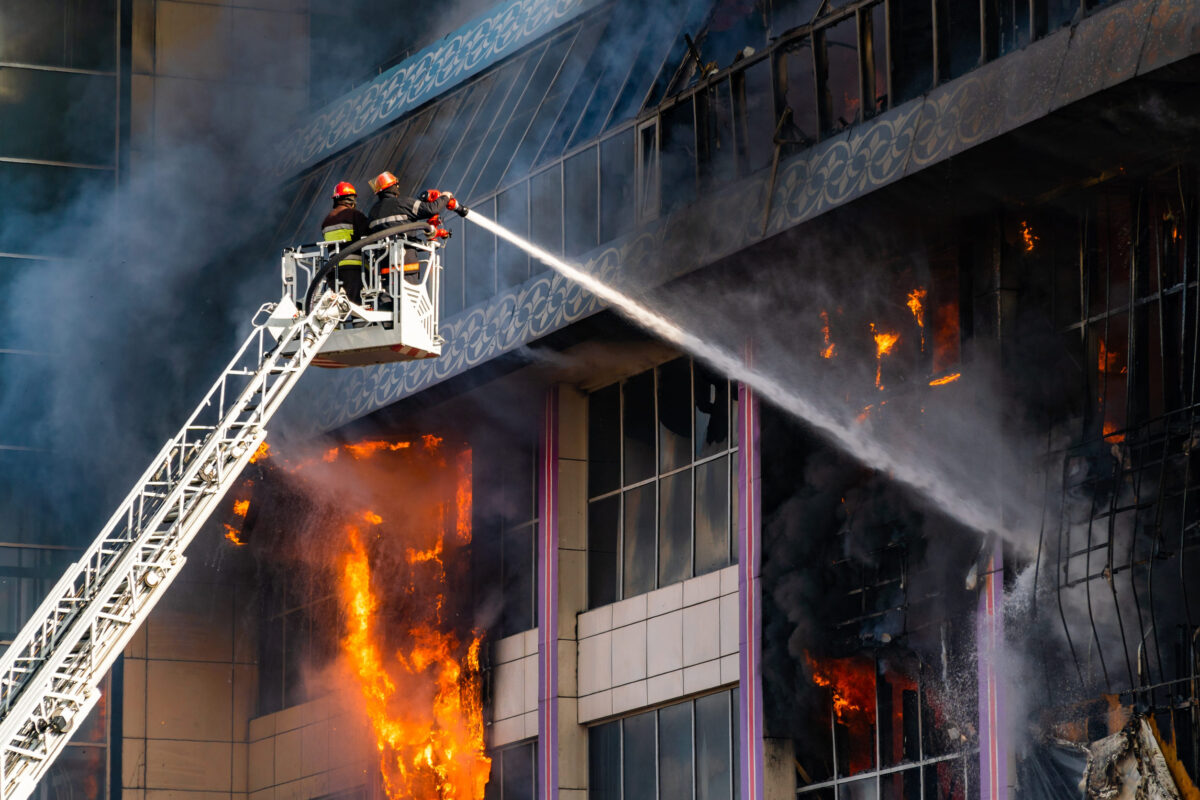
The fire reportedly started shortly after 2:30 p.m. Wednesday at the sprawling cold-food processing and storage facility. According to fire officials, the blaze spread across the solar panels on the roof before conditions inside the building became more dangerous.
An ammonia leak was reported during the incident, adding another layer of risk for crews already facing heavy smoke and a large industrial structure. Several small explosions were also reported, and flames intensified as thick black smoke rose over Boyle Heights.
Because of the warehouse’s size and complexity, firefighters took a defensive position, working from outside the structure rather than rushing into unsafe conditions. LAFD crews used helicopter water drops, a rare tactic for a structure fire and one more commonly associated with wildfires. Officials said the unusual approach was necessary because hose lines could not reach every part of the fire.
For residents watching from nearby streets, the scene was frightening. Smoke rolled through the area, emergency vehicles filled the neighborhood, and officials urged people in affected zones to remain inside, shut windows and doors, and turn off systems that could pull outdoor air into homes.
Smoke Can Outlast the Flames
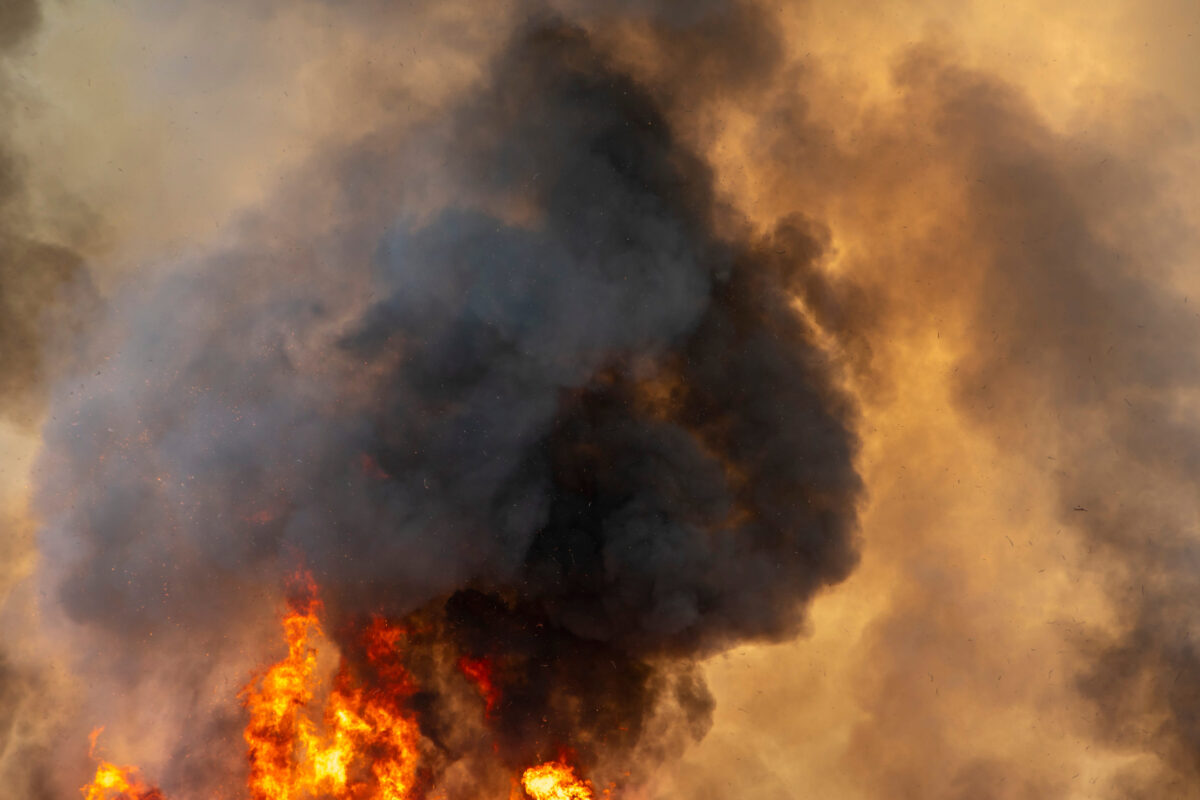
The South Coast Air Quality Management District warned that smoldering material could continue to affect air quality downwind of the facility. That warning matters because smoke from a structure fire is not simply an unpleasant smell. It can carry fine particles that irritate the lungs, worsen asthma, and create problems for people with heart or respiratory conditions.
The agency also warned that cooler smoke plumes may remain lower to the ground rather than rising and dispersing quickly. That means residents could notice haze, reduced visibility, and ash even after the most dramatic flames have died down.
People in Boyle Heights, East Los Angeles, Montebello, downtown Los Angeles, and other nearby areas were among those most likely to feel the impact. Lighter smoke impacts were also possible across a wider part of Los Angeles County, depending on wind patterns.
Officials advised residents who smelled smoke or saw ash on the ground to stay indoors as much as possible. Doors and windows should remain closed, and air purifiers can help if available. Residents were also told to avoid vigorous outdoor activity until conditions improved.
For anyone using a swamp cooler or whole-house fan, officials gave a clear warning: avoid using systems that bring outside air indoors while smoke is present. Air conditioning can help when it recirculates indoor air, but drawing smoky air into a home can worsen indoor conditions.
Residents Still Had Questions
Even after the shelter-in-place order was lifted, uncertainty remained. People wanted to know what they were breathing, how far the smoke had spread, and how long the smell would hang over their neighborhoods.
Fire officials said no injuries were immediately reported, but the cause of the fire was still unclear. Investigators were expected to examine the role of the roof solar panels, especially because the building reportedly had a previous solar panel fire in 2024 that crews extinguished in less than an hour.
The facility itself is part of the cold-chain industry, storing and processing food products that must be kept at controlled temperatures. That kind of operation can involve complex refrigeration systems, large storage racks, industrial equipment, and materials that make firefighting more difficult once flames enter the building.
LAFD Chief Jaime Moore described the situation as unusual and said using water-dropping helicopters on a structure fire was something he had seen only rarely in his decades with the department. That detail captured the scale of the challenge. This was not a small warehouse flare-up that could be quickly handled by engines on the street. It was a stubborn industrial fire that demanded unusual tactics and continued monitoring.
For families in the area, the practical advice was simple but serious. Stay inside when smoke is present. Keep windows closed. Avoid outdoor exercise. Check on older relatives, children, and anyone with asthma, lung disease, heart disease, or other sensitive health issues. Masks may help reduce exposure when people must go outside, especially properly fitted respirator-style masks.
The Boyle Heights fire is a reminder that the danger from a major urban fire does not always stop at the property line. A burning warehouse can become a neighborhood problem, then a regional air-quality issue, carried by wind into places where people never saw the flames.
For Los Angeles residents, the message from officials was clear: even when the sky starts to look calmer, the air may still need time to recover.