Oil Flows Jump To 17 Million Barrels As Gas Prices Drop Nearly 60 Cents In A Month After Hormuz Deal.
American drivers may finally be seeing the first real relief from the energy shock that followed months of disruption in the Strait of Hormuz, one of the world’s most important oil routes. Energy Secretary Chris Wright said Sunday that oil and natural gas traffic through the strait has returned to normal levels after the United States and Iran signed a preliminary agreement aimed at reopening the waterway and creating space for nuclear negotiations.
The statement matters because the Strait of Hormuz is not just another shipping lane. It is a narrow but powerful chokepoint between Iran and Oman, and it normally carries a major share of the world’s oil and liquefied natural gas. When the route slows, oil traders react quickly, gasoline prices climb, shipping costs rise, and consumers feel the squeeze at the pump, in grocery prices, in airline fares, and across supply chains.
Wright told ABC News that he no longer wants to be in the business of making exact oil or gasoline price predictions, but he still gave Americans a clear direction: prices, in his view, should keep moving lower. His argument is simple. If energy cargoes can keep moving through Hormuz, if American production continues rising, and if other producers keep cooperating, then pressure on fuel prices should ease.
That is the optimistic version of the story. The more cautious view is that the waterway may reopen, but it is not yet clear that the global energy system has fully recovered. U.S. Central Command reported that 55 merchant ships crossed the strait on Saturday, carrying more than 17 million barrels of oil to global markets. That number suggests a meaningful rebound. However, trade trackers and maritime intelligence firms have also reported lower verified counts on some recent days, suggesting the recovery may still be uneven.
Why the Strait of Hormuz Controls So Much of the Gas Price Story
The Strait of Hormuz has become the center of the global energy conversation because it connects the Persian Gulf to the Gulf of Oman and the wider global market. Major oil and gas exporters, including Saudi Arabia, Iraq, Kuwait, Qatar, the United Arab Emirates, Bahrain and Iran, depend on the route to move huge volumes of energy.
Before the conflict, the waterway handled roughly one-fifth of global oil flows. That means even a partial disruption can create an instant price reaction. Traders do not wait for fuel shortages to appear at neighborhood gas stations. They price in risk early. If they believe tankers may be delayed, rerouted, insured at higher cost, or blocked entirely, crude prices can rise before any physical shortage reaches consumers.
That is why the recent movement through Hormuz is so important. It gives the market a reason to step back from panic pricing. Oil prices had already started dropping after news of the interim U.S.-Iran arrangement, with benchmark crude prices falling sharply on hopes that shipping would recover and Iranian exports would return to the market.
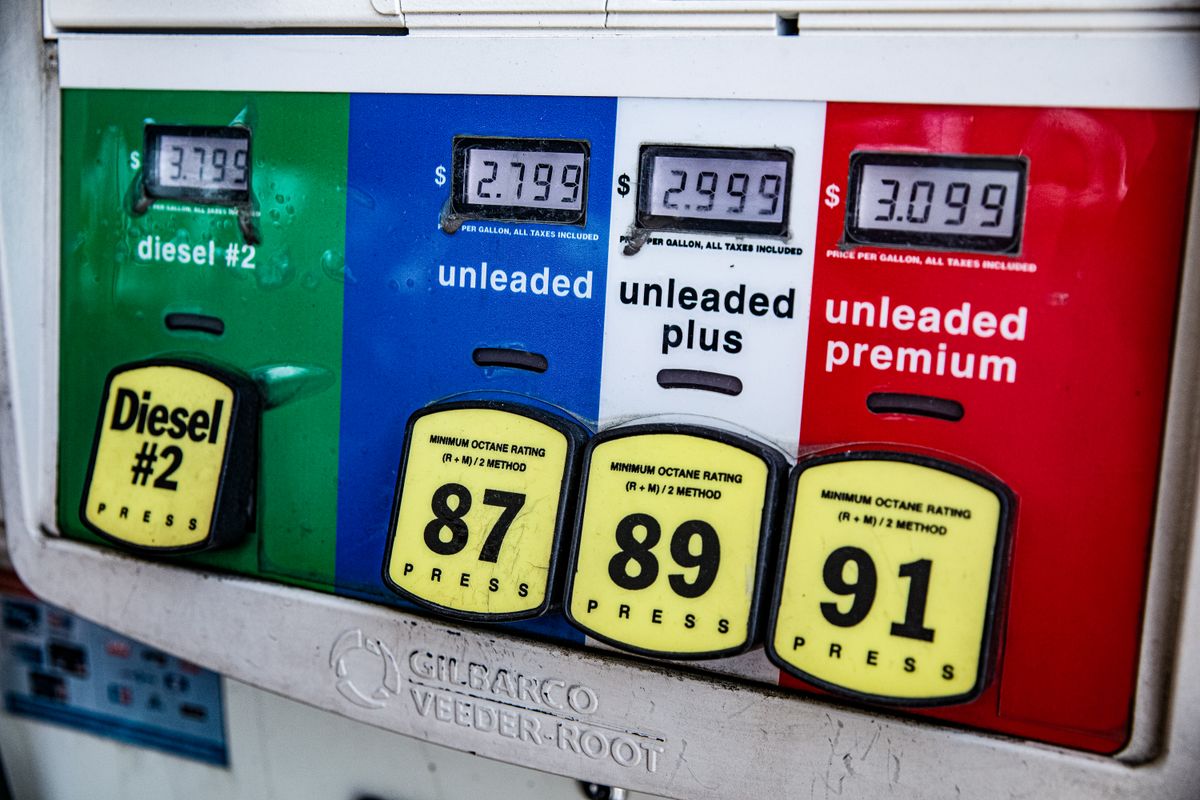
Gasoline prices have followed with some delay. The national average remains high compared with last year, but the movement has shifted in a better direction for drivers. AAA listed the national average for regular gasoline at $3.938 per gallon on June 21, down from $4.074 a week earlier and $4.564 a month earlier. That is a drop of more than 60 cents in one month, which is significant for households that fill up multiple times a week.
Still, a lower national average does not mean every driver is getting equal relief. State-by-state prices remain widely different. Drivers in high-tax, high-cost or supply-constrained states may still pay far more than the national average, while states closer to refining hubs or pipeline networks may see prices fall faster.
The U.S.-Iran Agreement That Changed the Oil Market Mood
The immediate reason for the shift is the preliminary agreement between Washington and Tehran. The deal is designed to reopen the Strait of Hormuz while giving negotiators about 60 days to address deeper nuclear and security issues.
The agreement appears to have two major energy effects. First, it allows commercial traffic to resume through a route that had been badly disrupted. Second, it gives Iran a path to sell oil again under a U.S. sanctions waiver, at least while talks continue.
That second point is politically explosive. Critics argue that easing oil sanctions gives Iran too much too quickly. Supporters argue that reopening Hormuz and stabilizing global energy markets required some form of concession. Wright defended the approach by saying Iran has been selling oil for much of the past several decades anyway, while insisting that frozen funds and broader benefits would remain tied to meaningful progress in nuclear talks.
The deal is therefore not just about shipping. It is about leverage. The United States wants open waterways and limits on Iran’s nuclear program. Iran wants oil revenue, sanctions relief, and access to money frozen abroad. Gulf countries want stable shipping. Energy markets want clarity. American consumers want lower prices.
Wright’s Price Forecast Depends on More Than One Waterway
Wright’s confidence rests on several factors beyond Hormuz. He pointed to growing U.S. energy production, improving supply from Venezuela, and cooperation among global energy producers. In plain terms, he is arguing that the market has more supply options than it did during previous crises.
That matters because he is arguing that oil prices are shaped by both fear and fundamentals. If the market believes supply is secure, prices can fall even before every tanker has returned to its usual schedule. If the market believes a disruption may return, prices can rise even while oil is still flowing.
The United States has more domestic production capacity than it did during earlier energy crises, giving Washington more flexibility. However, domestic production does not fully shield American drivers from global crude markets. Oil is priced internationally. A disruption in the Persian Gulf can still affect U.S. pump prices because refiners, traders, and fuel suppliers respond to global benchmarks.
That is why Hormuz remains so powerful. Even with strong U.S. production, a major disruption in a route that handles around 20% of global oil supply can still move the entire market.
The “Back to Normal” Claim Is Still Being Tested
Wright’s strongest claim was that flows through the strait are already back to normal. That may be directionally true from the U.S. government’s view, but the public evidence is mixed.
CENTCOM’s statement about 55 merchant ships and more than 17 million barrels of oil is a strong signal that traffic has improved sharply. But independent trackers have presented a more cautious picture, with verified daily crossings remaining below pre-conflict levels on some days. The World Trade Organization’s Hormuz tracker also warned that crude oil, LNG, and fertilizer-related cargoes remained severely disrupted through June, with only limited and uneven movement visible in tracking data.
What Falling Oil Prices Mean for American Drivers
When oil prices fall, gasoline usually follows, but not instantly. Refiners buy crude, process it, and distribute fuel; retail stations then adjust prices based on local competition, supply costs, taxes, and inventory. That means a sharp drop in crude prices can take days or weeks to fully show up at the pump.
The recent drop in national gasoline prices is still significant. A driver buying 15 gallons of regular fuel would pay about $59.07 at a national average of $3.938 per gallon. At last month’s average of $4.564, that same fill-up would cost about $68.46. That is roughly $9.39 less per tank. For a two-car household filling up weekly, the monthly difference can add up quickly.
Lower fuel prices also help businesses. Trucking companies pay less for diesel. Airlines face lower jet fuel pressure. Farmers, contractors, delivery fleets and small businesses all get some breathing room when energy costs fall. Over time, cheaper fuel can soften inflation pressure across the economy.
But falling prices can reverse quickly if the diplomatic process breaks down. The market is not only reacting to current supply. It is also pricing the risk of another closure, new fees, military action, sanctions changes or shipping delays.
Trump’s Toll Warning Adds a New Risk for Global Shipping
President Donald Trump has said there should be no tolls in the Strait of Hormuz during the 60-day ceasefire period or afterward unless the United States imposes one if the deal fails. That statement was meant to push back against Iranian suggestions that new maritime fees could appear later.
For the oil market, the toll issue matters because fees can act like a hidden tax on global energy. If ships must pay extra to cross a critical chokepoint, those costs can move through the system and eventually affect refiners, distributors and consumers.
Even the threat of fees can change behavior. Shipowners may demand higher insurance. Traders may reroute cargo. Buyers may seek alternative suppliers. Freight costs may rise. Energy markets may price in uncertainty before any fee is actually charged.
Iran’s Oil Sanctions Waiver Could Add Supply, But Politics Remain Messy
One of the most consequential pieces of the preliminary agreement is the U.S. decision to waive sanctions on Iran’s oil industry. That gives Iran the ability to sell oil into global markets with fewer restrictions during the negotiation window.
From a market perspective, more oil supply usually helps lower prices. If Iranian barrels return more openly and reliably, buyers have another source of crude, and the market has less reason to fear shortage. That is why oil prices reacted quickly when details of the interim deal emerged.
From a political perspective, the waiver is controversial. Critics see it as a major concession to Tehran. Supporters see it as a practical tool to reopen a critical waterway and prevent a broader economic shock. Wright argued that Iran is not receiving its frozen funds unless there is provable progress in nuclear talks, framing the waiver as limited relief rather than a full reward.
The danger for the White House is that the deal must satisfy multiple audiences at once. It must calm oil markets, reassure Gulf partners, pressure Iran on nuclear issues, answer domestic critics, and keep shipping open. That is a narrow path.
Nuclear Talks Could Decide Whether Gas Relief Lasts
The 60-day negotiation window is now the clock everyone is watching. Energy prices may keep falling if negotiators can maintain the ceasefire, keep Hormuz open, and produce credible progress on nuclear inspections and restrictions. Prices could rise again if either side walks away, if Iran threatens the strait, if the United States restores harsher sanctions, or if regional conflict expands.
Wright said Iran does not have the same leverage it once had. That may be true if the United States can keep ships moving without Iranian interference. But Iran’s geographic position still gives it influence. The country sits along the northern side of the strait, and its ability to threaten disruption remains a powerful bargaining tool.