Trump “Will Be Impeached” If Democrats Take Back the House, Sean Hannity Warns Ahead of Midterms
The battle for Congress is rapidly becoming a battle over Donald Trump’s political survival. Conservative media host Sean Hannity has warned that Trump could be impeached for a historic third time if Democrats take control of the House of Representatives in the November midterm elections. The prediction emerged during a conversation with political commentator Dave Rubin, who argued that Republicans may have only a few months to prevent Democrats from gaining the congressional power needed to launch investigations and impeachment proceedings.
“He’ll be impeached,” Hannity declared after Rubin suggested that losing the House could leave Trump trapped in another impeachment fight. Rubin agreed that impeachment was possible, although he questioned whether Democrats would ever secure enough Senate votes to remove Trump from office.
Their exchange was not a report that impeachment proceedings had begun. It was a political forecast, designed to underline the stakes of the 2026 midterms and motivate Republican voters. Nevertheless, the warning reflects a genuine constitutional possibility because the House, not the Senate, decides whether a president is impeached.
Why Control of the House Matters More Than a Democratic Sweep
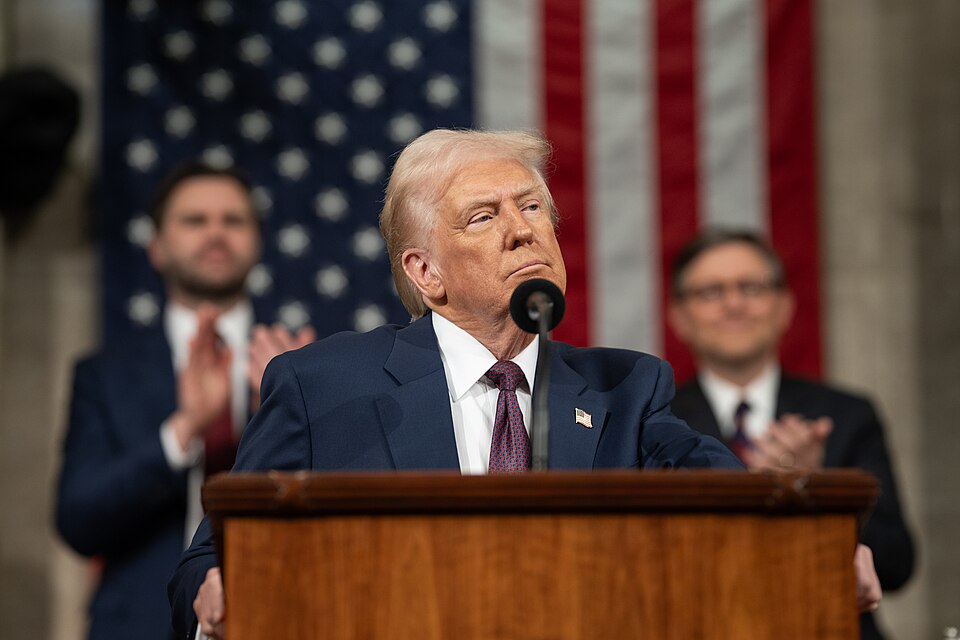
Democrats would not need to capture both chambers of Congress to impeach Trump. They would only need a majority in the House willing to approve one or more articles of impeachment.
Under the Constitution, the House has the exclusive authority to impeach a federal official. Articles of impeachment can be approved by a simple majority of representatives voting. The Senate then conducts a trial, where conviction and removal require support from two-thirds of the senators present.
That distinction is critical. Hannity’s broader warning focused on Democrats sweeping the midterms, but control of the House alone could produce impeachment. Winning the Senate would become important only during the trial and removal stage.
Even a narrow Democratic House majority could theoretically approve articles without Republican support. Removing Trump would be considerably harder. Unless Democrats won an extraordinary number of Senate seats, they would almost certainly need substantial Republican support to reach the two-thirds conviction threshold.
Rubin acknowledged that obstacle during the conversation. His prediction was therefore not that Trump would automatically be forced from the White House. It was that impeachment investigations, hearings and votes could dominate the final two years of his presidency.
Trump Has Already Been Through This Twice
Trump became the first president in American history to be impeached twice. Contrary to the timeline presented in some reports, his first impeachment did not occur in 2018.
The House first impeached Trump on December 18, 2019, approving charges of abuse of power and obstruction of Congress. The case centered on allegations that Trump pressured Ukrainian President Volodymyr Zelenskyy to announce investigations that could politically damage Joe Biden while congressionally approved military assistance was being withheld.
The Senate acquitted Trump on both articles on February 5, 2020. He remained in office and completed his first term.
The House impeached him again on January 13, 2021, one week after the attack on the U.S. Capitol. That impeachment charged him with incitement of insurrection. Although 57 senators ultimately voted to convict, the vote fell short of the constitutionally required two-thirds majority, and Trump was acquitted on February 13, 2021.
That history supports Rubin’s central argument. Impeachment and removal are separate outcomes. The House can formally impeach a president, but the president remains in office unless the Senate convicts.
A third impeachment would place Trump in completely uncharted territory. No other president has been impeached twice, and none has faced impeachment during two separate presidential terms.
The Warning Is Also a Republican Campaign Message
Hannity’s prediction arrives as Republicans confront signs of political vulnerability ahead of the November 2026 elections. The midterms will determine every House seat and roughly one third of the Senate, giving voters the power to reshape Washington for the second half of Trump’s term.
A Reuters/Ipsos poll released on August 3 found Democrats leading Republicans by 42 percent to 37 percent when respondents were asked which party they would support in congressional elections. The same survey placed Trump’s approval rating at 35 percent. Polls remain snapshots rather than guarantees, but the figures help explain why conservative commentators are treating control of Congress as an urgent political threat.
Trump himself has raised the possibility of impeachment while campaigning to preserve the Republican majority. At a January gathering of House Republicans, he warned that losing the midterms could lead Democrats to impeach him.
Some Democratic lawmakers have already demonstrated an interest in pursuing that option. Rep. Al Green of Texas introduced articles of impeachment in 2025 accusing Trump of abusing presidential power in connection with military action. That individual resolution, however, does not prove that Democratic leaders have agreed to make impeachment a priority after the midterms.
The Hannity and Rubin conversation therefore reveals as much about Republican campaign strategy as it does about a possible future constitutional crisis. Impeachment is being presented as a reason for conservatives to vote, donate, and overlook internal disagreements before November.
A Third Impeachment Would Not End Trump’s Presidency Overnight
Rubin’s suggestion that Trump could have only “three months left” should not be interpreted literally. The midterm elections cannot directly remove a sitting president, and newly elected members do not instantly take power on election night.
What could disappear is Trump’s freedom to govern with a friendly Congress. A Democratic House could issue subpoenas, open investigations, summon administration officials and examine presidential conduct through multiple committees. Impeachment could become one part of a much broader confrontation between the White House and Congress.
That conflict could consume Washington even if the Senate ultimately acquitted Trump again. Hearings would dominate television coverage, administration officials could spend months responding to congressional demands, and both parties would use the fight to shape the 2028 presidential campaign.
Hannity’s prediction is not a certainty. Democrats must first win the House; their members would then have to agree that Trump committed impeachable offenses, and a majority would need to approve formal charges. Removal would require an even more difficult Senate vote.
Yet the warning captures the extraordinary stakes of November 2026. Voters will not merely choose members of Congress. They may decide whether the remainder of Trump’s presidency is defined by Republican control or by another bruising impeachment battle.