FAA Investigates Boston Airport Near Collision After Delta Flight With 135 Passengers Abruptly Aborts Landing
A routine landing turned into a sudden emergency maneuver at Boston Logan International Airport when a Delta Air Lines flight carrying 135 passengers was forced to abort its descent after another aircraft moved into its flight path on a crossing runway, according to the Federal Aviation Administration.
What should have been a normal arrival instead became a high-stakes safety moment in the sky, one that is now under federal investigation as officials work to understand how two commercial planes came dangerously close during routine operations.
What Happened At Boston Logan Airport
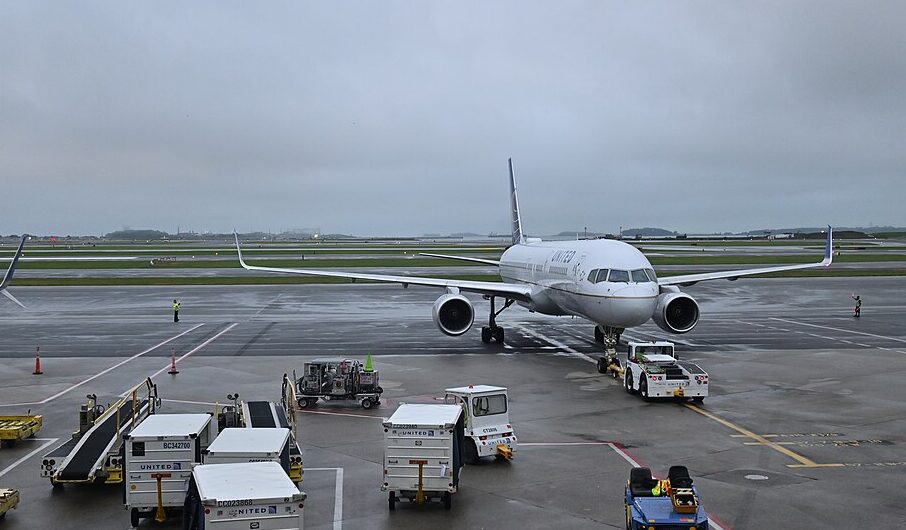
According to the FAA and flight logs, the Delta flight arriving from Dallas was on final approach Saturday morning when pilots were instructed to perform a “go-around,” a standard aviation maneuver used to safely abort a landing and climb back into the air.
The decision came after an American Airlines aircraft began departing from an intersecting runway at the same time, creating a potentially dangerous conflict in controlled airspace.
Air traffic controllers immediately intervened, directing the Delta crew to pull up and circle back rather than continue toward the runway.
No injuries were reported, and both aircraft landed safely afterward, but the incident has drawn serious attention due to how close the timing placed both planes on intersecting paths.
Why Passengers And Aviation Officials Are Concerned
For the 135 passengers onboard the Delta flight, the experience was sudden and unsettling. While most travelers may not have realized the seriousness of the maneuver in real time, aviation experts say that a go-around triggered by a runway conflict is given high priority in safety reviews.
In commercial aviation, intersecting runway operations are carefully timed and tightly controlled. Even small miscalculations can force last-second corrections, as seen in Boston.
Officials say the concern is not that a collision occurred, but that two aircraft were reportedly close enough in sequence to require immediate evasive action from pilots.
For travelers, incidents like this raise questions about how often near-miss situations occur in busy U.S. airports and how air traffic systems manage multiple departing and arriving flights under pressure.
FAA Launches Investigation Into Close Call
The Federal Aviation Administration confirmed it is investigating the incident to determine how the two aircraft were cleared to operate on intersecting runways at nearly the same time.
While officials have not announced any violations or assigned fault, the FAA routinely reviews such events to determine whether procedural errors, communication issues, or timing misjudgments played a role.
According to aviation safety protocols, runway incursions and near-miss events are treated as serious safety occurrences even when no collision takes place.
The FAA typically reviews air traffic control audio recordings, flight data, and cockpit communications as part of its investigation process.
Background On Runway Safety Concerns
Boston Logan International Airport is one of the busiest airports in the northeastern United States, handling hundreds of departures and arrivals daily across multiple intersecting runways.
Because of its layout, air traffic controllers must carefully coordinate timing between incoming and outgoing flights to avoid runway conflicts.
Aviation safety experts note that runway incursions remain one of the most closely monitored risks in commercial aviation. While rare compared to the total number of flights operated each day, such incidents are considered high-risk because they involve aircraft moving in close physical proximity during critical phases of flight.
The Federal Aviation Administration has spent years implementing safety upgrades, including improved radar systems, runway warning systems, and stricter taxiing and departure procedures to reduce the risk of conflicts.
What Happens Next In The Investigation
The FAA is expected to review all operational data from Saturday’s incident, including controller instructions, pilot responses, and runway sequencing decisions.
Depending on the findings, the agency could recommend changes to procedures, additional training, or further review of runway coordination practices at Logan Airport.
Airlines involved in the incident may also conduct internal safety reviews, which is standard practice when flights are involved in runway incursion investigations or go-around events.
For now, flights by both Delta Air Lines and American Airlines continued to operate normally after the incident, and no delays or cancellations were directly linked to the event.
Why This Incident Matters For Air Travel Safety
While passengers landed safely and no emergency declaration was required, aviation experts say the incident underscores how quickly routine airport operations can shift into high-alert situations.
A go-around is a common safety maneuver, but when triggered by a potential runway conflict, it becomes part of a broader safety investigation aimed at preventing future risks.
For travelers, the event is a reminder of the complex coordination happening behind every takeoff and landing. Hundreds of flights operate safely every day in U.S. airspace, but each one depends on precise timing between pilots and air traffic controllers.
As the FAA continues its investigation, the goal will be to determine whether this was a rare timing overlap or a sign that adjustments are needed to keep one of America’s busiest airports operating safely.
For the 135 passengers aboard the Delta flight, what began as a routine landing ended with a sudden climb back into the sky, an unexpected reminder of how quickly aviation safety systems must respond when seconds matter.