Alan Greenspan Dies at 100: The Fed Chair Who Defined Modern U.S. Monetary Policy and Shaped a Generation of Global Finance
The world of economics is reflecting on the life and legacy of Alan Greenspan, the long-serving Federal Reserve Chair whose influence spanned four U.S. presidencies and helped define a major era of American financial history. Greenspan died at the age of 100, marking the end of a career that reshaped central banking, market psychology, and global economic policy.
His leadership of the Federal Reserve from 1987 to 2006 coincided with periods of strong economic expansion, financial innovation, and recurring market volatility that continue to influence economic thinking today.
Alan Greenspan’s Death at 100 Marks the End of a Financial Era
Alan Greenspan passed away at his home due to complications related to Parkinson’s disease, according to family statements. His death closes a chapter in modern economic history defined by aggressive monetary policy decisions and evolving interpretations of market behavior.
Greenspan’s tenure as Fed Chair remains one of the longest in U.S. history, covering nearly two decades of dramatic economic transformation, including globalization, technological expansion, and multiple financial crises.
His influence extended beyond policy decisions; he became a symbol of central banking power during a period when interest rates, inflation control, and financial markets became increasingly interconnected.
The Greenspan Era and the “Great Moderation”
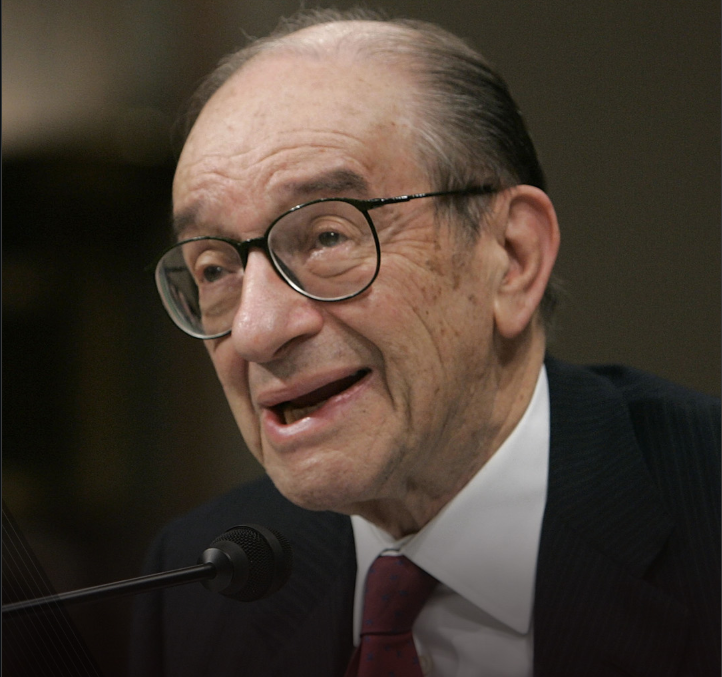
One of the defining characteristics of Greenspan’s leadership was his association with the so-called Great Moderation, a period from the mid-1980s to the early 2000s marked by relatively stable inflation, steady economic growth, and strong equity market performance.
During this time, monetary policy was often credited with reducing volatility in the business cycle, helping the U.S. economy achieve longer periods of expansion with fewer severe downturns. However, this stability was later reexamined as financial imbalances began to emerge beneath the surface, particularly in housing and credit markets.
Financial Crises That Defined His Tenure
Despite the era of stability, Greenspan’s time at the Federal Reserve was punctuated by major financial disruptions. Key events included: The 1987 stock market crash, the 1997 Asian financial crisis, the collapse of the dot-com bubble in the early 2000s, and early signals of the U.S. housing market expansion that preceded the 2008 crisis
Each of these episodes tested the limits of monetary policy and raised questions about how central banks should respond to asset bubbles and financial instability. Greenspan himself famously introduced the phrase “irrational exuberance” in the 1990s to describe excessive investor optimism during the tech stock boom; an expression that remains widely used in financial commentary today.
The 2008 Financial Crisis and the Debate Over Legacy
Although Greenspan left office in 2006, just before the global financial crisis erupted, his policies remained central to debates about its causes. Critics argue that prolonged periods of low interest rates contributed to excessive risk-taking in mortgage lending and the expansion of the subprime housing market.
These conditions eventually played a major role in the collapse of the financial system in 2008. Supporters, however, contend that Greenspan’s framework helped sustain decades of economic growth and that the crisis stemmed from broader systemic failures beyond monetary policy alone. The result is a legacy that remains both influential and heavily debated in economic circles.
Greenspan’s View on Markets and Human Behavior
Early in his career, Greenspan strongly believed in the efficiency of financial markets and placed limited emphasis on behavioral economics. Over time, however, his views evolved significantly. He later acknowledged that human psychology plays a crucial role in economic cycles, particularly during periods of fear and optimism that drive bubbles and crashes.
This shift in thinking helped shape later discussions in economics about behavioral finance, systemic risk, and the limits of predictive economic modeling.
Communication Style and Influence on Global Markets
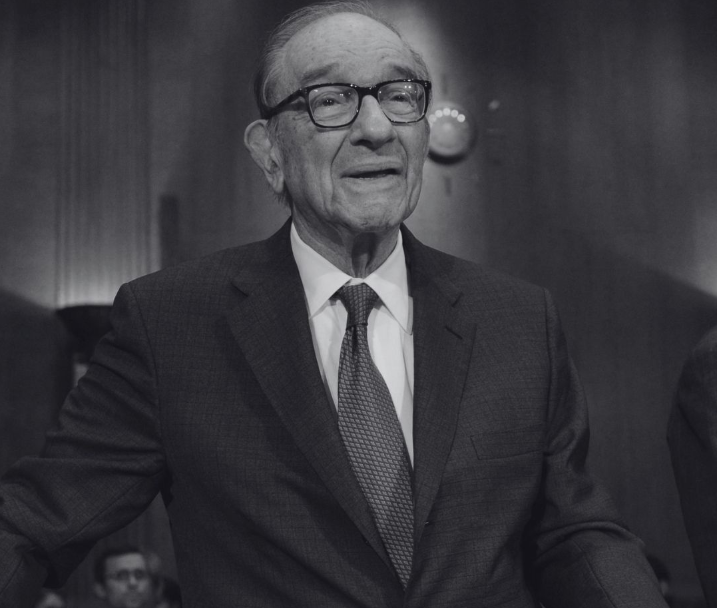
Greenspan became known not only for his policy decisions but also for his famously complex and cryptic communication style. Financial markets often reacted strongly to even subtle changes in his language during congressional testimony or public remarks.
At the same time, he played a major role in increasing transparency at the Federal Reserve, encouraging clearer communication of monetary policy intentions to reduce unnecessary market shocks. His philosophy emphasized that central banks should avoid surprising markets without purpose; a principle that continues to guide modern monetary communication strategies.
Personal Life and Intellectual Influences
Greenspan’s intellectual journey was shaped by a mix of academic training and philosophical influence. He was notably influenced in his early years by novelist Ayn Rand and participated in intellectual discussions that shaped his views on capitalism and individualism.
He later shifted toward a more nuanced understanding of economic behavior, particularly as financial systems became more complex and globally interconnected. In 1997, he married journalist Andrea Mitchell, further connecting his public life to the world of political reporting and media analysis.
The Enduring Impact of Greenspan’s Economic Philosophy
Alan Greenspan’s legacy continues to shape how policymakers, economists, and financial institutions think about interest rates, inflation control, and market behavior.
His tenure represents a defining period in which central banking became a dominant force in global economic stability, but also a subject of intense scrutiny regarding its unintended consequences.
Whether viewed as a stabilizing force or a contributor to systemic risk, his influence on modern economic policy is undeniable. What remains clear is that Greenspan helped redefine the role of central banks in shaping not only markets, but the global economic narrative itself.