Grandmother Killed Inside Texas Home as Tesla Lawsuit Puts Full Self-Driving on Trial
A fatal crash in Katy, Texas, has pushed Tesla back into the center of America’s self-driving safety debate. But this case carries a detail that makes it feel different from many earlier Tesla crash controversies.
The person who died was not driving the car. She was not riding in the car. She was not crossing the street, standing near traffic, or walking along a road.
She was inside a home.
Martha Avila, a woman in her 70s, was killed after a Tesla crashed into her family’s residence. Her daughter, Jennifer Barbour, and son-in-law, Justin Barbour, have filed a lawsuit against Tesla and the driver, seeking at least $1 million in damages. The lawsuit accuses Tesla of defective design and negligence, while also raising serious questions about how the company promotes and deploys advanced driver-assistance technology.
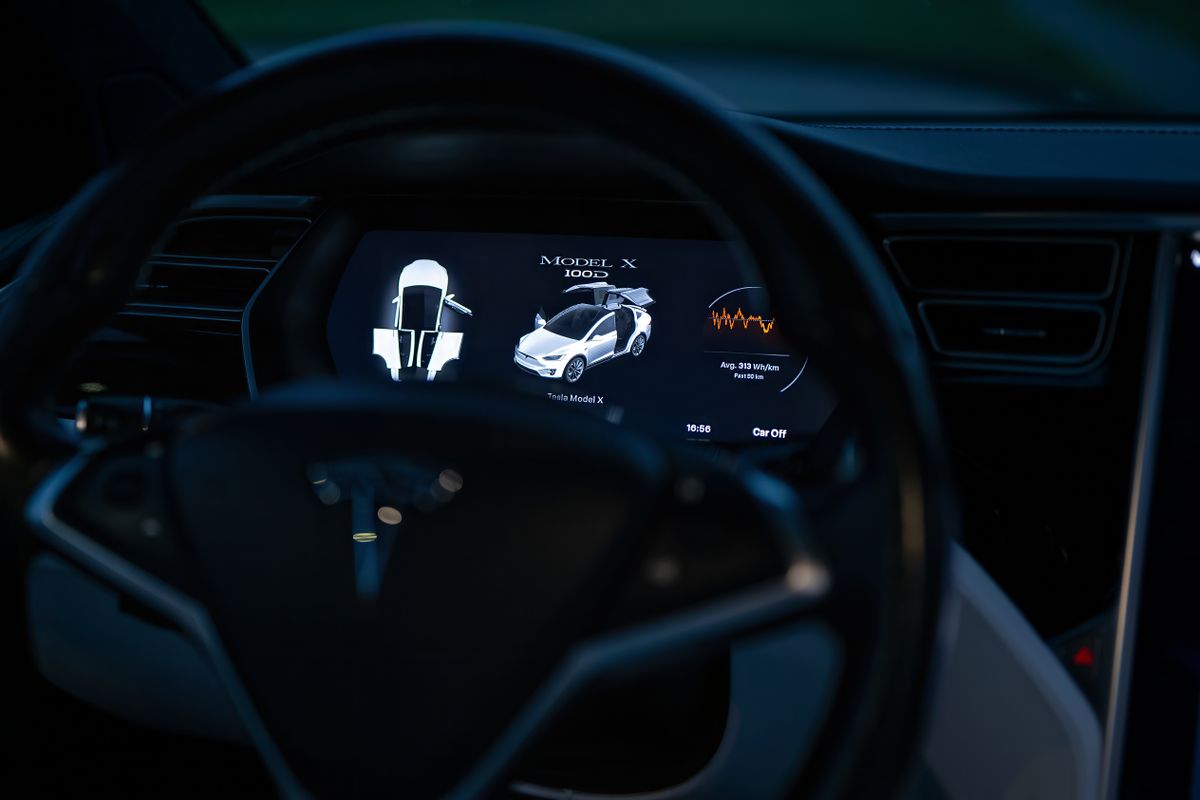
The driver reportedly told police that he was using Tesla’s autonomous or Full Self-Driving technology at the time of the crash. Tesla leaders have pushed back publicly, arguing that the vehicle data does not support the idea that Full Self-Driving caused the collision. Elon Musk wrote on X that the claim “makes no sense,” and Tesla’s AI software chief Ashok Elluswamy said the driver was traveling at 73 mph and had pressed the accelerator fully, overriding the car’s self-driving mode.
That conflict now sits at the center of the case. Was this a driver error? Was it a technology failure? Was it a foreseeable misuse of a system that Tesla marketed too confidently? Or was it some combination of all three?
For the Barbour family, the lawsuit is about grief, accountability, and the death of a mother inside a place that should have been safe. For Tesla, it is another major test of how far the company can go in selling the promise of self-driving while insisting that drivers remain fully responsible.
A Texas Home Became the Crash Scene
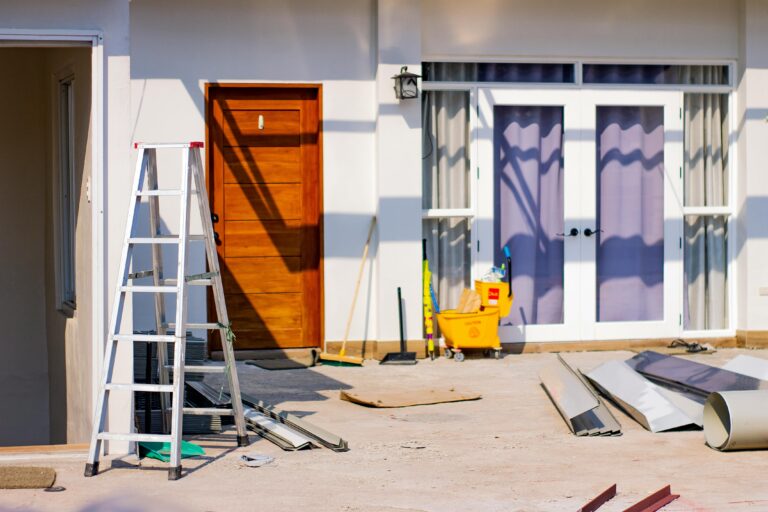
The most haunting fact in this lawsuit is not only that a Tesla crashed. It is where the crash ended.
A residential street is not a freeway. A family home is not a test track. A living room or kitchen is not meant to be the final destination for a high-speed vehicle.
That is why the Katy crash has the power to reach beyond Tesla owners and electric-vehicle enthusiasts. It raises a broader public-safety question: what happens when partially automated driving technology operates in ordinary neighborhoods where the people at risk never agreed to use it?
Martha Avila did not buy the Tesla. She did not activate Full Self-Driving. She did not choose to trust the software. Yet she became the person who paid the highest price.
That detail gives the lawsuit a deeper public meaning. The risk of driver-assistance technology does not remain inside the vehicle. It can move across streets, yards, sidewalks, driveways, and walls. It can reach neighbors, children, pedestrians, cyclists, and families who have no connection to the driver or the car.
This is why the lawsuit may resonate far beyond one Texas community. It shifts the debate from a consumer-choice issue to a public-exposure issue.
The Lawsuit Accuses Tesla of Unsafe Technology and Negligent Promotion
The Barbour family’s complaint argues that Tesla promoted technology that was unsafe for real-world use. It claims the vehicle was operating in a reasonably foreseeable manner with Full Self-Driving engaged when the technology allegedly failed to detect the end of the street, accelerated suddenly, and crashed into the home.
The lawsuit also claims Justin Barbour suffered severe injuries in the crash. The damages sought include compensation for anguish, injury, and medical expenses, as well as exemplary damages based on allegations of gross negligence.
Tesla has not accepted that version of events. The company’s public response has focused on driver behavior, especially the allegation that the driver fully pressed the accelerator and overrode the system.
That disagreement matters because it may shape the entire legal fight. If Tesla can prove the driver manually overrode the system, the company will argue that the crash was caused by human action. If the family can show that the technology was engaged, failed to respond safely, gave unclear warnings, or created dangerous overreliance before the crash, the case becomes more complicated.
The final legal question may not be simply whether the driver or Tesla caused the crash. It may be whether both human behavior and system design played a role.
Tesla’s Defense Centers on Driver Override
Tesla’s strongest public argument is that the driver was allegedly controlling the accelerator at the time of the crash.
According to Elluswamy’s statement on X, the vehicle was traveling at 73 mph, and the driver had pushed the accelerator to 100 percent. He also said the driver continued pressing the accelerator after the impact. If that version is supported by the vehicle’s data, Tesla will likely argue that Full Self-Driving was not the cause of the crash.
This is where Tesla’s data advantage becomes important. Modern Tesla vehicles record detailed information about speed, braking, steering, acceleration, driver inputs, software status, warnings, and disengagement. Those final seconds may become the most important evidence in the case.
But driver override does not automatically end the legal debate.
The family may argue that Tesla should have anticipated driver confusion, misuse, or overreliance. They may argue that a company selling a feature called Full Self-Driving should design stronger safeguards against dangerous behavior, especially in a residential area.
That is the heart of the product-liability fight. A company may argue that a driver misused the product. A plaintiff may argue that the misuse was predictable and should have been designed against.
The Name Full Self-Driving Carries Legal and Public Weight
Tesla’s naming has long been one of the most controversial parts of its automated-driving strategy.
The phrase Full Self-Driving sounds powerful. To many ordinary drivers, it suggests a vehicle that can handle the road on its own. Tesla says the feature requires driver supervision, but the name still creates a tension that critics have challenged for years.
That tension is simple.
The name sounds autonomous. The legal responsibility remains human.
That gap matters because drivers do not interact with technology only through instruction manuals. They also respond to branding, public statements, product demonstrations, online videos, and years of repeated promises about the future of self-driving cars.
When a system can steer, accelerate, brake, navigate, and respond to traffic conditions, drivers may begin to trust it more than they should. The better the system appears in normal conditions, the easier it becomes for a person to relax at the exact moment they should remain alert.
This is not only a Tesla problem. It is a human-factors problem. People are often poor monitors of systems that work well most of the time but can fail suddenly in rare or unusual moments.
The Katy lawsuit gives that problem a human face.
The Case Arrives After Years of Federal Scrutiny
The crash remains under investigation by police in Texas and the National Highway Traffic Safety Administration, the federal agency responsible for auto safety. The National Transportation Safety Board is also reviewing the incident.
That matters because Tesla’s driver-assistance systems have already faced years of regulatory attention.
Federal safety officials have investigated crashes involving Tesla Autopilot and Full Self-Driving features. Lawmakers have also raised concerns about whether Tesla’s public claims give consumers a complete picture of real-world risk.
In 2023, Tesla recalled more than 2 million vehicles in the United States to update Autopilot safeguards after regulators said the system’s controls might not be enough to prevent driver misuse. That earlier recall does not prove anything about the Katy crash, but it gives the lawsuit a broader context.
The family is not simply asking what happened on one Texas street. Their lawsuit points toward a larger question Tesla has faced again and again: Did the company do enough to prevent drivers from over-trusting its technology?
The Hardest Question Is Who Carries the Risk
The Katy crash exposes a difficult truth about partially automated driving.
The person who chooses to use the technology is not always the only person exposed to danger.
A driver may buy the car. A driver may activate the feature. A driver may believe the vehicle can handle more than it actually can. But the consequences of that belief can spill outward to everyone nearby.
That is what makes this case so powerful. Martha Avila was not part of the decision chain. She was not testing Tesla software. She was not depending on Full Self-Driving. She was simply inside a home when the crash happened.
If automated driving technology is going to operate on public roads, then the public becomes part of the safety equation. That includes people who never signed a purchase agreement, never saw a Tesla warning screen, and never agreed to trust a driver-assistance system.
This is where the lawsuit becomes bigger than one company. It asks whether America’s roads and neighborhoods are ready for technology that still depends heavily on instant human correction.
The Evidence Will Likely Come From the Final Seconds
The final seconds before impact may decide much of the case.
Investigators will likely examine the vehicle’s speed, accelerator position, brake input, steering input, system status, driver alerts, disengagement timing, and whether the software recognized the road environment. They may also review the street layout, the vehicle’s path, and the physical evidence from the crash scene.
If the data shows that the driver pressed the accelerator and overrode the system, Tesla will use that evidence aggressively. If the data shows that Full Self-Driving was active, behaved unexpectedly, or failed to clearly warn the driver, the family may have a stronger argument.
There may also be a middle ground. The system may have been engaged before the crash, then overridden by the driver. In that scenario, the legal fight could focus on whether the transition from automation to human control was clear, safe, and properly managed.
That is one of the most important issues in driver-assistance technology. A system can perform much of the driving task, but when something goes wrong, the human must suddenly return to full control. That handoff can be dangerous if the driver is confused, distracted, overconfident, or given too little time to react.
Tesla’s Marketing May Become Part of the Legal Story
Tesla has built much of its brand around technological confidence. Musk has repeatedly promoted the company’s self-driving ambitions, and Tesla has positioned itself as a leader in vehicle automation.
That confidence has helped Tesla sell cars, attract attention, and shape the future of the auto industry. But in court, confidence can become evidence.
The family’s lawyers may argue that Tesla’s public messaging encouraged drivers to believe the technology was more capable than it truly was. Tesla will likely argue that its warnings are clear and that drivers are told to remain attentive and ready to take over.
That clash could become one of the most important parts of the case. The court may have to weigh the difference between formal warnings and real-world consumer perception.
A warning buried in software prompts may not erase the effect of years of branding around Autopilot and Full Self-Driving. At the same time, Tesla may argue that drivers cannot ignore instructions and then blame the company when something goes wrong.
Both arguments will matter. The outcome may depend on whether the court sees the driver’s conduct as an isolated failure or as the kind of behavior Tesla should have expected.
Why This Lawsuit Could Shape Future Self-Driving Claims
The Katy case could influence future lawsuits involving Tesla and other companies developing automated-driving technology.
If the case proceeds, the family may seek internal Tesla documents, safety records, software data, evidence of driver warnings, marketing materials, and information about similar incidents. That discovery process could reveal how Tesla evaluated risk and how much it knew about possible misuse.
Even if the case ends in a settlement, it may still add pressure on regulators and automakers. The crash gives lawmakers and safety advocates a vivid example of the concern they have raised for years: advanced driver-assistance systems may be moving faster than public understanding, legal standards, and regulatory oversight.
For Tesla, the stakes are high. The company is not only defending itself against one lawsuit. It is defending the public credibility of its self-driving vision.
For the wider auto industry, the message is clear. The future of vehicle automation will not be judged only by innovation. It will be judged by what happens when the technology fails, when drivers misunderstand it, and when innocent people outside the car are harmed.
A Family’s Grief Now Sits at the Center of a National Debate
At the center of this lawsuit is a family grieving Martha Avila.
The technology debate matters. The vehicle data matters. Tesla’s statements matter. The driver’s conduct matters. Federal investigations matter. But the human loss is what gives the case its force.
A woman died inside a home. Her family says Tesla and the driver should be held accountable. Tesla says the facts do not support blaming its self-driving technology. Investigators are now working through the evidence.
The country should pay attention because the Katy crash raises one of the hardest questions in modern transportation.
When a car is sold with technology that sounds like the future but still depends on human supervision in the present, who is responsible when the promise hits a wall?
That answer cannot come from branding. It cannot come from social media. It cannot come from confidence alone.
It has to come from evidence, accountability, and a clearer understanding of how much trust these systems deserve on the roads where ordinary families live.