LA’s $1 Million Housing Market Has a New Problem: Global Buyers Are Looking Elsewhere
Los Angeles is still expensive, still famous, and still one of the most recognizable cities on Earth, but the numbers are flashing a warning sign. In just 6 years, the city’s share of international online home-shopping demand fell from 7.9% in Q1 2020 to 4.6% in Q1 2026, while Miami pulled ahead with 10.3% of foreign interest.
The Money Did Not Disappear
That matters because global buyers have not disappeared from U.S. real estate. From April 2024 through March 2025, foreign buyers spent $56 billion on U.S. existing homes, purchased 78,100 properties, and pushed total dollar volume up 33.2% from the previous year. The money is still moving; the uncomfortable question is why less of it appears to be circling Los Angeles.
LA Is Cooling, but It Is Not Cheap
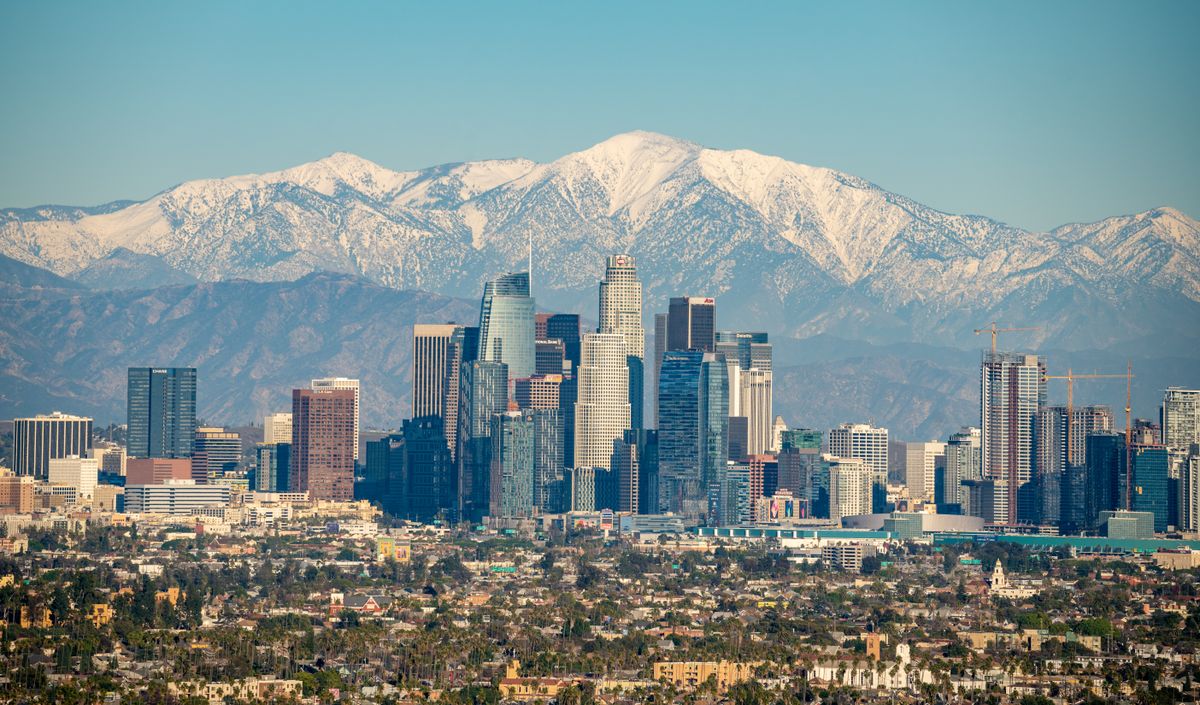
The strange part is that LA is not suddenly cheap. Redfin’s May 2026 data put the city’s median home sale price at $1,049,372, only down 0.72% year over year, with homes still taking about 48 days to sell. In other words, Los Angeles can be losing global heat and still remain brutally expensive for local buyers.
Fewer Foreign Buyers Will Not Rescue Local Families
That is what makes this story bigger than luxury real estate. A city can lose wealthy foreign buyers at the top and still lock out ordinary buyers in the middle, especially when a $1 million median price is far beyond what many teachers, nurses, firefighters, small-business owners, and young families can afford. Fewer international shoppers may cool some high-end bidding, but it does not magically turn LA into a starter-home market.
This Is Really a Confidence Problem
The real story is confidence. When international buyers compare 5 or 6 major U.S. cities, they are not just comparing palm trees, beaches, nightlife, or skyline photos. They are comparing taxes, insurance risk, resale value, public safety, homelessness, climate exposure, political stability, and whether the city feels like a smart 10-year bet.
Miami Is Selling a Cleaner Story
On that score, Miami has become the louder pitch. Florida captured 21% of foreign-buyer destinations in NAR’s latest international buyer report, while California took 15%. That gap does not mean California is finished, but it does show how quickly global real estate money can shift when another state sells a cleaner story around taxes, business climate, lifestyle, and ownership.
Culture Alone Cannot close the Deal
Los Angeles still has the stronger cultural engine in many ways. It has Hollywood, music, fashion, ports, universities, global sports, Pacific Rim business ties, and a creative economy that has shaped American identity for more than 100 years. But culture alone does not close a real estate deal when the ownership math starts looking heavier every year.
Measure ULA Is Changing the Luxury Market
Measure ULA is one of the pressure points buyers and sellers cannot ignore. Starting after June 30, 2026, the city’s thresholds move to $5.4 million and $10.9 million, with a 4% tax on transactions above the first mark and a 5.5% tax at the higher tier. On a $10.9 million sale, that kind of charge is not a footnote; it is a boardroom conversation.
Housing Money Comes With Market Consequences
Supporters argue that LA needs serious money for housing and homelessness, and they have a point because the 2025 homeless count still estimated 43,695 people without housing in the City of Los Angeles. But investors do not look at taxes in isolation. They look at the full stack of costs, and in LA, that stack can include transfer taxes, insurance stress, high maintenance, expensive labor, slow permitting, and neighborhood uncertainty.
Wildfire Risk Is Now Part of the Price
Wildfire risk has also moved from the background to the closing table. Redfin’s Los Angeles climate data says 31% of properties have some wildfire risk over the next 30 years, while 85% of homes face a major heat factor. For a buyer choosing between 3 U.S. markets, that kind of long-term risk changes the conversation from “Do I love this house?” to “Can I protect this asset?”
Insurance Is Becoming a Dealbreaker

Insurance makes that concern more concrete. California’s FAIR Plan reported $750 billion in total exposure as of March 2026, up 242% since September 2022. That does not mean every LA homeowner is in crisis, but it does mean the insurance market has become a headline risk in a state where homeownership was already expensive.
Public Disorder Can Hurt Private Wealth
Then comes the public-space problem. Los Angeles can offer a $5 million view from a hillside home and still struggle with the block-by-block reality of tents, boarded storefronts, open drug use, retail theft concerns, and neglected sidewalks. For global buyers who can choose from 10 wealthy-city options, the private luxury has to compete with the public experience.
The 2028 Olympics Are Not a Magic Wand
The 2028 Olympics should be the city’s biggest reset button in a generation. LA28 has already passed $2 billion in domestic sponsorship revenue, and the overall budget is about $6.9 billion. That should be a massive opportunity to sell Los Angeles again, but the Olympics will not hide what visitors can see from the airport, the freeway, the hotel, the sidewalk, and the neighborhood around the venue.
Homeowners Should Watch the Mood Shift
That is the risk for homeowners, too. A city that looks less attractive to international buyers may eventually face slower luxury sales, more aggressive price cuts, weaker investor confidence, and fewer big-ticket transactions. Even if the median price remains above $1 million, the market’s mood can change long before the headline number fully reflects it.
Local Buyers Should Not Celebrate Too Fast
Local buyers should be careful before celebrating the foreign pullback. If global demand cools but supply remains tight, insurance remains expensive, mortgage payments remain high, and wages lag behind housing costs, the average Angeleno still loses. A softer-than-expected mansion market does not automatically create an affordable 3-bedroom home in the neighborhood where someone’s kids already go to school.
Sellers Can No Longer Count on the Old LA Premium
Sellers should also read the room. The old LA assumption was simple: list the property, wait for the wealthy buyer, and let the address do the work. In 2026, that strategy looks weaker because buyers are asking harder questions about every $100,000 of price, every 1% of tax, every year of insurance uncertainty, and every visible sign that the city is struggling to manage itself.
The Real Rejection Is Not About the House
The sharper angle is this: Los Angeles is not suffering because people forgot it exists. It is suffering because people know exactly what it is and are starting to question the price of believing in it. A city can survive a 0.72% annual price dip, but it should not ignore a 6-year slide in global buyer attention.
LA Needs More Than Another Slogan
The solution is not to chase foreign buyers at the expense of local residents. The solution is to build a city that works for both groups: more housing, faster approvals, safer streets, cleaner public spaces, realistic tax policy, better wildfire preparation, and a homelessness strategy that shows visible results over 12 months, not just promises over 10 years.
The California Dream Now Has a Balance Sheet
Los Angeles has too much going for it to be written off. It has 3 Olympic host moments in its history, a global entertainment machine, a Pacific gateway economy, and neighborhoods that still define the California dream for millions of people. But the dream has a balance sheet now, and buyers from around the world are reading it more carefully.
The Question LA Cannot Avoid
The debate should not be whether LA is still beautiful. It is. The real question is whether a city with $1 million homes, 43,695 homeless residents, a 4%-5.5% high-end transfer tax, and rising climate-insurance pressure can keep asking the world to pay a premium without fixing the basics.
The Bottom Line
Los Angeles does not need another slogan before 2028. It needs a city government, a housing market, and a civic culture that can demonstrate the numbers are moving in the right direction. Because when global buyers start looking elsewhere, they are not just rejecting a house; they are questioning the future of the city around it.