Trump “No Longer Behaving Like Somebody Who Cares,” Haberman Warning Sparks Political Alarm Over Second-Term Direction
Maggie Haberman’s comments on Donald Trump’s governing style raise concerns about political risk-taking after a delayed bipartisan housing bill becomes tied to election legislation.
When Political Instinct Starts to Fade in Plain Sight

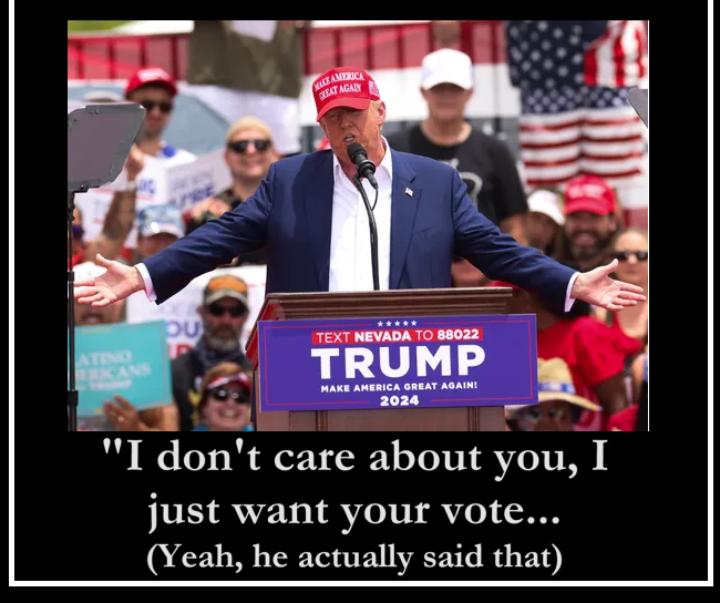
The phrase “Trump no longer behaving like somebody who cares” has quickly become a talking point in Washington after political journalist Maggie Haberman raised concerns about Donald Trump’s current approach to governing. Her analysis was not framed as emotional criticism, but as political interpretation. The core idea is that Trump appears less constrained by traditional political caution and more willing to take decisions that could carry electoral consequences without adjusting course in response to expected backlash.
The debate gained traction after reports that Trump delayed signing a bipartisan housing bill, citing the delay as tied to broader election-related legislation. That move immediately shifted attention from policy delivery to political strategy. Instead of a straightforward economic win focused on affordability, the moment became a test of how far political negotiation can be pushed in real-time governance.
This is where Haberman’s warning enters the conversation. It is not about a single decision, but about what that decision signals in a broader pattern of leadership style and political calculation.
A Housing Bill That Turned Into a Political Bargaining Chip
At the center of the story is a bipartisan housing package designed to address rising costs, limited supply, and long-term affordability pressures across the United States. The bill reportedly had strong support across party lines, making it the kind of legislation that typically moves forward with minimal political friction once passed through Congress.
However, instead of proceeding with a clean signing process, Trump tied the bill’s progress to the SAVE America Act, a separate election-focused proposal. That decision reframed the entire situation. What was expected to be a policy achievement became a point of negotiation between two major political priorities.
Housing is not a minor issue in this context. It sits at the center of voter concern, especially as rent levels, mortgage rates, and housing availability continue to strain household budgets. That makes the handling of any housing legislation politically significant far beyond Washington procedures.
From Policy Win to Strategic Leverage
The reaction in Washington has been divided. Supporters of the move argue it reflects strategic leverage, using the momentum of a broadly supported bill to advance other priorities considered politically essential. From that perspective, linking legislation is not unusual; it is standard political bargaining.
Critics interpret it differently. They argue that turning a bipartisan economic relief bill into a bargaining tool risks undermining public trust, especially when the issue directly affects household finances. The concern is not just about the delay itself, but about what it communicates to voters watching affordability remain a daily pressure.
Haberman’s framing adds another dimension. She suggests the calculation may go beyond immediate political optics. Instead, it could reflect a governing approach that prioritizes long-term structural or ideological goals even if it creates short-term political friction.
Haberman’s Broader Warning About Political Behavior
Maggie Haberman’s commentary, often discussed alongside reporting connected to her book Regime Change, focuses on how Trump’s political environment appears to have shifted in his second term compared to his first.
Reports from outlets such as Axios describe a leadership style that is more instinct-driven and less filtered by traditional advisory restraint. In earlier administrations, presidents often adjusted decisions based on polling signals, media reaction, or electoral timing. The concern raised in this analysis is that those signals may not carry the same influence they once did.
That does not necessarily mean decisions are random or uncalculated. Instead, it suggests a different weighting system in which political risk is acknowledged but not always treated as a limiting factor.
Why the Housing Decision Matters Politically
Housing policy carries direct electoral weight because it affects nearly every demographic group. Renters, homeowners, young voters, and retirees all experience its impact in different ways. When a bipartisan housing bill is delayed, it does not remain an abstract policy issue. It becomes a narrative point in political messaging.
Opponents can frame it simply: relief was available, but delayed for political reasons. Supporters can counter that broader legislative goals require alignment across multiple priorities. Both narratives can coexist, but the clarity of the issue makes it politically sensitive.
This is why Haberman’s observation has drawn attention. It suggests the administration may be operating with less emphasis on avoiding that kind of electoral framing.
The Midterm Reality Republicans Cannot Ignore
For Republican lawmakers, the challenge is not just policy alignment, but voter perception. In competitive districts, affordability issues often outweigh ideological debates. Housing costs, in particular, have become one of the most immediate and visible economic concerns for voters.
If voters perceive that widely supported relief measures are being delayed due to unrelated political negotiations, it can create a messaging disadvantage. Even if the strategy is defensible in legislative terms, the political interpretation may still carry weight at the ballot box.
Haberman’s warning indirectly highlights this tension. It is not simply about Trump’s decisions, but about how those decisions interact with broader electoral dynamics.
Power Politics Versus Political Consequence
At its core, this debate is about how power is being used and how political consequences are being weighed. The housing bill episode illustrates a governing style that prioritizes leverage, negotiation strength, and long-term objectives even when it risks short-term political comfort.
Whether that approach proves effective or costly remains unclear. What is clear is that it reflects a shift in how decisions are being framed and executed within the current political environment.
Haberman’s comment resonates because it captures uncertainty at the center of that shift. It suggests a presidency operating with fewer traditional political guardrails, where decisions are shaped more by strategic ambition than by caution alone.
As Washington continues to process these moves, one question remains central: Is this a sign of political strength born of confidence or of political vulnerability born of overreach? The answer will likely be written not in commentary, but in voter response.