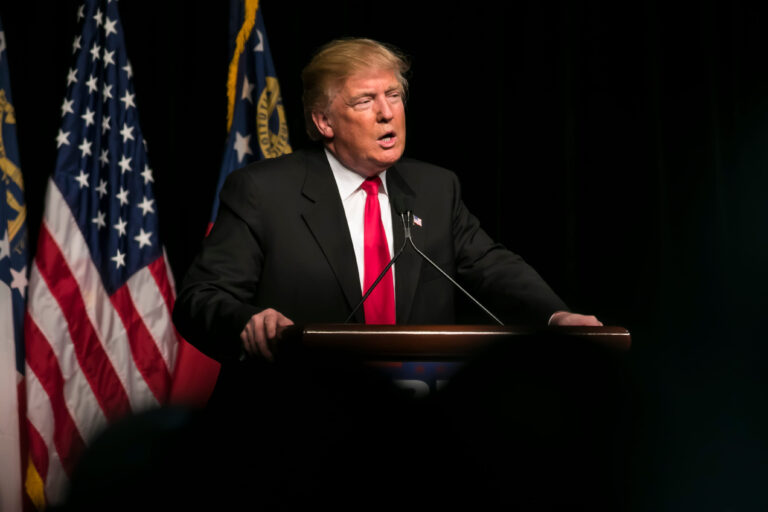
Trump, Natalie Harp, and the Quiet Architecture of Proximity Inside the White House
A Rainy Day Appearance That Reveals More Than It Shows
A rainy Sunday outing featuring Donald Trump, 80, and White House aide Natalie Harp, 34, has drawn attention not simply for the optics, but for what it reveals about how influence quietly moves inside the modern presidency.
The scene was ordinary on the surface. A presidential visit to Trump National Golf Club in the Washington, D.C., suburbs. A walk through Lafayette Square earlier in the day. Staff nearby, conversations in motion, routine movement through familiar spaces.
But inside that ordinariness sits a deeper pattern that defines how this White House operates. Power is not only expressed through policy or public address. It is also shaped through proximity, repetition, and the individuals who remain closest during unstructured moments.
In that space, Natalie Harp has become more than an aide in the background. She represents something increasingly central to understanding Trump’s political environment: the human infrastructure of attention.
Natalie Harp’s Role Inside the Inner Circle Ecosystem

Natalie Harp serves as a Special Assistant to the President and Executive Assistant, a role that places her near the center of Trump’s daily operational flow. On paper, that title is administrative. In practice, proximity inside a presidential workspace often carries influence that far exceeds formal designation.
Harp has been repeatedly described in reporting as a constant presence around Trump, especially during informal transitions between meetings, travel, and periods of media consumption.
That pattern matters because presidential decision environments are rarely structured. They are fragmented into moments between calls, briefings, media clips, and social media reactions. Whoever occupies those gaps helps shape what becomes visible and what fades away.
In that sense, Harp’s position is not defined by a single function. It is defined by continuity. She is part of the connective tissue that holds together Trump’s fast-moving information ecosystem.
The Information Filter Effect: What Reaches the President First
One of the least-discussed but most powerful dynamics within any presidency is the “first exposure effect.” The first piece of information a leader sees often shapes the emotional and political framing of everything that follows.
Inside Trump’s environment, aides who manage printed material, digital headlines, and curated stories effectively participate in a quiet form of filtering.
Reports have previously described Harp as delivering printed articles, selected media content, and favorable coverage into Trump’s orbit. While routine in appearance, this type of role sits at the core of how presidential perception is formed.
We are not talking about policy drafting. We are talking about attention direction.
- What story appears first in the morning stack
- What headline is physically placed within reach
- What narrative is reinforced during downtime
- What criticism never reaches direct view
This creates a soft but persistent shaping mechanism. Not persuasion through argument, but influence through sequencing.
In modern political communication, sequencing is power.
Emotional Infrastructure: The Invisible Layer of Leadership Support
Beyond information flow lies another layer often ignored in political reporting: emotional infrastructure.
Presidents do not operate in emotional isolation. They rely on a network of aides who stabilize tone, reinforce confidence, and mirror the urgency of the moment.
Within that context, Harp’s reported presence is frequently described as highly engaged and consistently attentive. Whether in formal meetings or informal movement through White House spaces, she is part of the emotional atmosphere surrounding Trump’s daily rhythm.
This is not about personality speculation. It is about function.
In high-pressure political environments, emotional reinforcement becomes a form of operational support. It influences:
- How decisions are framed
- How messages are delivered
- How quickly reactions escalate
- How external events are interpreted
When viewed through that lens, proximity becomes more than access. It becomes stabilized.
The Media Loop Engine Inside Trump’s Political System
Trump’s political identity is inseparable from media response cycles. Statements, posts, and reactions often move in rapid loops between external reporting and internal amplification.
Inside this system, aides who monitor media content play a critical role in maintaining the cycle.
The structure can be described as:
External media publishes coverage.
Internal aides surface selected narratives.
Trump reacts publicly or digitally.
Reaction becomes new media content.
The cycle accelerates and repeats.
In this loop, aides are not passive observers. They are part of the transmission system.
Natalie Harp’s reported role in surfacing favorable stories and assisting with digital messaging places her inside this feedback engine. The result is a political communication system that is continuous rather than episodic.
It does not wait for press briefings. It reacts in real time.
Proximity Economy: How Access Becomes Political Currency
Inside any presidential administration, access is not evenly distributed. It operates like an economy with its own internal currency.
In this environment:
- Attention is currency
- proximity is capital
- Trust is leverage
- Repetition is accumulation
Natalie Harp’s presence near Trump across multiple settings public appearances, travel, informal movement places her in the highest tier of this proximity economy.
Importantly, this does not require formal authority. Influence can emerge from consistency rather than title.
Aides who are always present during transitions between structured events often become part of the decision atmosphere itself. They are not in the room by exception. They are in the space by default.
That difference matters more than it appears.
Gatekeeping Without Formal Authority
One of the most structurally significant aspects of modern executive environments is the rise of informal gatekeeping.
Not gatekeeping through official office designation, but through:
- timing control
- document prioritization
- attention management
- conversational filtering
In such systems, influence can exist without formal accountability.
This creates a paradox at the center of Harp’s public visibility:
She holds a defined staff role, yet her proximity allows her to help shape what enters and leaves the president’s immediate sphere of attention.
That is not unusual in presidential history. It is, however, often invisible until media attention brings it into focus.
The Dependency Loop Between Leader and Aide
Highly personalized political environments often generate mutual dependency loops.
For the aide:
- Access defines relevance
- Proximity defines influence
- Visibility defines career trajectory.
For the leader:
- Consistency defines trust
- Reinforcement defines stability
- Information flow defines reaction speed.
When both sides begin to rely on this structure, the relationship becomes self-reinforcing.
Not in emotional terms alone, but in operational terms.
This is where modern political staffing differs from traditional bureaucratic models. The system is less about hierarchy and more about continuous presence.
White House Response and Institutional Framing
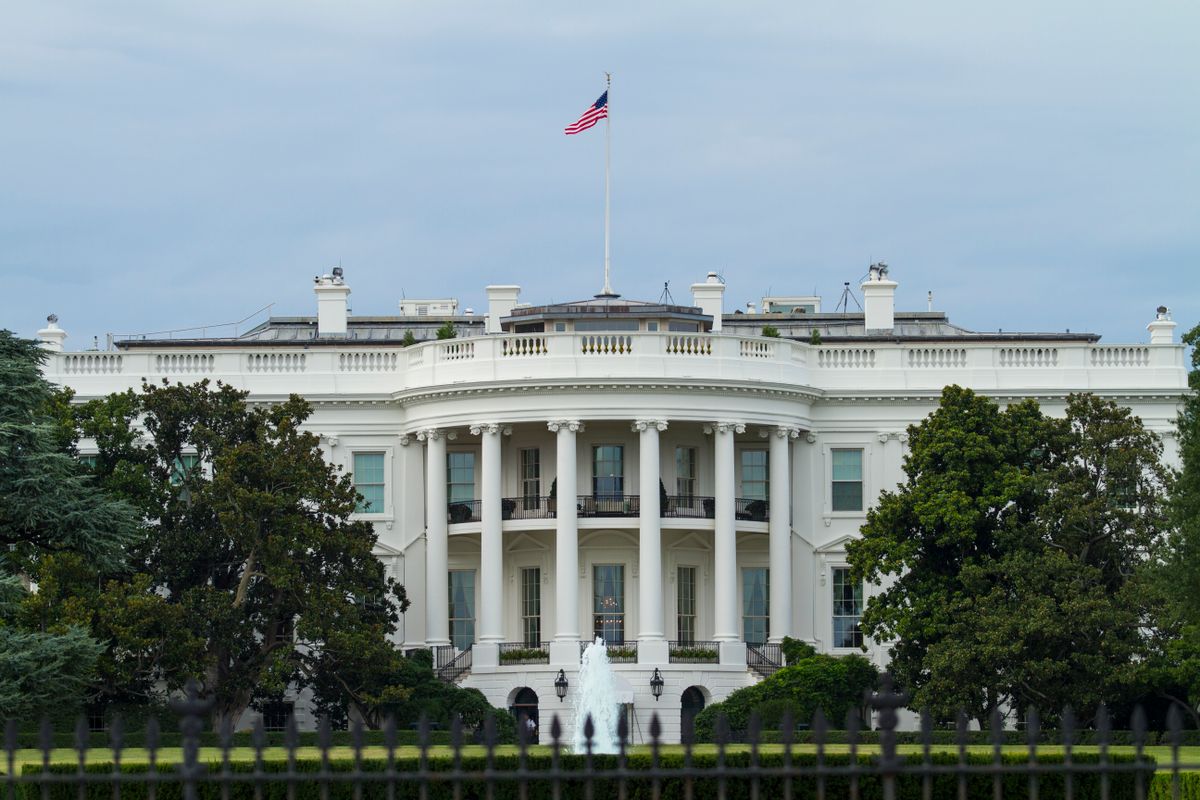
The White House has publicly defended Harp, describing her as a loyal and hardworking member of the presidential team.
That framing serves a stabilizing function. It redirects attention from speculation toward institutional normalcy. In any administration, staff proximity to the president is often more complex than outside observers can fully capture.
What remains clear is that Harp’s role is not ceremonial. It is embedded in the daily operational rhythm of Trump’s presidency, where communication speed, media response, and information selection intersect constantly.
The Larger Pattern: Presidential Power in the Age of Continuous Attention
The Harp story is ultimately not just about one aide. It reflects a broader transformation in how presidential power functions in the digital age.
Leadership is no longer limited to scheduled decision points. It is continuous, reactive, and shaped by constant input.
In that environment, the individuals closest to the flow of information become structurally significant.
Not because they issue orders.
But because they shape what the leader sees first, hears most often, and reacts to most quickly.
That is where modern political influence increasingly lives.
A System Built on Presence, Not Just Position
The rainy Sunday outing may appear ordinary. But inside the architecture of Trump’s White House, it reflects something more enduring.
Power today is not only about who holds formal authority. It is about who remains present as decisions form, who stands closest when information arrives, and who helps shape the rhythm of attention itself.
Natalie Harp’s visibility is not the story’s endpoint. It is the entry point into a larger system where proximity becomes influence, and influence often begins long before any official decision is made.