Panic on New York’s East River as Seaplane Carrying 10 Makes Emergency Water Landing
A Frightening Scene on the East River Ends Without Reported Injuries
A routine flight turned into a frightening rescue Sunday after a seaplane carrying 10 people was forced into New York City’s East River, sending emergency crews racing toward the aircraft as stunned witnesses watched from the shoreline. The incident happened around noon on Sunday, July 5, 2026, according to emergency officials. Early reports described the aircraft as having gone down in the river, but authorities later characterized it as a hard landing that left the plane tilted in the water with part of one wing submerged. The most important update came quickly: everyone on board was rescued, and no injuries were reported.
Videos shared from nearby buildings and along the waterfront showed the white seaplane sitting low in the river as rescue boats surrounded it. A helicopter could be seen circling above while emergency crews worked around the aircraft. The image was alarming, especially for people watching from Williamsburg, Manhattan, and other waterfront neighborhoods, but the response appeared to move quickly and successfully. The FDNY said the plane remained upright and was being towed back to the dock after the incident. That detail matters because water landings can turn dangerous fast when an aircraft flips, sinks, or traps passengers inside. In this case, the plane stayed visible and reachable long enough for responders to remove everyone safely.
What We Know About the East River Seaplane Incident
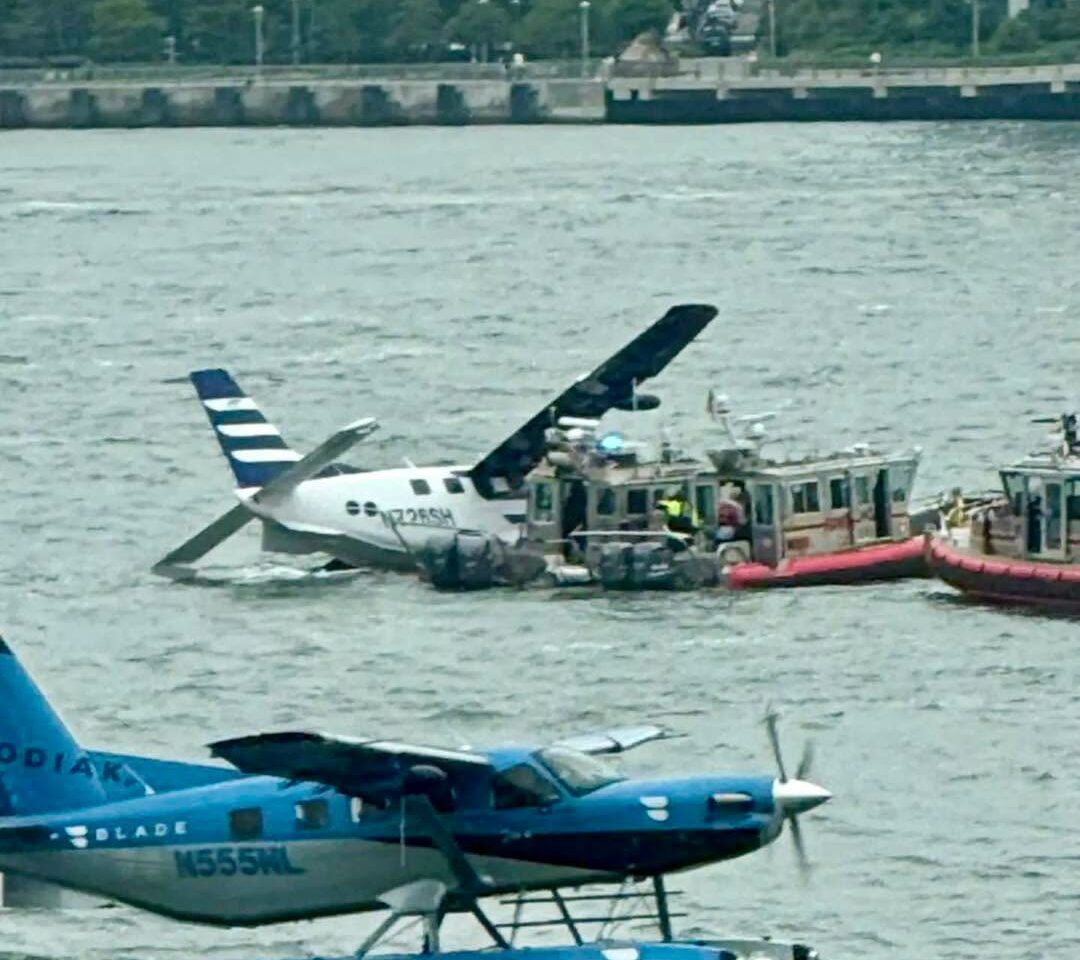
We know the aircraft was a seaplane, a type of small aircraft designed to take off from and land on water. New York City has a long history of seaplane operations, especially around the East River, where private and commuter style flights have used waterfront access points for decades. The aircraft was carrying 10 people when it made the rough landing. Earlier reports gave different passenger counts, but later information from emergency officials placed the number at 10. The plane came down in the river shortly after noon, and emergency responders moved in from multiple directions.
Footage from the scene showed the plane leaning to one side, with the tip of the left wing appearing to touch or sink into the water. That kind of angle can look dramatic even when the aircraft is still floating. For passengers, though, the experience would have been terrifying: a sudden hard landing, cold river water around the plane, emergency sirens, circling aircraft, and boats racing toward the scene. Officials have not yet released a confirmed cause. At this stage, there is no verified public finding showing whether the rough landing was caused by weather, water conditions, mechanical trouble, pilot decision-making, or another factor. That part remains under review. What is clear is that the outcome was far better than it first looked. A small aircraft in the East River can quickly become a major emergency, but this incident ended with all passengers safely evacuated.
Why the East River Is a Challenging Place for Emergency Landings
The East River is not a quiet stretch of open water. It is a narrow tidal strait lined by dense neighborhoods, bridges, ferry routes, sightseeing traffic, private vessels, and commercial activity. Conditions can change quickly because of currents, wakes, wind, and boat movement. That makes any aircraft incident there especially serious. A seaplane is built for water operations, but it still needs a stable landing surface and enough room to settle safely. A hard landing can damage a float, wing, engine, propeller, or fuselage. If the aircraft takes on water, the situation can shift from rescue to recovery within minutes.
Sunday’s incident drew attention because the aircraft appeared to be stranded in the river, not simply floating at a dock or taxiing normally. The emergency response reflected that risk. Rescue boats moved toward the plane, and aerial support monitored the situation from above. For New Yorkers, the scene immediately brought back memories of other aviation emergencies on city waterways. New York’s rivers have seen both miraculous rescues and deadly crashes. That history is one reason any report of a plane in the water gets an immediate and serious response.
Emergency Crews Move Fast as Witnesses Watch From the Waterfront
Witnesses along the waterfront posted stunned reactions as the rescue unfolded. Some said they could see the aircraft from nearby buildings. Others described the moment as shocking because it looked, at first glance, like a full crash into the river. That public reaction was understandable. The East River runs through the middle of daily New York life. People live beside it, commute across it, jog along it, dine near it, and ride ferries through it. When a plane suddenly appears disabled in the water, the scene becomes impossible to ignore.
Emergency crews responded with the kind of speed expected in New York City. The FDNY and other responders have extensive experience with water rescues, ferry emergencies, marine incidents, and aviation-related calls. In a case like this, every minute matters. Passengers must be removed, the aircraft must be stabilized, boat traffic must be controlled, and responders must make sure fuel, debris, or shifting currents do not create new hazards. That everyone on board was rescued without any reported injuries is the central point of the story. It means responders reached the aircraft quickly, passengers were accessible, and the plane did not sink before the rescue could be completed.
Hard Landing, Crash, or Water Emergency?
In the first minutes after an aviation emergency, words often move faster than confirmed facts. Social media users may call it a crash because that is what it looks like from a distance. Early news alerts may use the same word because an aircraft is visibly down in the water. Officials may later use more precise language, such as hard landing, rough landing, or incident.
That distinction matters.
A crash usually suggests a more violent impact or serious damage. A hard landing can still be dangerous, but it does not always mean the aircraft lost control completely or broke apart. In this case, emergency officials described the seaplane as making a hard or rough landing, remaining upright, and later being towed back to dock.
That does not make the event minor. Any aircraft emergency on the East River is serious. But the available facts point to a frightening landing that ended in rescue, not a mass-casualty aviation disaster.
What Investigators Will Likely Examine Next
The next questions will focus on why the seaplane came down the way it did. Investigators and aviation officials typically look at several areas after an incident like this: the aircraft’s condition, maintenance history, weather at the time, water surface conditions, pilot communications, flight path, passenger load, and whether any mechanical warning appeared before landing.
They may also review videos from witnesses, radio traffic, GPS data, and statements from the pilot and passengers. If the aircraft was operating commercially, officials may also examine the operator’s records and procedures. At this point, no official cause has been released. That should be treated carefully. A dramatic video can show what happened after impact, but it cannot prove why the aircraft came down hard. Until aviation authorities complete their review, the cause remains unconfirmed.
A Safe Ending After a Dramatic New York Aviation Scare
For the passengers aboard the seaplane, Sunday’s flight ended in a way no traveler wants to experience: surrounded by river water, rescue boats, and the eyes of a city watching from shore. But it also ended with the result everyone hopes for in an emergency: all 10 people made it out safely. The East River scene looked frightening. The response was urgent. The images were dramatic. But the final confirmed outcome was relief, not tragedy.