Florida Beach Tragedy: Swimmer Killed by Lightning During Family Vacation at Fort Myers Beach
A Sudden Lightning Strike Turned a Beach Day Into a Fatal Emergency
A summer afternoon at Fort Myers Beach, Florida, turned into a scene of panic and heartbreak after a powerful lightning strike hit the water, killing one swimmer and injuring three others in front of stunned beachgoers. The deadly strike happened on Friday, July 3, 2026, near Fort Myers Beach, where families and vacationers had gathered for what should have been a normal day by the Gulf. Instead, a violent bolt of lightning hit the water while people were swimming, triggering a frantic rescue effort as witnesses rushed to help and emergency crews raced to the shoreline. One man, later identified as 51-year-old Viktar Kiryk, died after the strike, while three family members were taken to the hospital and reported to be in stable condition.
The tragedy unfolded with almost no time for people nearby to process what was happening. Witnesses described an explosive flash, a crushing sound, and children running from the beach in fear. One beachgoer said the strike sounded like “an atomic bomb”, a chilling phrase that has since defined the horror of the moment. What makes the incident even more painful is the setting. Fort Myers Beach is known for warm Gulf water, vacation crowds, and family getaways. For Kiryk and his family, the stop at the beach was where an ordinary swim turned into an unimaginable loss.
Fort Myers Beach Lightning Strike Leaves One Dead and Three Injured
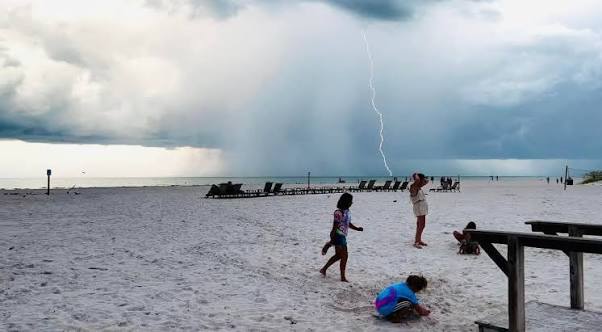
First responders were called to the beach after reports that lightning had struck swimmers in the Gulf of Mexico. When crews arrived, they found Kiryk unresponsive. Bystanders had already begun lifesaving efforts, including CPR, before emergency personnel took over. Despite those efforts, he was pronounced dead at the scene. Three others who were in the water were transported to a hospital for treatment. The injured victims were reportedly family members who had been in the water when the lightning struck. Their survival brought some relief, but the death of Kiryk left the beach shaken and his family devastated. The event was not a distant storm story or a warning on a weather app. It happened in the water, in front of people who had been enjoying the beach moments earlier.
A vacationer with medical training reportedly joined the emergency effort, helping administer CPR and using an AED while responders were on the way. That detail shows how quickly strangers became part of the rescue attempt, but it also underlines how severe lightning injuries can be. In cases like this, even immediate action may not be enough when the strike is direct or extremely close. For witnesses, the emotional shock was instant. The beach shifted from laughter, swimming, and summer noise to screams, confusion, and emergency response. People who came to relax were suddenly watching a family fight through the worst moment of their lives.
Witnesses Describe a Terrifying Blast Near the Shoreline
The most haunting accounts came from beachgoers who saw or heard the strike from nearby. The lightning did not feel like distant weather. It felt close, violent, and overwhelming. One witness described a blinding flash and a blast so intense that people nearby were stunned by the sound and brightness. Another account described children running from the beach after the strike, screaming as adults tried to understand where the lightning had landed and who had been hurt.
That kind of eyewitness reaction is common in severe lightning events because lightning can strike suddenly and travel through water, wet sand, metal objects, and nearby surfaces. At a beach, the danger is amplified because people are often exposed, spread out, barefoot, wet, and far from strong shelter. Fort Myers Beach is especially busy during holiday periods, and early July brings heavy crowds to Florida’s coast. Many visitors are focused on the water, not the sky. But lightning does not require rain directly overhead to become dangerous. A storm can still pose a serious threat even when conditions appear only partly unsettled from the shoreline. The witness descriptions are a brutal reminder that lightning can turn a beach into a danger zone in seconds.
Why Swimming During a Thunderstorm Is So Dangerous
Lightning and water are a deadly combination. The National Weather Service warns that no place outside is safe when thunderstorms are in the area, and if you can hear thunder, lightning is close enough to strike. Its safety guidance is direct: people should move immediately to a substantial building or an enclosed, metal-topped vehicle when they hear thunder, and they should stay sheltered for at least 30 minutes after the last sound of thunder. The CDC also warns people to avoid water during thunderstorms and advises beachgoers to seek shelter in a safe, enclosed area if they hear thunder or see lightning. The agency specifically notes that even if blue sky is visible, danger can remain, and outdoor activity should not resume until at least 30 minutes after the storm has passed.
That warning matters because many people wait too long. They wait until the rain becomes heavy. They wait until lightning looks closer. They wait until lifeguards clear the beach. They wait because they believe they can finish one last swim. That delay can be deadly. At the beach, the safest move is not to watch the storm approach. It is to leave the water immediately, move away from the shoreline, and seek proper shelter. Picnic shelters, umbrellas, beach tents, open pavilions, and palm trees do not provide reliable protection from lightning.
A Family Vacation Becomes a Florida Sea Tragedy
Kiryk’s death carries an especially painful weight because he was reportedly vacationing with his family when the lightning struck. What should have been a short stop to cool off became a fatal accident that left relatives injured and one man gone. That is why this story has hit so many readers hard. It is not just a weather report. It is a warning wrapped inside a family tragedy. A father, husband, relative, or loved one can walk into the water on a vacation afternoon and never walk back out.
The beach is often treated as a place where danger feels manageable. People know to watch for rough surf, deep water, heat, and strong currents. Lightning can feel less immediate because it comes from the sky and may seem distant until it strikes. But Florida is one of the most lightning-prone states in the country, and summer storms can develop quickly along the coast. Visitors who are not familiar with local storm patterns may underestimate how fast the weather can shift. A sunny or partly cloudy beach can become dangerous long before rain begins pouring.
The Warning for Beachgoers After the Deadly Strike
This tragedy leaves one message that cannot be softened: get out of the water when thunder or lightning appears. The safest choice is not to wait for someone else to move first. It is not to assume the storm will pass offshore. It is not to stand under a palm tree or crowd into a beach hut. The safest choice is to leave the open beach and get into a building or a hard-topped vehicle. Authorities and weather experts repeat the same rule because it saves lives: when thunder roars, go indoors. If people followed that rule every time, many lightning injuries and deaths could be prevented.
For Fort Myers Beach, the deadly strike is now part of a painful holiday weekend memory. For the family involved, it is not a safety lesson or viral headline. It is the day a loved one died in the water during a trip that was supposed to bring joy. A man is dead. Three others were injured. Witnesses are left shaken by a blast they will likely never forget. And a Florida beach that should have been filled only with summer noise became the scene of a tragedy no family should ever have to endure.