RAF Fairford’s $500m Expansion Raises Local and Strategic Questions
RAF Fairford is once again at the center of a much larger conversation about Britain’s role in American military operations.
The Gloucestershire air base, long known for hosting US heavy bombers and the Royal International Air Tattoo, is now facing fresh scrutiny after reports of nearly $500 million in planned US-backed infrastructure investment.
The scale of the proposed work has alarmed South Cotswolds MP Roz Savage, who has asked the UK government for clearer answers about what the expansion means, how long intensified operations may continue, and what local residents should expect in the years ahead.
The Ministry of Defense has insisted that infrastructure upgrades do not automatically signal a change in the base’s long-term role, but the timing has sharpened public concern.
Why RAF Fairford Matters to the US Military
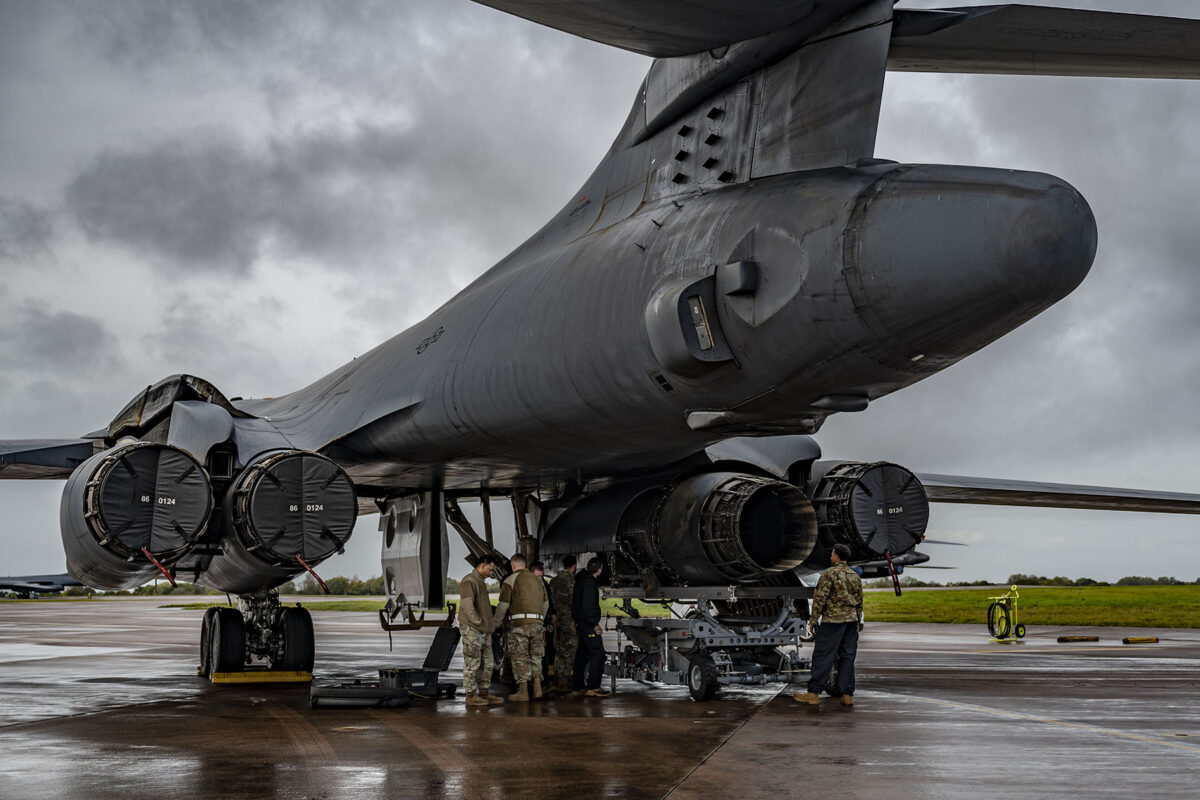
RAF Fairford is not an ordinary airfield. The base is operated as a key forward location for American air power in Europe, with the 420th Air Base Squadron based there to receive, bed down, and sustain deployed forces.
The US Air Force describes RAF Fairford as USAFE’s only bomber forward operating location, capable of supporting full-spectrum flying operations for US and NATO missions.
That role explains why the base has repeatedly hosted aircraft such as the B-52H Stratofortress, B-1 Lancer, and B-2 Spirit. A 501st Combat Support Wing document states that Bomber Task Force deployments bring those airframes to RAF Fairford and allow bombers to conduct higher-headquarters missions alongside European partners.
For Washington, Fairford offers reach, runway capacity, and allied access. For the Cotswolds, it brings noise, disruption, security concerns, and economic dependence on both military activity and aviation tourism.
The $500m Question Hanging Over Gloucestershire
The reported investment forms part of a much wider US upgrade program across major UK bases.
ADS Advance reported that the US Air Force is preparing a $4.2 billion investment program across RAF Lakenheath, RAF Mildenhall and RAF Fairford, covering airfield infrastructure, maintenance facilities, munitions storage, utilities and operational support.
Nearly $500 million is expected for RAF Fairford, including completion of a large hangar complex and housing renovation to support additional aircrew.
Savage’s concern is simple: projects of that size rarely look temporary. A large hangar complex, upgraded housing, and expanded support facilities suggest planning for sustained activity rather than a short-term operational spike.
Her argument is not that the base appeared overnight or that residents were unaware they lived near a military installation. It is that the character and intensity of its use may be changing without enough public explanation.
The MoD’s position is more cautious. It says US Visiting Forces infrastructure decisions are made by the United States in support of defense requirements, and that periodic upgrades are normal across defense sites to keep facilities safe, effective, and fit for purpose.
Both things can be true at once. Bases need maintenance. But a $500 million upgrade still deserves democratic scrutiny, especially when operations affect nearby homes, businesses and public life.
Iran Operations Put Fairford Back in the Spotlight
RAF Fairford’s profile has risen sharply because of US operations linked to Iran. The Royal International Air Tattoo, scheduled for July 17–19, 2026, was canceled due to military operations related to the war in Iran.
The event usually attracts more than 150,000 visitors a year and is held at RAF Fairford.
That cancellation made the issue visible far beyond defense circles. RIAT is not only an aviation show; it is a major summer economic event for hotels, pubs, restaurants, shops, taxi firms, and local workers across the region. When the airshow disappears, the economic loss spreads quickly.
For residents, the concern is more immediate. Heavy bombers are not discreet aircraft. Take-offs can shake homes, fuel smells can drift across communities, and night-time operations can turn hot summer evenings into restless nights.
Savage has described residents as worn down by the noise and inconvenience, while also acknowledging that many local people have long maintained good relationships with American personnel living in the area.
That distinction matters. The public frustration is not necessarily anti-American. It is about transparency, accountability, and quality of life.
The Local Trade-Off: Security, Jobs and Disruption
RAF Fairford sits at the intersection of national security and local tolerance. Strategically, it gives the US and NATO a rare European platform for long-range bomber operations. Locally, it changes the rhythm of rural life.
The benefits are real. Military personnel and families spend money in nearby communities. Base activity supports contractors, suppliers, and services.
Aviation events bring international visitors and valuable tourism revenue. Defense infrastructure can also create construction and maintenance opportunities.
The costs are just as real. Noise, fumes, traffic pressure, canceled public events, and uncertainty over future operations all fall most heavily on people living closest to the base.
The central issue is not whether RAF Fairford has military value. It clearly does. The question is whether residents and local representatives are being given enough information about the future shape of that value.
What Transparency Should Look Like
The UK government does not have to disclose operational secrets to improve trust. It can still explain the broad purpose of infrastructure upgrades, publish clearer environmental and local-impact assessments, outline community engagement plans, and clarify how decisions involving US Visiting Forces are reviewed.
A better public process would answer practical questions. Will bomber activity remain at current levels? How will noise be monitored? What compensation or support exists for businesses hurt by RIAT’s cancellation? What planning permissions are required for the new hangar complex? How will local councils be consulted? What limits apply to US operations launched from British soil?
Without those answers, the $500 million figure becomes a symbol of something larger: a sense that major strategic decisions are being made over the heads of the people most affected.
The Bigger Picture for Britain’s US Air Bases
RAF Fairford is part of a broader American military footprint in Britain. Alongside RAF Lakenheath and RAF Mildenhall, it helps anchor US air operations across Europe, the Middle East and Africa.
The House of Commons Library has noted that operational use of UK bases by US forces requires approval from both governments, although the detailed arrangements remain confidential.
That confidentiality is where political tension grows. In ordinary times, the public may accept limited detail. During active conflict, rising defense spending and visible base expansion, the demand for clarity becomes harder to dismiss.
RAF Fairford’s future is therefore not just a Gloucestershire story. It is a test of how Britain manages allied military power on its own soil.
The base may remain essential to Western defense planning, but local consent cannot be treated as a minor administrative detail.
A $500 million investment may strengthen runways, hangars, and operational capacity. Whether it strengthens public confidence depends on what the UK government chooses to explain next.