Why Britain Can’t Hold Onto Prime Ministers As The Economy Keeps Breaking the Cycle
Britain has developed a strange political habit: prime ministers don’t last long, but the economic problems always do. That pattern is once again in the spotlight after Keir Starmer stepped down as UK prime minister following less than two years in office, triggering yet another leadership transition in Westminster.
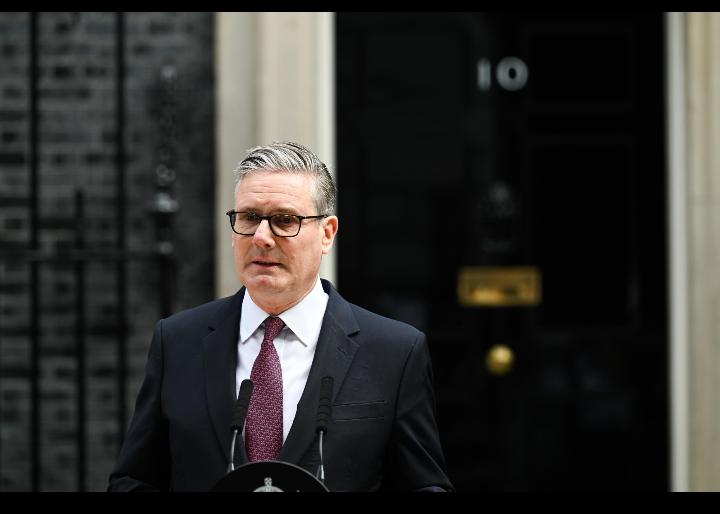
This time, Andy Burnham is widely expected to emerge as the next leader if Labor’s internal process unfolds as anticipated. But while the political headlines focus on personalities and power shifts, the deeper story is not about who sits in Downing Street. It is about why sitting there has become so unstable in the first place.
And increasingly, the answer circles back to one thing: the economy.
A Job That Keeps Breaking Its Occupants
Being UK prime minister has started to resemble a high-pressure job with impossible expectations and very little room for error. Over the past decade, leaders have fallen for very different reasons, but the economic backdrop has been the constant pressure point underneath them all.
Theresa May was consumed by Brexit negotiations that paralyzed governance. Boris Johnson faced a political scandal layered atop post-pandemic inflation shocks. Liz Truss triggered a market panic with an aggressive tax-cut plan that collapsed within weeks. Rishi Sunak attempted to stabilize the economy but struggled to convince voters that economic pain was easing. Now Starmer exits after failing to deliver the fast economic improvement many households expected.
Each leader had a different style, but the underlying challenge never changed: weak growth, stubborn inflation effects, and a cost-of-living crisis that refuses to fade quickly.
As Raoul Ruparel, UK economist at Boston Consulting Group, put it in comments cited by CNN: “Everything comes back to the economy.”
That line captures the core truth of modern British politics. Elections are no longer decided solely by ideology or leadership personality. They are decided by whether people feel life is getting easier or harder.
And right now, many Britons feel it is still too hard.
The Economy Behind the Political Instability

At first glance, the UK economy is not collapsing. Inflation has cooled relative to its peak, and wages have grown. But the deeper picture is more uncomfortable when you zoom in.
According to the Office for National Statistics, average regular pay (excluding bonuses) rose by 3.4% in the February to April 2026 period. However, when adjusted for inflation using CPIH, real wage growth was only 0.1%. In other words, pay is barely keeping pace with rising costs.
For households, that difference is everything. It means salaries technically rise, but purchasing power barely moves.
Public finances tell a similar story. The Office for Budget Responsibility expects the UK tax burden to reach a historic high later this decade. That creates a political contradiction: the state is collecting more money, but many citizens still feel public services are stretched, and living standards are under pressure.
Meanwhile, borrowing remains elevated. The ONS reported UK public sector net borrowing at £23.3 billion in May 2026 alone—£5.4 billion higher than the same month a year earlier. Interest payments on debt also remain high, limiting fiscal flexibility for whoever is in power.
On the growth side, the IMF has projected UK expansion of around 1% for 2026. That is positive, but still modest compared to what would be needed to significantly raise living standards or ease fiscal pressure.
Business confidence adds another layer of concern. S&P Global’s June PMI showed the UK private sector slipping below the 50 threshold that separates growth from contraction. The composite reading of 49.4 indicated shrinking activity, with services weakening and new orders falling at the fastest rate since the pandemic recovery phase.
S&P Global economist Chris Williamson warned that political uncertainty is weighing on confidence and delaying investment decisions. That matters because businesses don’t just react to policy; they react to stability. When leadership looks uncertain, spending slows.
As Ben Harrison of the Work Foundation noted in CNN’s coverage, cost-of-living pressures remain the dominant concern for voters. Ipsos polling ahead of local elections also showed 62% of voters naming living costs as their top issue. That consistency is politically powerful and dangerous for any government.
Why Every New Leader Faces the Same Wall
The expectation that a new prime minister will “fix things” quickly is now colliding with economic reality. Structural issues in the UK economy do not change with leadership:
- Productivity growth remains weak.
- Housing supply remains tight.
- Energy and food costs remain sensitive.
- Public services face persistent funding pressure.
- Global economic conditions remain uncertain.
This means even competent governments struggle to deliver visible improvements within short political cycles.
That is why leadership changes often feel dramatic in Westminster but underwhelming in daily life. A new prime minister can shift tone, reshuffle priorities, or announce new strategies, but cannot instantly raise productivity or erase years of fiscal constraints.
Ruth Gregory, deputy chief UK economist at Capital Economics, told CNN that the government had “good ideas,” but warned that delivery remains the key weakness. That distinction is crucial. Britain is not short of policy ideas. It is short of execution speed and measurable results.
The Confederation of British Industry has also stressed that economic challenges will not disappear simply because leadership changes. Businesses, it argues, need consistency more than political reinvention.
And that is where the next leader, likely Andy Burnham if the expected transition holds, will face the same structural test that defeated predecessors.
Even Chancellor Rachel Reeves has emphasized stability, arguing that fiscal discipline is essential for maintaining investor confidence. But discipline alone does not solve the political problem. Voters also want a visible improvement in daily life.
That tension is at the heart of Britain’s leadership cycle: markets want stability, voters want relief, and governments must somehow deliver both at the same time.
The Real Problem Isn’t Who Leads Britain, It’s What Britain Is Growing Into

It is tempting to view Britain’s repeated changes of prime minister as a political drama. But underneath it is something more systemic.
Britain is operating in an environment of low growth, high expectations, and tight fiscal space. That combination creates a constant pressure cooker for any leader, regardless of party or personality.
When living standards stagnate, even slightly, political patience erodes quickly. When taxes are high but services feel stretched, frustration builds. When businesses hesitate to invest, job creation slows. And when households don’t feel progress, leadership becomes the first target for blame.
That is why UK prime ministers now feel temporary, even when they arrive with strong electoral mandates. The system is demanding outcomes faster than the economy can realistically produce them.
As Raoul Ruparel summarized, everything returns to the economy. Not because politicians lack ideas, but because economic performance ultimately decides whether those ideas feel real or irrelevant.
So Britain’s revolving door of prime ministers may continue. But unless growth, productivity, and living standards shift meaningfully, the faces in power will keep changing faster than the underlying story does.
And that story, for now, is not about who leads Britain.
It is about whether Britain itself can feel like it is moving forward again.