USS George Washington Enters South China Sea as China-Philippines Tensions Reach a Dangerous New Level
The South China Sea was already crowded with coast guard cutters, naval patrols, fishing fleets and vessels carrying out competing national missions. Now, one of the most powerful symbols of American military reach has entered the picture.
The USS George Washington Carrier Strike Group was operating in the South China Sea on July 22, with F-35C fighter jets conducting flight operations from the nuclear-powered aircraft carrier. The deployment places a major U.S. naval force in contested waters at a moment when confrontations between China and the Philippines are becoming more frequent, more physical and increasingly difficult to contain.
A Carrier Group Arrives at a Volatile Moment
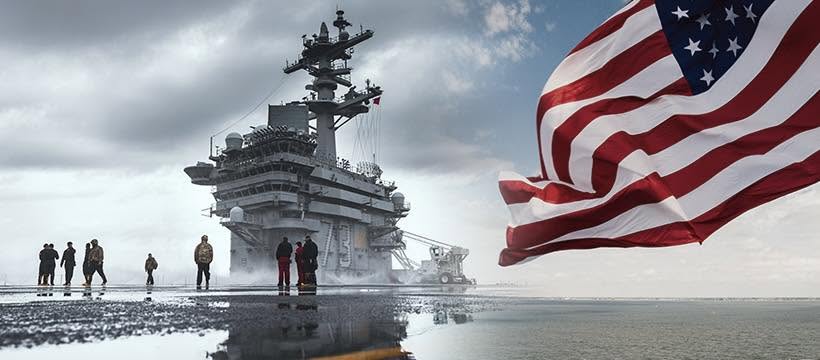
The USS George Washington is the flagship of Carrier Strike Group 5 and the U.S. Navy’s forward-deployed aircraft carrier based in Japan. Its presence is supported by Carrier Air Wing 5 and escorting warships equipped for air defense, anti-submarine warfare and long-range maritime operations.
The strike group includes the guided-missile cruiser USS Robert Smalls and the destroyers USS Shoup and USS Benfold. On July 24, the American ships trained with Japan’s JS Yūdachi, underscoring that U.S. naval deployments are increasingly connected to broader regional partnerships rather than conducted in isolation.
The Navy described the George Washington’s activities as routine operations within the U.S. 7th Fleet area. However, routine does not mean insignificant. An aircraft carrier brings fighter aircraft, surveillance systems, missile defenses and thousands of personnel into a single mobile force capable of operating for extended periods without relying on a nearby land base.
There is no official evidence that the carrier group entered the South China Sea specifically in response to the latest China-Philippines confrontation. Still, its arrival immediately after several dangerous encounters gives the deployment unmistakable strategic weight.
Recent Clashes Have Raised the Stakes
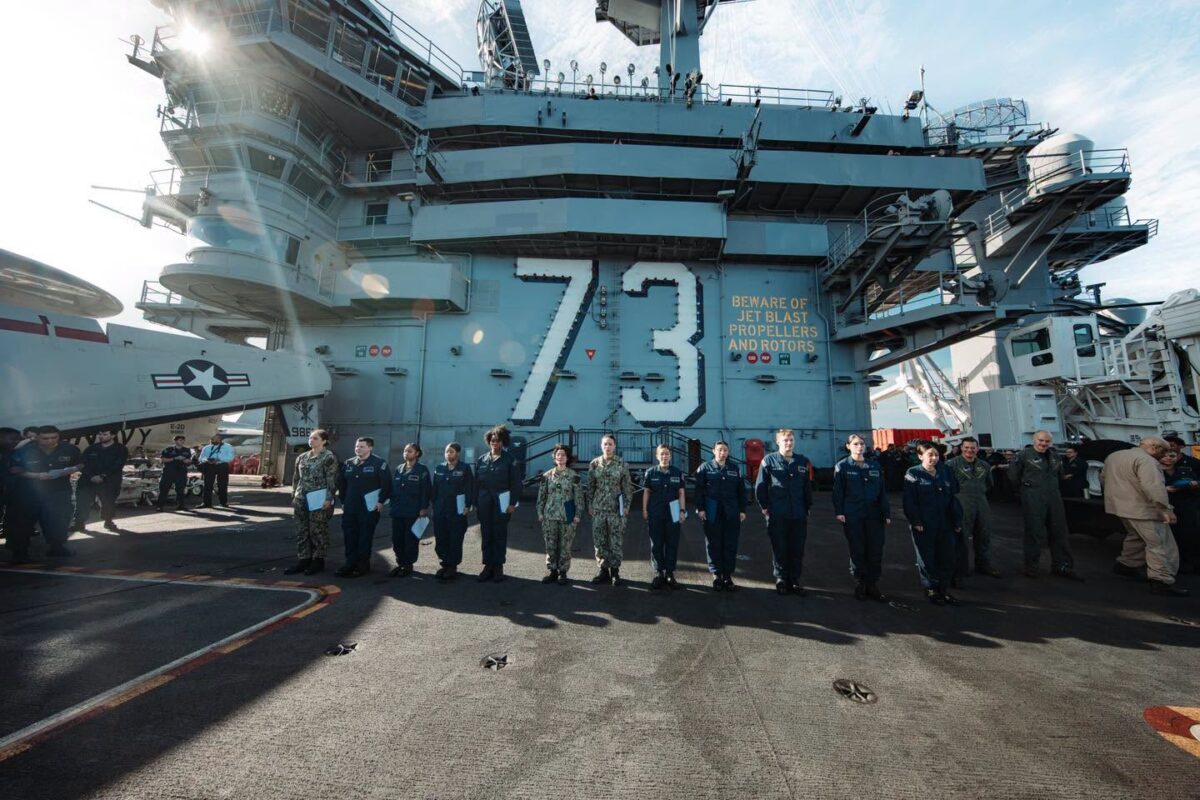
The carrier’s operations followed a July 20 confrontation near Second Thomas Shoal, where the Philippines maintains a military outpost aboard the grounded BRP Sierra Madre.
Philippine officials said Chinese Coast Guard personnel struck Filipino sailors with wooden poles during the encounter. Two Philippine personnel were reportedly injured. China rejected Manila’s account, accusing Philippine personnel of attacking first and saying Philippine vessels rammed a Chinese patrol boat.
The dispute soon widened. Philippine government fisheries vessels operating near Scarborough Shoal were hit with water cannons during confrontations on July 23 and 24. The Philippine Coast Guard also accused a Chinese vessel of approaching within about 7 meters, creating what it described as a serious risk of collision.
Beijing said it had taken lawful measures after Philippine vessels entered waters claimed by China. Chinese officials warned Manila to end what they called provocative activities.
These competing stories reveal one of the region’s greatest dangers. Both governments present themselves as defending lawful rights. Both accuse the other of starting confrontations. With crews operating at close range, a shove, collision or misjudged maneuver could suddenly become a military crisis.
Alliances Are Moving From Agreements to Action
While the George Washington conducted flight operations, the Philippines, United States and Japan completed a five-day maritime exercise from July 21 to 25.
The drills brought together warships, coast guard vessels, helicopters, surveillance planes and fighter aircraft. Activities included communications exercises, replenishment operations, formation maneuvers, deck-landing training and cross-deck aviation operations.
For Manila, such exercises demonstrate that it is no longer confronting Chinese pressure alone. For Washington, they show that its alliances can produce coordinated forces capable of operating together. Japan’s participation adds another layer to the regional security network developing around the Philippines.
The United States and the Philippines are bound by their 1951 Mutual Defense Treaty. Washington and Manila have repeatedly stated that the treaty applies to armed attacks against their armed forces, aircraft and public vessels, including coast guard ships, anywhere in the Pacific, including the South China Sea.
That commitment is meant to deter an attack. Yet every confrontation forces officials to consider a difficult question: At what point does aggressive Coast Guard behavior constitute an armed attack requiring an allied response?
Deterrence and Escalation Now Share the Same Waters
China has condemned the expanding military cooperation. The People’s Liberation Army’s Southern Theater Command accused the Philippines of bringing foreign powers into the dispute and said Chinese naval and air forces had conducted their own patrols in response.
Beijing claims sovereignty over most of the South China Sea. The Philippines, Vietnam, Malaysia, Brunei and Taiwan hold overlapping claims in parts of the region.
A 2016 international tribunal ruled that China’s sweeping claims based on historic rights had no legal foundation under the United Nations Convention on the Law of the Sea. China rejected the ruling, while the Philippines, United States, Japan and several other governments continue to describe it as final and legally binding.
The USS George Washington’s presence is therefore about more than firepower. It is a floating declaration that the United States intends to remain militarily engaged and that its commitments to regional allies are backed by visible capability.
But deterrence carries its own danger. More warships, patrol aircraft and coast guard vessels mean more opportunities for miscalculation. The South China Sea is becoming a test of whether powerful countries can demonstrate resolve without losing control of events.
For now, the carrier group’s mission remains peaceful. Its aircraft are flying, its escorts are training, and its commanders are emphasizing regional stability. Yet the message moving across the water is impossible to miss: The sea is more crowded, the alliances are more active, and the distance between confrontation and conflict may be narrowing.