GOP Rift Deepens as John Kennedy Moves to Block Jan. 6 Rioters From $1.8 Billion Fund
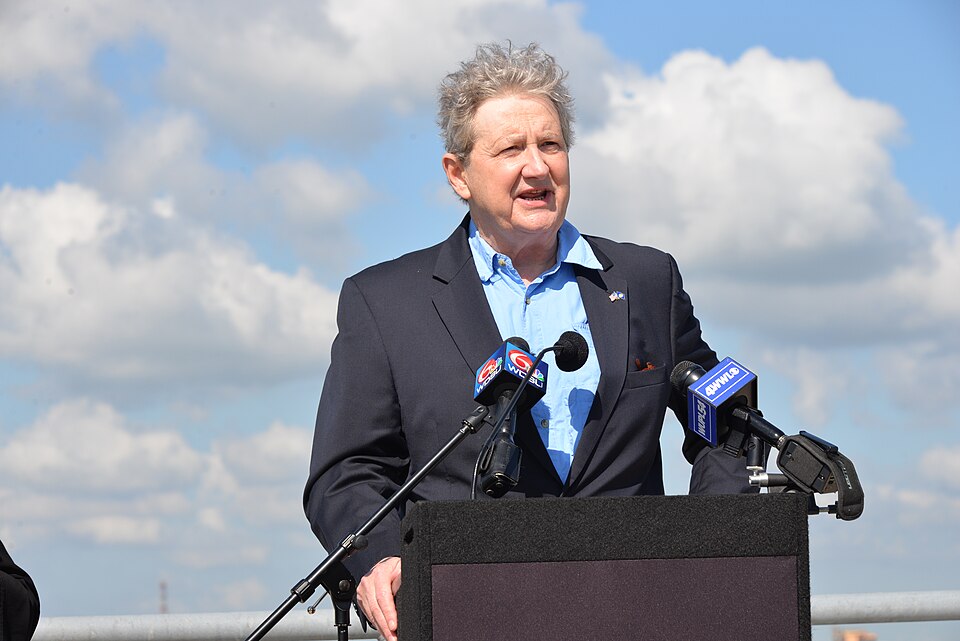
A fight over a proposed $1.776 billion government compensation fund is opening a fresh divide inside the Republican Party, with Sen. John Kennedy drawing a firm line against allowing people who stormed the U.S. Capitol or attacked police officers on Jan. 6, 2021, to receive money.
The Louisiana Republican said he would not give the Trump administration a “blank check” to determine who qualifies for payments under any revived anti-weaponization program. Kennedy said he would review potential legislation, but made clear that Capitol rioters and people who assaulted law enforcement should be excluded.
His position adds another influential Republican voice to a dispute that has already complicated Todd Blanche’s nomination to become attorney general.
A Fund Built Into a Trump Settlement
The controversy began with a Justice Department settlement connected to President Donald Trump’s lawsuit against the Internal Revenue Service over the disclosure of his tax information.
Under the agreement announced in May, Trump, his adult sons and the Trump Organization would receive a formal apology but no direct damages. In exchange, the government created an Anti-Weaponization Fund intended to hear claims from people who said federal power had been used against them for political, ideological or personal reasons.
The Justice Department said the fund would receive $1.776 billion from the federal Judgment Fund. A five-member panel appointed largely by the attorney general would review claims and could award apologies or monetary compensation.
The original structure imposed no partisan eligibility requirement and called for quarterly reports to the attorney general. Claims processing was scheduled to end by Dec. 1, 2028, with unused money returning to the federal government.
That broad language immediately raised alarms on Capitol Hill. Critics feared the money could reach Trump allies, including defendants prosecuted for their roles in the Jan. 6 attack.
Earlier congressional testimony also left open the possibility that anyone claiming political mistreatment could apply, even people accused or convicted of violence at the Capitol.
Kennedy Draws a Clear Boundary
Kennedy’s intervention does not amount to full support for the fund. Instead, he appears open to examining a narrower law with stronger limits, oversight and eligibility rules.
He also pointed to the Federal Tort Claims Act, which already allows some people to seek compensation from the federal government for misconduct committed by federal employees.
His central message was that a new compensation program cannot treat every politically charged prosecution as equivalent. People who peacefully challenged government conduct would present a different case from those who breached the Capitol or attacked officers trying to defend it.
That distinction matters because Trump has repeatedly portrayed many Jan. 6 defendants as victims of an unfair justice system. After returning to office, he granted clemency to more than 1,500 people charged in connection with the attack.
Several Republican senators, however, have resisted the idea that pardons should be followed by taxpayer-funded compensation, particularly for people convicted of violence against police.
Blanche’s Confirmation Gets Caught in the Fight
The fund has become the biggest obstacle facing Blanche, who is serving as acting attorney general while seeking Senate confirmation for the permanent position.
Republican Sens. John Cornyn of Texas and Thom Tillis of North Carolina have demanded written assurances that the original fund will not move forward. They have also sought clarification about tax-audit protections contained in the broader settlement.
The Senate Judiciary Committee previously held Blanche’s nomination rather than advancing it, according to the committee’s July 23 record. With Democrats opposed, losing even a small number of Republican votes could prevent the nomination from clearing the closely divided panel.
Blanche had told lawmakers that the fund was effectively dead. The Justice Department also provided language saying the May order establishing it would be rescinded.
Cornyn and Tillis continued pressing for stronger written guarantees because Trump kept defending the idea publicly.
Trump’s Reversal Raises the Stakes
Trump said Friday that officials had agreed not to proceed with the fund, even as he argued that people prosecuted by the Justice Department deserved compensation.
One day later, he threatened to push Congress to pass an anti-weaponization bill if senators refused to confirm Blanche. Trump also said Blanche could remain in an acting capacity while the nomination stayed pending.
That reversal transformed a complicated settlement dispute into a direct test of Republican loyalty. Kennedy’s position offers a possible middle route: consider claims involving genuine government abuse, but write firm exclusions into law before taxpayer money is distributed.
The larger question is whether Congress can create a compensation process that voters view as fair rather than partisan. Kennedy’s warning shows that even Republicans sympathetic to concerns about government overreach may be unwilling to let the Jan. 6 attack disappear behind the language of political victimhood.
As the fight over Blanche’s nomination continues, the dispute is no longer only about one government official. It is about who counts as a victim, who must accept responsibility, and whether the federal government should ever compensate people who turned political anger into violence.