Max Miller Said He Was Protecting His Daughter. His Defense Exposed Her Instead
The Max Miller child image controversy began with a promise of protection and ended with a child’s private information exposed to strangers. Rep. Max Miller said he was speaking as a father who wanted to defend his daughter and answer allegations made by his former wife. Yet the files he promoted reportedly included her name, medical details, family photographs, and a sensitive image that should never have reached a public audience.
That contradiction has transformed the story. Miller had hoped to challenge domestic abuse allegations that he denies, but his response created a second crisis built on facts that are far less disputed. The public release happened, the sensitive material appeared inside it, and Miller’s attorney later accepted responsibility for the failure.
The incident now reaches beyond one careless upload. It raises questions about how political power can magnify private harm, how quickly digital disclosures become permanent, and whether a public official showed sound judgment under pressure. It also leaves Republican leaders with an uncomfortable choice as Miller continues his reelection campaign in Ohio.
The promise of protection became the story’s central contradiction

Before sharing the files, Miller appeared in a livestream and framed the release as an act of parental responsibility. He said the effort was not mainly about defending himself, but about protecting his daughter. That statement gave moral weight to what followed and invited the public to judge his actions against his own stated purpose.
The problem is that the release produced the opposite result. A folder linked to Miller’s social media audience reportedly contained sensitive information about the child, including a photograph connected to an earlier inquiry into an injury. The Max Miller child image controversy therefore rests on a simple and damaging contrast between what he said he intended and what his decision helped cause.
Political controversies often turn on disputed motives, incomplete records, and competing testimony. This one also includes an acknowledged disclosure that can be evaluated without resolving every allegation in Miller’s divorce and custody conflict. The central question is no longer only whether Miller’s former wife’s claims are true, but whether his chosen defense showed the restraint expected from a member of Congress.
A toddler became collateral in an adult struggle for control
The child at the center of the Max Miller child image controversy had no role in the political decisions surrounding her. She could not consent to the release of her image, medical information, or custody-related details. She also had no power to limit the audience once those records entered a public folder promoted by an elected official.
The sensitive photograph reportedly came from a February 2025 exchange between Miller and Emily Moreno about an injury to their daughter. Moreno said she noticed a bruise while bathing the child, and Miller asked to see a picture. The child was later found to have a broken collarbone, and a police investigation ended without charges.
That context matters because it shows how a private family record acquired a political life. The photograph was created during a medical and parental concern, not for public distribution or campaign messaging. When it appeared inside the released archive, the child’s vulnerability became part of an adult effort to win control of the public narrative.
The lawyer’s apology narrows blame but not responsibility

Miller’s attorney, Aaron Minc, said he was responsible for reviewing and preparing the documents before their release. He apologized after the sensitive image was discovered and said he had missed the final pages of a document that ran more than 40 pages. He described the failure as unintentional and said he corrected the file as soon as he learned what had happened.
That explanation addresses the immediate redaction error. It does not fully answer why such a broad collection of divorce, custody, medical, and family records was placed online in the first place. The Max Miller child image controversy is therefore larger than a missed page or an incomplete review.
Minc’s apology may protect Miller from being portrayed as the person who personally failed to redact the image. Still, Miller promoted the archive, framed its purpose, and used his public platform to drive attention toward it. A lawyer may have handled the technical process, but the political strategy belonged to the congressman who decided that mass disclosure would strengthen his defense.
Digital exposure does not end when a file disappears
The public folder was later corrected, but removal does not restore privacy once material has circulated online. Social media posts can be copied, files can be downloaded, and images can be stored without the original publisher ever knowing. That reality gives the Max Miller child image controversy a lasting dimension that no apology can erase.
Emily Moreno’s attorneys said the post linking to the archive had received more than 204,000 views by Monday afternoon. That figure does not prove that every viewer opened the folder or saw the image. It does show that the release traveled through a large public channel before the mistake was repaired.
Digital culture has repeatedly shown that deletion is not the same as retrieval. Courts can seal documents, publishers can remove links, and platforms can suspend access, but none of those steps guarantee that private material has vanished. For the child involved, the risk is not limited to one day of exposure because unknown copies may continue to exist beyond the reach of her parents, lawyers, or the government.
Miller’s counterattack became a test of political judgment
Miller released the material to persuade the public that allegations against him were false or misleading. He denied the abuse accusations and sought to present messages, recordings, and images that he believed would support his position. In that sense, the archive functioned as a political counterattack during a moment of serious personal and electoral pressure.
Yet the method of self-defense may now matter as much as the claims he was trying to rebut. Voters often learn more about public officials during crises than during prepared speeches or campaign appearances. The Max Miller child image controversy offered a direct look at how he used power, information, and publicity when his reputation was under threat.
The decision also raises a proportionality question. Miller had access to attorneys, court procedures, investigators, and congressional channels that could review evidence without placing family records before a mass audience. By choosing public release, he increased the chance that private information would be mishandled and that his daughter would become visible inside a political fight she did not choose.
A private custody battle became public political content

Most family disputes remain inside courtrooms, legal filings, and private negotiations because the material often involves children, medical information, and intimate allegations. Miller’s position as a member of Congress gave him a much larger platform than most parents involved in custody litigation. That platform turned a private conflict into national political content.
The conversion was deliberate even if the sensitive disclosure was not. Miller appeared publicly, explained his reasons, and directed followers toward an archive designed to influence public opinion. The Max Miller child image controversy emerged because political communication techniques were applied to material that carried unusually high privacy risks.
This episode also reflects a wider trend in modern politics. Public officials increasingly bypass traditional media and release raw documents, videos, and messages directly to followers, often presenting unfiltered material as proof of transparency. The practice can create the appearance of openness, but it can also eliminate editorial safeguards that might otherwise protect minors, victims, or uninvolved relatives.
The House Ethics request may widen rather than contain the crisis
Miller responded to the growing pressure by saying he would ask the House Ethics Committee to investigate him. He presented the move as evidence that he had nothing to hide and expected a full review to clear his name. The request allowed him to cast himself as a public official inviting scrutiny rather than avoiding it.
However, an ethics inquiry is not controlled by the person who requests it. The committee decides whether to open a review, what evidence to examine, and how broadly to interpret the conduct at issue. The Max Miller child image controversy could therefore become part of a wider examination that extends beyond the allegations Miller hoped to challenge.
Questions could include who selected the documents, who reviewed them, whether official or campaign resources supported the release, and how the child’s information was handled. None of those questions prove that Miller violated House rules. They do show why a self-requested investigation may create new lines of scrutiny instead of delivering the narrow vindication he seeks.
Bernie Moreno’s anger turned the scandal into a Republican family war
Sen. Bernie Moreno’s condemnation has given the story unusual political force. Moreno is not only a Republican senator from Ohio, but also Miller’s former father-in-law and the grandfather of the child whose information was exposed. His criticism combines family anger with a direct challenge to Miller’s fitness for office.
Moreno had already said Miller should no longer serve in Congress before the sensitive image became public. After the release, he expressed outrage that strangers might now possess the photograph and rejected the idea that the incident could be dismissed as a simple mistake. His words deepened the Max Miller child image controversy by making it impossible to treat the dispute as ordinary partisan criticism.
The family relationship changes how voters may hear the accusation. Moreno is close enough to the conflict to carry personal knowledge, although that closeness also means he is not a neutral observer. Still, a Republican senator publicly declaring that a fellow Republican and former family member is unfit creates a level of internal damage that opposition attacks rarely achieve on their own.
Ohio Republicans face a choice with no clean outcome
The timing of the crisis places Republican leaders under additional pressure. Ohio’s ballot rules create tight deadlines for replacing a congressional nominee, and Miller has continued to insist that he will remain in the race. The Max Miller child image controversy therefore affects not only his reputation but also the party’s ability to manage the seat.
Keeping Miller means carrying the dispute through the general election. The campaign would likely face continuing questions about the abuse allegations, the child’s privacy, the attorney’s apology, the Moreno family feud, and any ethics review that may follow. Each new development could consume attention that Republican candidates would prefer to direct toward policy and turnout.
Replacing him would bring a different set of risks. Party officials would need to act quickly, choose another candidate, and explain why the nominee changed after voters had already selected Miller. Even in a district that favors Republicans, an abrupt replacement can weaken organization, confuse supporters, and give Democrats an opening they might not otherwise have enjoyed.
Trump’s support cannot reverse a privacy failure
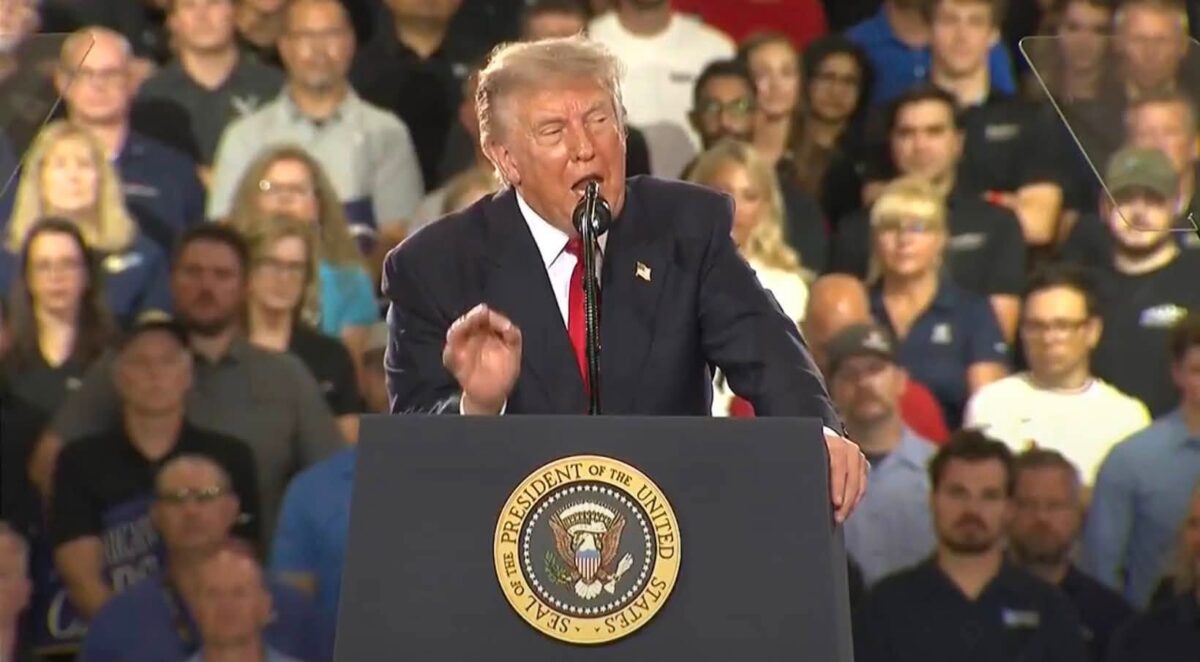
Miller has said that President Donald Trump called him and did not ask him to leave the race. Trump had previously endorsed Miller, who worked in his first administration, and his position carries substantial influence inside the Republican Party. That relationship may help Miller resist pressure from party officials who want a cleaner candidate.
Yet presidential support cannot resolve the most damaging part of the Max Miller child image controversy. Trump can question the allegations, defend Miller’s right to respond, or decline to demand his withdrawal. He cannot make the released information private again.
This limit matters because political loyalty often solves problems that are mainly partisan. A strong endorsement can reassure donors, discourage challengers, and consolidate voters. It cannot repair a privacy breach involving a child, especially when the breach arose during the candidate’s own attempt to control the story.
The scandal reveals the danger of raw-document politics
The Miller case belongs to a larger political culture that treats document dumps as a shortcut to credibility. Candidates and public officials increasingly release screenshots, audio files, emails, and legal records in the belief that volume proves honesty. The more material they publish, the more they can claim that they are letting the public see everything.
That strategy can be persuasive because many voters distrust institutions and prefer direct access to evidence. Yet raw disclosure can hide context, expose innocent people, and overwhelm audiences with material they cannot independently verify. The Max Miller child image controversy shows the human cost when transparency becomes a weapon rather than a carefully managed public duty.
History offers similar warnings. From leaked diplomatic cables to hacked campaign emails, mass document releases have often produced consequences far beyond their original political purpose. The difference here is that the most vulnerable person was not a government official or campaign operative, but a young child whose privacy depended on adults exercising caution.
The campaign now revolves around restraint, not only denial
Miller continues to deny the domestic abuse allegations made by his former wife. Those claims remain contested and should not be presented as proven facts. The investigation into the child’s broken collarbone also ended without criminal charges, a fact that must remain clear in any fair account.
Still, the Max Miller child image controversy has created a separate record of conduct that does not depend on resolving those disputes. The archive was promoted publicly, sensitive information appeared inside it, and the attorney acknowledged the failure. Voters can judge that decision even while reserving judgment on the allegations that led to the release.
This shift may prove politically decisive. Miller wanted the public conversation to focus on whether the accusations against him were credible. Instead, the debate now includes whether his response showed caution, responsibility, and respect for the privacy of the child he said he was protecting.
The most damaging evidence may be the response itself
Political survival often depends on separating allegations from proven conduct. Miller has tried to do that by denying abuse claims and releasing material he believes supports his version of events. Yet his defense created an acknowledged event that now carries its own moral and political weight.
The Max Miller child image controversy is compelling because it does not require readers to accept every claim made by either side. It asks them to consider whether a public official used his platform responsibly, whether a toddler’s privacy became secondary to reputation management, and whether an apology can meaningfully repair digital exposure. Those questions are narrower than the original accusations, but they may be easier for voters to answer.
Miller entered the crisis determined to show that the public had misunderstood him. His response instead created a clearer picture of how power can distort private judgment when political survival is at stake. The final question is not only whether he can remain on the ballot, but whether voters believe a leader who exposed what he promised to protect should continue to hold public trust.