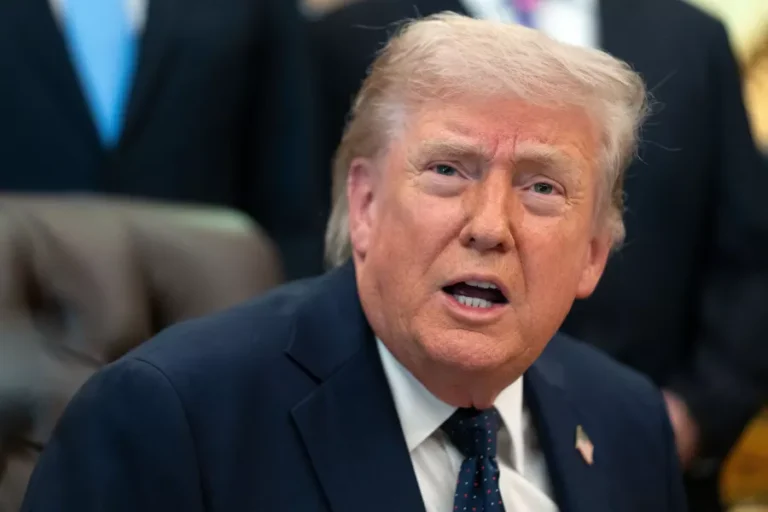
Trump Declines to Rule Out Declaring a National Security Emergency Over the 2026 Election
President Donald Trump declined to dismiss a proposal to declare a national security emergency over the 2026 elections, raising fresh questions about presidential power as courts block parts of his voting agenda.
A president can push Congress to rewrite election law. He can challenge election rules in court. He can order federal agencies to enforce laws already on the books. But can a president declare an emergency and effectively rewrite voting rules himself?
That question moved from political theory to a much more immediate debate Tuesday after President Donald Trump declined to dismiss a proposal that he declare a national security emergency over the 2026 midterm elections. His comments came as his administration was already confronting another court setback over its attempts to change how elections operate.
Trump responds to an extraordinary proposal.
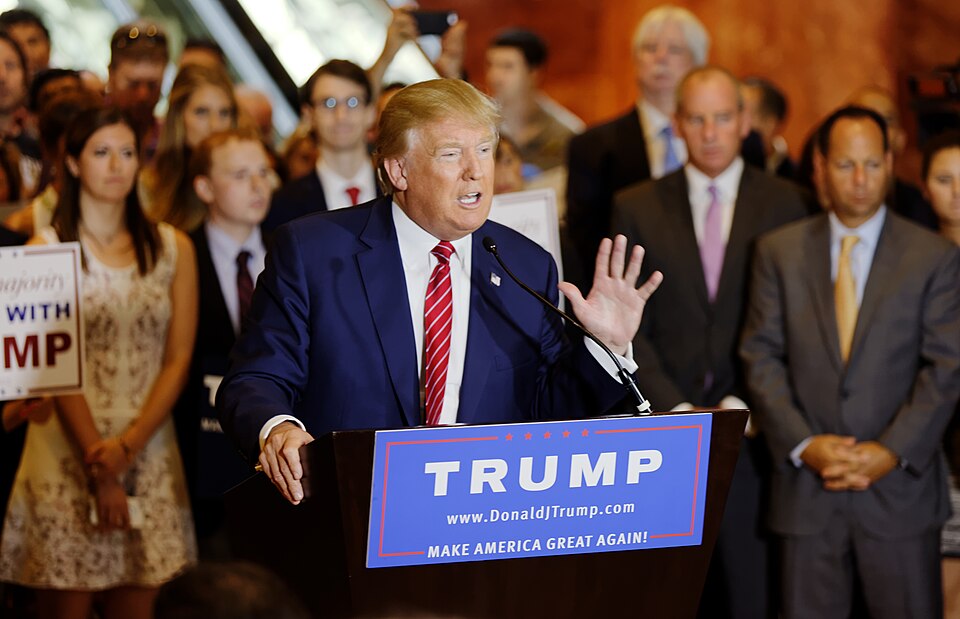
The exchange happened during an interview with Wayne Allyn Root on Real America’s Voice. Root raised the possibility after discussing the SAVE America Act, a major Republican election proposal that has passed the House but remains stalled in the Senate. The legislation includes new voting requirements, including documentary proof of citizenship for voter registration and stricter identification rules. Broader Republican proposals have also sought limits on mail voting.
Root suggested Trump could turn to presidential emergency powers if Congress failed to act. Rather than reject the idea, Trump responded: “Let me just say that stranger things have happened, OK?”
“I’ll leave it at that,” he added.
That answer did not amount to an announcement that Trump plans to declare an emergency. He provided no executive order, timeline or legal justification. But he also chose not to close the door.
That distinction matters. The most defensible description of what happened is not that Trump announced a federal takeover of elections. He did not. Instead, he declined to rule out an extraordinary proposal presented to him by a supportive interviewer.
The question now is whether such an emergency declaration could actually give a president the powers Root described.
Declaring an emergency would not automatically give Trump control of elections.
Root argued that an emergency declaration could produce federal photo-ID requirements, proof-of-citizenship rules and restrictions on mail voting while making the policy extremely difficult to challenge. Federal law is more complicated.
The National Emergencies Act establishes procedures presidents can use when declaring national emergencies, but an emergency declaration does not automatically create unlimited presidential authority. A president generally must rely on powers that Congress has already provided through other laws. Congress can also move to terminate a national emergency through legislation. There is an even bigger obstacle when elections are involved.
Article I’s Elections Clause gives state legislatures the initial authority to regulate the “Times, Places and Manner” of congressional elections, while giving Congress the power to make or alter those regulations. The constitutional text does not assign that legislative power to the president.
That does not mean presidents have no role whatsoever in election security. Federal agencies can enforce voting-rights laws, investigate federal crimes and protect election infrastructure under powers Congress has granted them.
But unilaterally imposing nationwide rules covering voter eligibility procedures, ballot delivery or election administration presents a much harder constitutional question. And Trump is already seeing that distinction play out in court.
A federal judge delivered another setback the same day.
On Tuesday, U.S. District Judge Indira Talwani again blocked the Trump administration from implementing parts of an executive order involving mail voting and the U.S. Postal Service.
The March order sought to create a federal voter list and direct the Postal Service to play a larger role in determining how mail ballots would be handled. Voting-rights groups and Democratic state attorneys general challenged the policy.
Talwani had already ruled against major parts of the order in June. Her latest preliminary injunction bars the Postal Service from implementing it for the November 3 midterm election while litigation continues. Her reasoning went directly to the constitutional issue hanging over the new emergency discussion.
“The executive branch has no authority to regulate elections,” Talwani wrote.
The Trump administration disputes the challenges to its election policies and has sought Supreme Court intervention in litigation over the order. Government lawyers have argued, among other things, that some challenges came before agencies had taken final action and that the administration has legitimate authority to protect federal election integrity. That litigation makes Tuesday’s interview especially significant.
Trump’s comments did not happen in a vacuum. They came while courts are actively testing how far presidential authority can extend into election administration.
The SAVE America Act remains the immediate political fight.
Trump and Republican allies have spent months trying to move the SAVE America Act through Congress. The House passed the measure in February, but Senate Republicans have repeatedly struggled to assemble enough votes to overcome procedural hurdles. A narrower attempt centered on voter identification also failed to clear the 60-vote threshold before senators left Washington for their August recess. Republican supporters have indicated they plan to return to the issue in September.
Supporters frame the legislation as an election-integrity measure designed to ensure that only eligible U.S. citizens vote and that voters properly identify themselves.
Opponents argue that documentary requirements could create unnecessary barriers for eligible voters who do not have passports, readily available birth certificates or documents showing matching names.
Federal law already prohibits noncitizens from voting in federal elections. The Associated Press notes that documented noncitizen voting remains rare. Those disagreements normally belong to Congress, state legislatures and the courts.
Trump’s latest comment introduces another possibility into the debate: what happens if the White House decides the normal legislative route is not enough?
What happens next matters more than the remark itself
For now, there is no announced national security emergency covering the midterms. There is no publicly released emergency order establishing the restrictions Root proposed.
And Trump’s brief “stranger things have happened” response leaves considerable room between political teasing and presidential action.
Still, the idea cannot simply be treated as a hypothetical raised by someone outside government. It was presented directly to the president, and the president deliberately declined to reject it.
If the White House goes further, courts would almost certainly face another fundamental separation-of-powers question: Can emergency authority allow a president to do something the Constitution ordinarily assigns to states and Congress?
Tuesday produced an unusual preview of that possible confrontation. In one courtroom, a federal judge said the executive branch lacked authority to regulate elections in the way Trump had attempted.
Hours later, Trump was publicly leaving open the possibility of something potentially broader. The next important development will not be another provocative sentence. It will be whether the White House turns that sentence into an actual legal document.