Houston Is Putting a Texas Twist on Boudin, Po-Boys and Gumbo
Houston’s Louisiana influence is easy to spot when you know where to look: smoked boudin links, po-boys on French bread, gumbo, crawfish, étouffée, and plenty of Gulf seafood.
What makes the city’s version especially interesting is how those dishes sit alongside Texas barbecue traditions. In some places, that means brisket working its way into boudin. In others, it means smoked all-beef links, barbecue meats on po-boy-style sandwiches, or Cajun seafood menus operating with a distinctly Houston identity.
The result is not one single “Houston style.” It is a collection of specific dishes and techniques that show how Louisiana food traditions and Texas cooking methods can overlap.
Houston’s Boudin Scene Goes Beyond One Style
The Houston Chronicle describes Southeast Texas boudin as generally more rice-forward and often smoked, while Louisiana boudin tends to be meatier and more likely to include pork liver. That distinction should not be treated as a rule for every producer, but it helps explain some of the variation seen around Houston.
Bernard’s Creole Cuisine is one example. Chronicle reporting says the Houston food trailer serves smoked boudin in both all-beef and spicy-pork versions.
Then there is the barbecue side of the story. A 2024 Chronicle profile documented a Cajun-influenced pork-and-brisket boudin at 3rd Coast BBQ in Spring. Its current official menu doesn’t list that item, so view it as a documented example rather than a guaranteed present-day offering.
That brisket variation matters because it shows how Texas barbecue can fit into a Louisiana meat-and-rice format without needing a vague “fusion” label.
Related: 6 Best Cuisines in the World
Po-Boys Still Come Back to the Bread
Po-boys are another place where Houston’s Louisiana connections are easy to see. BB’s Tex-Orleans currently lists po-boys on its menu, and its online ordering material references Leidenheimer French bread in a half-po-boy-and-gumbo combination. That pairing also includes a cup of chicken-and-sausage gumbo.
At 1929 Po-Boy Kitchen, the official menu describes its po-boys as dressed with remoulade, lettuce, tomato, and pickles. The same menu also lists a fried boudin-and-pepper-jack egg roll, another example of familiar Louisiana flavors showing up in a different format.
The broader Houston po-boy picture includes both Louisiana-style operations and barbecue-driven interpretations. What matters most is the specific preparation: the bread, the filling, the dressing, and whether smoked Texas meats are part of the equation.
Gumbo, Crawfish and Étouffée Round Out the Picture
Boudin and po-boys may get much of the attention, but Houston’s Louisiana-inspired menus go much wider. BB’s Tex-Orleans says its current offerings include gumbo, crawfish, seafood boils, étouffée, fried seafood, oysters and po-boys.
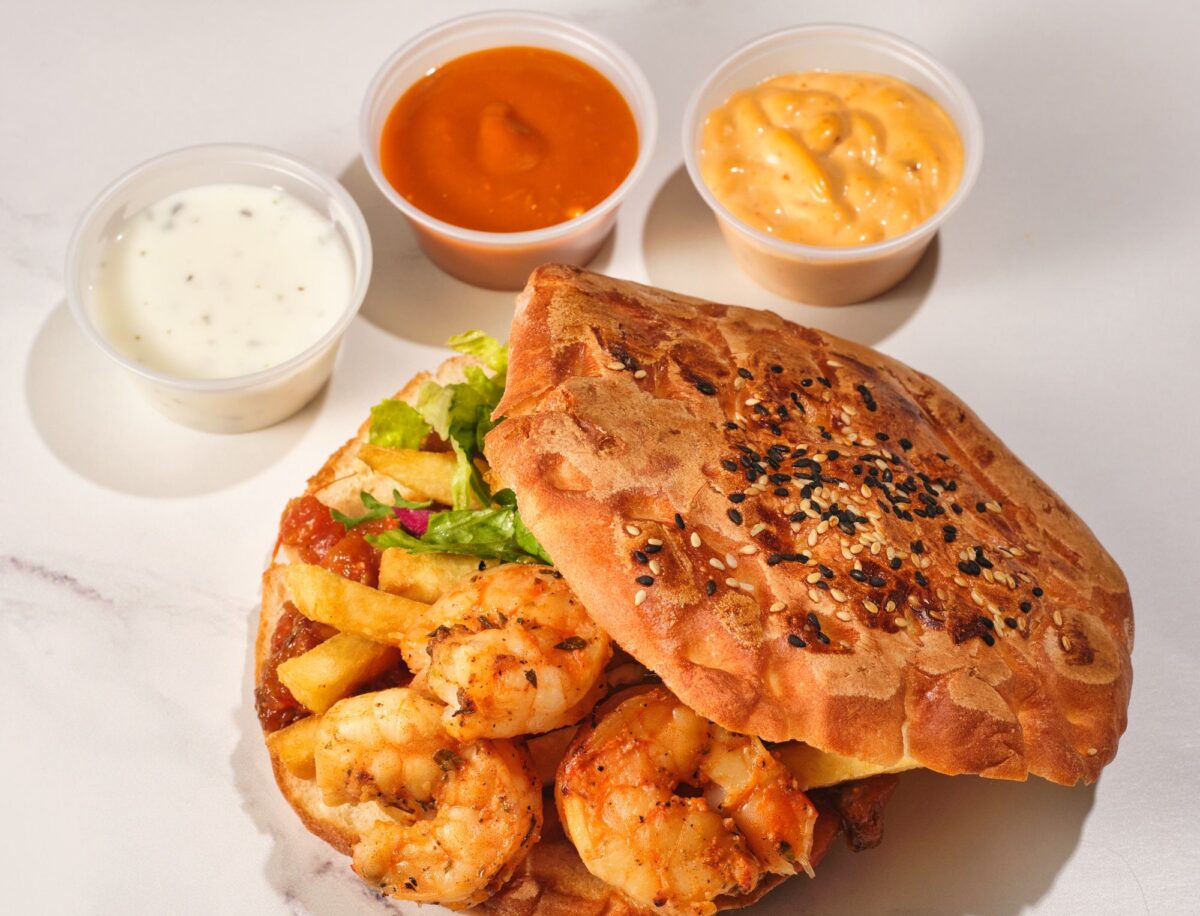
Its official site also describes grilled jumbo Gulf shrimp with andouille cream sauce over cheese grits, along with blackened redfish served with crawfish or shrimp étouffée. 3rd Coast BBQ also describes a broader Gulf Coast menu alongside its Texas barbecue identity.
Its site says gumbo, spicy crawfish, fish, oysters, and shrimp may appear among its offerings, although daily specials can vary. That combination is one of the clearest ways to understand Houston’s food landscape: slow-smoked meats can share a menu with gumbo and Gulf seafood without either side disappearing.
The Changes Are in the Details
The most interesting differences are not sweeping claims about whether Houston has “reinvented” Louisiana food. They are visible in the small, concrete choices restaurants make.
Boudin can be smoked. Brisket can become part of the meat mixture. One operation can offer all-beef boudin while another leans toward spicy pork. A po-boy can stay close to a New Orleans-style format, or barbecue meats can fill it.
Those details tell the story better than a broad label ever could. They also show why Houston’s Cajun- and Creole-inspired food is hard to reduce to a single definition.
Houston’s Louisiana Connection Has Deep Roots
Today’s menus also have a longer local history. The Houston Chronicle reports that the aftermath of Hurricane Katrina brought New Orleans transplants to Houston, including po-boy operators such as Calliope’s Po-boys and The Cajun Stop. The paper says the city’s modern po-boy scene expanded after that period.
At the same time, boudin was not new to Southeast Texas. The Chronicle notes that the regional spelling “boudain” has long been associated with Beaumont and surrounding areas.
That means Houston’s current landscape isn’t simply Louisiana food arriving in Texas. It reflects multiple Gulf Coast traditions that have been crossing paths for years.
What Makes Houston’s Version Worth Watching
The clearest sign of Houston’s influence is not a single dish or restaurant. It is the way techniques and ingredients move between traditions.
A smoked boudin link, brisket worked into a Cajun-style sausage, Gulf seafood served beside Texas barbecue, or a po-boy built around smoked meat all make the connection visible on the plate.
Houston is not replacing Louisiana’s food traditions. It is showing what can happen when those traditions meet a city with its own barbecue culture, Gulf Coast ingredients, and long-standing regional ties.
Other Posts You May Like
. 10 Best Seafood That Isn’t Fish, Ranked
. Exploring 10 World’s Weirdest Street Foods: A Culinary Adventure Across Continents