6 Types of Lettuce for Better Salads, Sandwiches, and Wraps
The wrong lettuce can leave a good sandwich missing its crunch or make a delicate salad feel heavier than you wanted. Choosing a head or a bunch gets easier when you know what you need it to do. Some leaves bring a firm bite, while others fold around fillings or carry a light dressing.
These six choices offer different textures, shapes, and flavors. They overlap in classification: green and red leaf are looseleaf lettuces, while Little Gem is a compact romaine cultivar. Think of this as a kitchen guide rather than a ranking.
Little Gem
Little Gem is a dwarf romaine, also called a cos cultivar. It forms small, dense heads with a crisp, sweet heart. It is a distinct variety, rather than ordinary romaine picked before it grows up. Separate the small leaves and use them whole in salads or as little lettuce cups.
Their sturdy structure works with richer dressings and substantial additions, including oil-packed tuna. This is a useful choice when you want compact leaves rather than a bowl of chopped romaine. Halved heads also suit charred or grilled preparations, while quartered heads make small, composed portions.
Follow a recipe designed for Little Gem rather than borrowing cooking times from larger heads. Availability varies, so check what your store carries.
Related: 4 Best Types of Lettuce to Grow in Your Garden for Optimal Harvest
Romaine
Romaine earns its place when you want lettuce you can feel between bites of everything else. Its long leaves have a pronounced central rib, with darker outer leaves surrounding a paler, tightly packed heart. The flavor is mild, sometimes with a little earthiness or bitterness.
That firm structure works well in Caesar and Cobb salads, where the leaves share the bowl with substantial toppings and creamy dressing. It provides more bite than a delicate leaf without needing an assertive flavor. Choose it when crunch is part of the meal’s appeal.
Romaine hearts also suit grilled preparations. Use a recipe designed for the tightly packed hearts, since loose outer leaves behave differently. Follow that recipe’s cooking instructions instead of assuming every piece needs the same treatment.
Iceber
Iceberg has a clear job, and it does it well. Its dense, round head contains tightly packed, pale green leaves with a juicy crunch. The flavor is mild and slightly sweet, making it useful when you want texture without a strong competing taste.
Cut the head into wedges for a composed salad, or shred it for tacos, subs, and fried fish sandwiches. On a burger, that crisp bite contrasts with the other ingredients. In a chopped salad, it works with creamy dressings.
The useful trick is matching the cut to the meal. A wedge keeps the compact head’s structure front and center, while thin shreds spread the crunch through a sandwich. Neither needs iceberg to pretend it is a tender salad green.
Butterhead
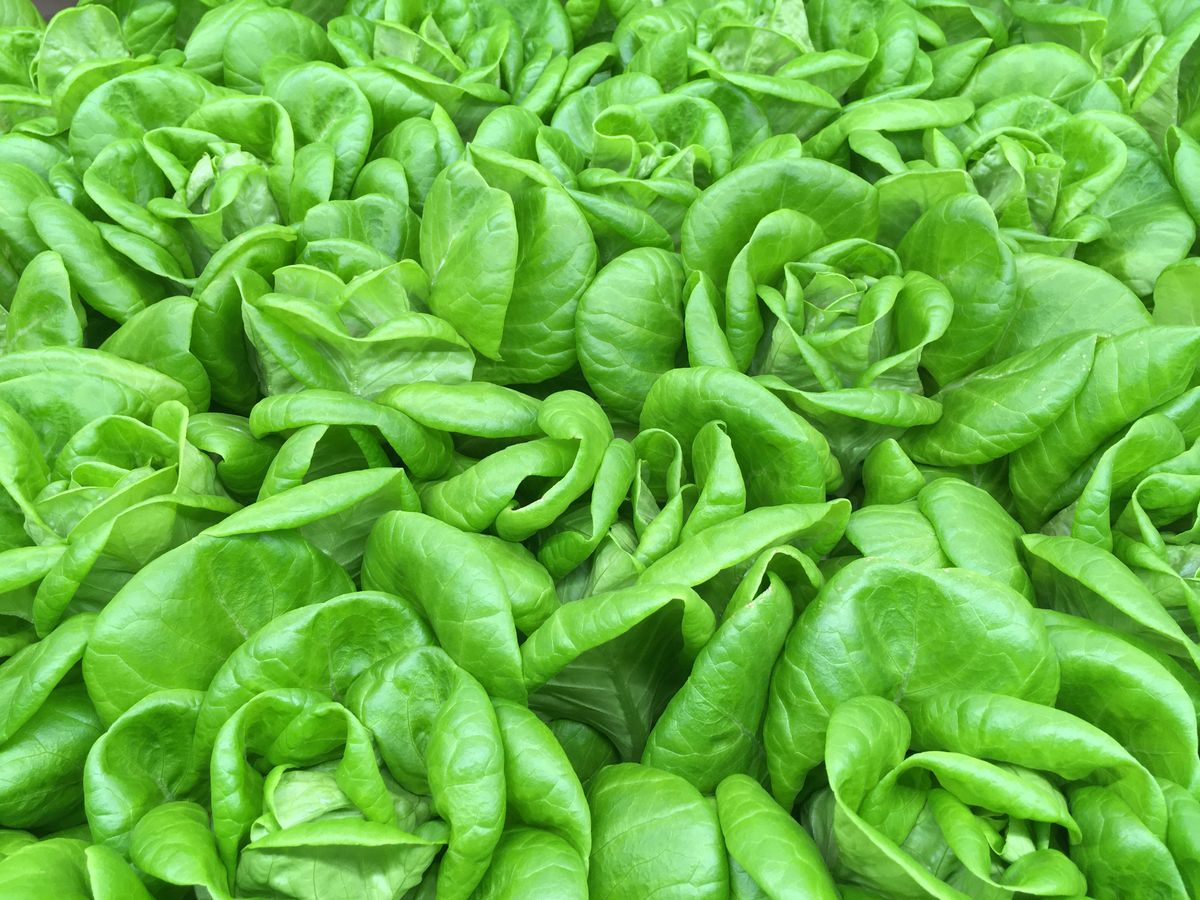
Butterhead takes things in a gentler direction. Its loose, rounded heads have smooth, cup-shaped leaves with a soft, velvety texture. Boston and Bibb belong to this group, also called butter lettuce.
Choose it for a simple salad with a light vinaigrette. Its mild, slightly sweet flavor lets the tender leaves stay part of the experience. A heavy-handed toss can work against that texture, so handle it gently.
The leaf shape also makes butterhead useful for lettuce cups. Keep individual leaves intact and fill them with spiced ground meat, bean salad, shrimp, or grilled meat. Avoid overloading them, because a flexible leaf is still a delicate wrapper.
Green Leaf
Green leaf is a useful middle ground when iceberg feels too crunchy, and butterhead feels too soft. It grows in an open arrangement, with broad, frilly leaves rather than a tightly packed head. Expect mild flavor, a tender texture, and a light crunch.
Those pliable leaves work in sandwiches, burgers, wraps, and everyday salads. Use them when the lettuce needs to fit around other ingredients instead of forming a firm layer. They also make sense when you want a leafy salad without a pronounced central rib in every bite.
Tear the leaves into pieces that suit the dish. Smaller pieces work in a salad bowl, while broader sections suit sandwiches. Let the meal determine the size instead of using every leaf whole.
Red Leaf
Red leaf shares green leaf’s open shape and ruffled edges. The first difference you notice is its burgundy tips and red-purple coloring. Its tender leaves offer a light crunch and may have a hint of bitterness.
Use it alongside green leaf for a mixed salad with more visual contrast. It also works in sandwiches and wraps, so you don’t need a separate recipe. The color changes the look more dramatically than the preparation.
Red leaf can also form an edible bed for chicken or fish. Tear the leaves to suit the plate and treat them gently. There is no need to assign them a completely different role from their green counterparts.
When shopping, look for fresh-looking leaves. Pass over wilted leaves and brown edges. Red or purple tips are normal on red leaf lettuce. Choose the texture your meal needs, and the lettuce aisle becomes much easier to navigate.
Other Posts You May Like
. The Salad That Gets Better Overnight and It’s the Smartest Thing You Can Make This Week
. 6 Smart Ways to Save Space and Money in a Small Vegetable Garden