What ALDI’s Meat Labels Reveal About Where Its Beef, Chicken and Pork Come From
If you have ever looked at an ALDI meat package and wondered where the animal came from, the answer depends on the product and the wording on the label. ALDI does not publish one complete public directory showing the farm, supplier, and country behind every meat item. The retailer says it does not raise animals or own or operate processing facilities, instead working with suppliers.
That makes one rule especially useful: do not treat the meat department as if every package follows the same sourcing path. Beef, chicken, pork, and fish can have different labeling requirements, and a country listed on a package can tell you something different from a statement about where the food was processed.
Beef does not have one blanket origin
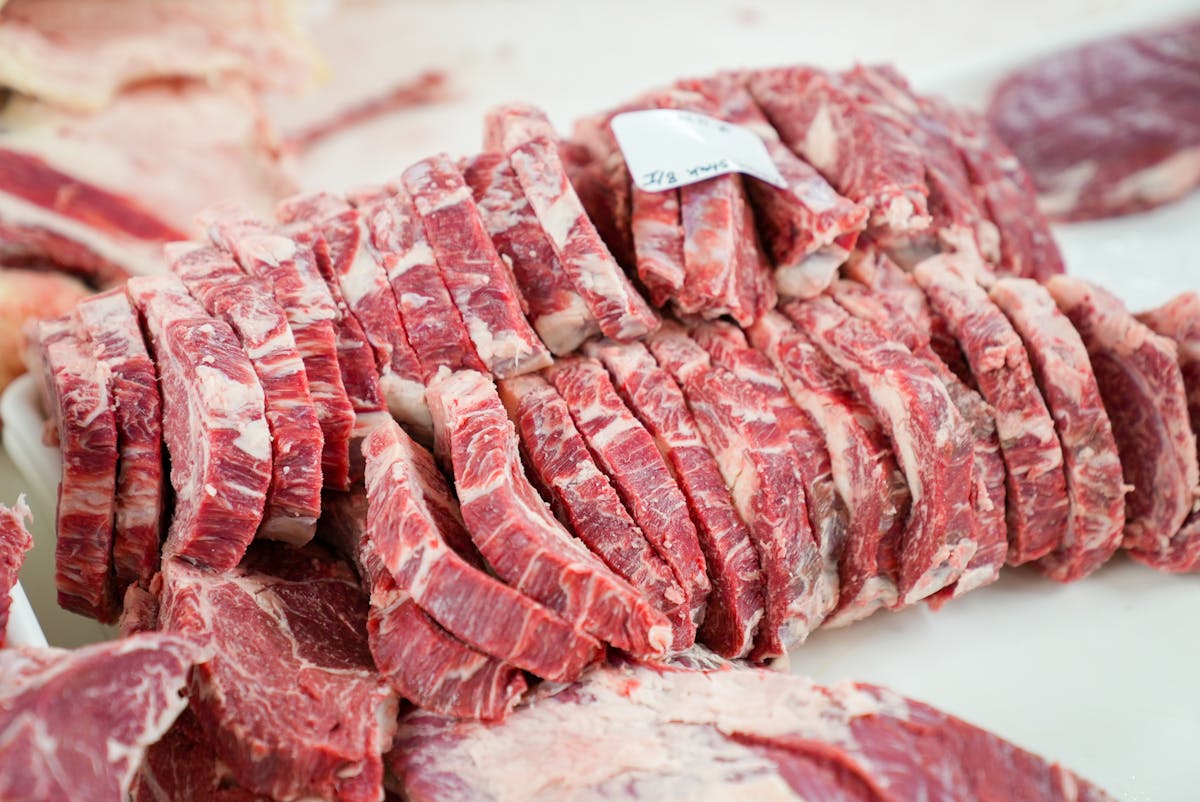
For ALDI beef, there is no single nationwide country of origin that applies to every package. USDA’s mandatory retail country-of-origin labeling requirements for beef muscle cuts and ground beef were repealed, with enforcement ending in December 2015. Imported consumer-ready beef still has separate country-of-origin marking requirements.
That means an unlabeled beef package does not automatically prove that the beef is American, nor does the absence of an origin statement prove that it came from another country.
It is also important not to confuse USDA Choice or USDA Organic wording with a country-of-origin statement. Those labels answer different questions.
Chicken labels can tell you more
Chicken has a different labeling framework. Retail chicken remains covered by mandatory country-of-origin labeling, while the voluntary “Product of USA” claim has a specific meaning under USDA rules that took effect January 1, 2026.
For a single-ingredient meat or poultry product carrying a “Product of USA” or “Made in the USA” claim, the animal must have been born, raised, slaughtered, and processed in the United States.
Samuelson reported seeing “Product of U.S.A.” wording on the whole chickens, breasts, thighs, and drumsticks he examined during his store visit. That supports what was printed on those particular products, not every chicken item sold by ALDI.
So a qualifying U.S.-origin claim is more specific than a general statement about where a product was processed.
Pork can look different from package to package
Pork is another category where shoppers should read the individual label instead of assuming every cut carries the same information.
Samuelson reported finding “Product of USA” on a pork-belly package, while the pork-chop packages he examined did not carry an origin statement.
That difference is consistent with the broader labeling landscape. Like beef, pork muscle cuts and ground pork are no longer covered by mandatory retail COOL, although imported consumer-ready products still have separate marking requirements and companies can make qualifying voluntary U.S.-origin claims.
In practical terms, one pork package cannot automatically stand in for another. Bacon, chops, belly, and other products should be checked individually.
Fish has its own clues
Seafood can provide shoppers with some particularly useful sourcing details. ALDI says many of its seafood products include information about whether the product is wild-caught or farmed. For wild-caught seafood, ALDI may provide the FAO catchment area, while farmed seafood may list the country of origin.
That information helps answer a different question from a processing statement. A fish processed in the United States is not automatically a fish that was caught or farmed in the United States.
ALDI also publicly discloses wild-caught seafood sourcing through the Ocean Disclosure Project. Its 2024 profile covers main wild-caught seafood sourced in 2023. Examples include Alaska pollock from U.S. fisheries, Atlantic cod associated with Norwegian fisheries, and American lobster associated with Canadian fisheries.
Those examples show that ALDI’s seafood sourcing has covered multiple geographic areas. They are historical sourcing examples, not a guarantee of what every ALDI store carries in November 2026.
What ALDI’s supplier policies do tell you
ALDI says it does not raise animals or own or operate processing facilities. Its role is to work with suppliers and set sourcing expectations.
The company lists animal-welfare expectations involving programs and guidelines such as Beef Quality Assurance, Pork Quality Assurance Plus, and poultry-industry guidelines. Those standards describe sourcing expectations, but they do not identify a particular farm or prove that a product came from a particular country.
The same distinction applies to certifications. A certification or production claim can tell you something specific about how a product was produced, but it should not automatically be read as a country-of-origin statement.
The label is useful, but read the whole thing
The easiest way to get closer to an answer is to examine the actual package or retail display. Look for country-of-origin wording, production method information, and statements describing where processing occurred.
Then ask what each statement actually tells you.
“Product of USA” under the current USDA standard is much more specific than simply seeing that a product was processed or packaged in the United States. For fish, “wild-caught,” “farmed,” an FAO catchment area, or a country-of-origin statement can provide different pieces of the sourcing picture.
ALDI says products without a listed country of origin are from the United States, although some may contain foreign-made components. However, that broad company statement should not be confused with a specific country-of-origin label on an individual beef package or treated as proof of where the animal was born and raised.
The bottom line is simple: there is no single answer for where all ALDI meat comes from. The useful answer is on the product level, where the label can reveal the origin, production method, or processing information that applies to that particular item.