Hand-Washing Dishes With Hot Tap Water? The CDC Says You’re Missing a Step
Hot water, soap, and a good rinse are normally enough to get through a sink full of dishes. But when a boil-water advisory is in effect, there is an extra step the CDC recommends before those dishes are ready to use again.
The key is not simply washing more thoroughly. During a boil-water advisory, the CDC recommends washing and rinsing dishes normally, then giving them a separate sanitizing soak and allowing them to air-dry completely.
That procedure is specifically for a boil-water advisory. It is not a recommendation that households with safe tap water bleach their dishes every day.
Wash and rinse first
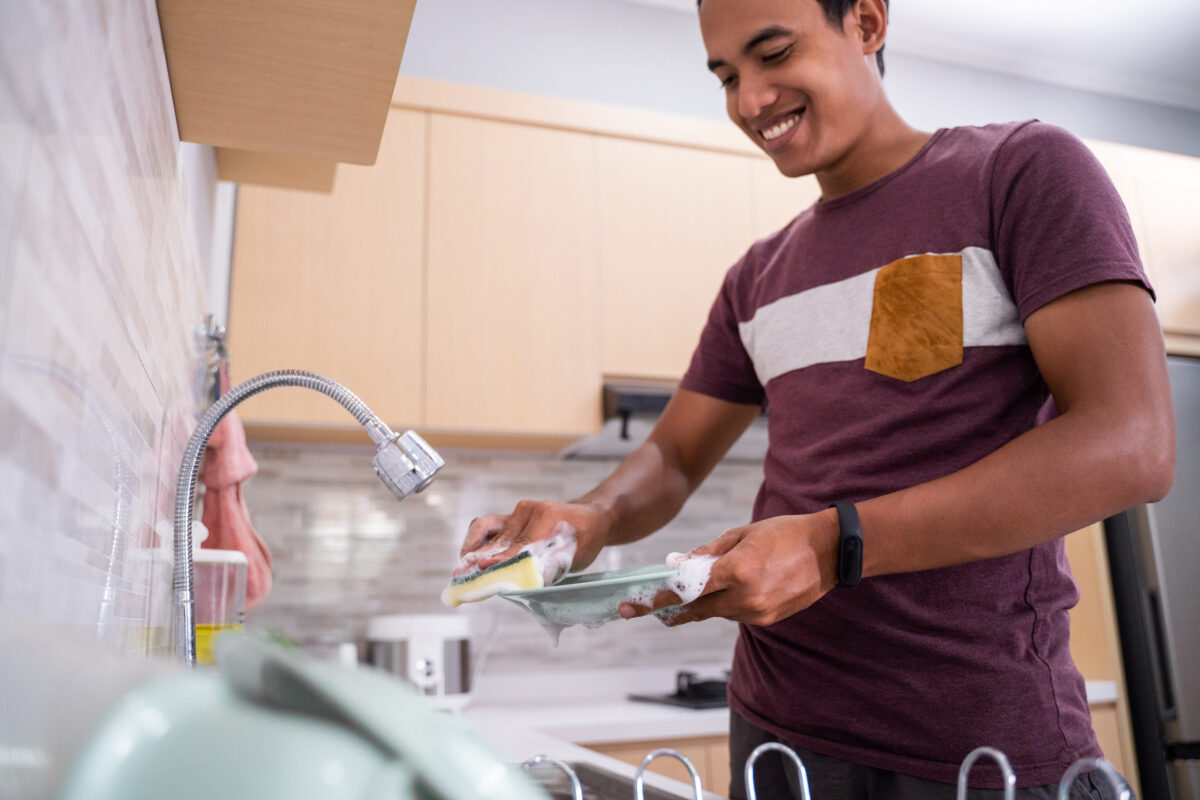
Start with the same basic dishwashing process you normally use.
Wash the dishes with hot water and soap, then rinse them. This removes food, dirt, and other material from the surface before the sanitizing step.
The order matters. Cleaning and sanitizing are not the same thing. Cleaning removes material from an item, while sanitizing is the additional step used to reduce germs that may remain after cleaning.
That is why the CDC’s instructions do not tell you to skip the regular washing process and go straight to a sanitizing solution.
Prepare a separate sanitizing solution
Once the dishes have been washed and rinsed, prepare the solution in a separate basin.
The CDC’s procedure calls for 1 teaspoon of unscented household liquid bleach containing 5%–9% sodium hypochlorite for each gallon of warm water.
The solution should be prepared separately from the sink where the dishes were washed. The instructions do not call for pouring bleach into a basin of soapy dishwater or mixing it with the dishwashing detergent.
This is a specific dilution for this dishwashing procedure, so it should not be replaced with a stronger bleach mixture intended for another type of cleaning.
Give the dishes a one-minute soak
After rinsing, place the dishes in the prepared sanitizing solution.
They should remain in the solution for at least one minute.
This is the part that is easy to miss if you are thinking only about ordinary dishwashing. Washing and rinsing are followed by the sanitizing soak during a boil-water advisory.
The dishes are not ready for use immediately after being removed from the solution, either.
Let everything air-dry completely
Once the dishes have finished soaking, let them air-dry completely before using them again.
That means drying is part of the process rather than an optional finishing touch.
The CDC’s broader guidance for sanitized nonporous items also cautions against rubbing or patting them dry with a dish towel because that can transfer germs back onto the items. For this procedure, leaving the dishes to air-dry is the recommended approach.
It may take longer than wiping down a plate and putting it straight back into the cupboard, but the complete process includes the drying stage.
A dishwasher may be an option
Hand-washing is not the only option during a boil-water advisory.
The CDC says household dishwashers are generally safe to use during an advisory when they have a sanitizing cycle or reach a final rinse temperature of at least 150°F, or 66°C.
If you are unsure whether your dishwasher meets those conditions, check the machine’s manual or contact the manufacturer.
That temperature applies to the dishwasher’s final rinse. It is not a temperature you should try to reproduce while washing dishes by hand.
The CDC also recommends using disposable plates, cups, and utensils during an advisory when possible.
Keep bleach away from other cleaners
There is one rule that should not be overlooked when preparing the sanitizing solution: never mix household bleach with other cleaners or disinfectants.
Mixing cleaning products can release dangerous vapors. The CDC also advises following product-label directions, providing ventilation, and using any protective equipment specified on the label.
For the dishwashing procedure, the simplest approach is to keep the stages separate: wash and rinse the dishes first, then use the separately prepared bleach solution for the sanitizing soak.
Do not add extra bleach because you think a stronger solution will work better.
Not every water advisory means the same thing
The type of water notice matters.
A boil-water advisory generally addresses germs that boiling can kill. A do-not-drink advisory can involve harmful chemicals or toxins that boiling does not remove. A do-not-use advisory can go further by prohibiting tap-water use altogether.
That means the dishwashing procedure described here is not a universal solution for every type of water problem.
If a local water utility or public-health authority issues an advisory, follow the specific instructions provided for that situation.
This is not an everyday dishwashing rule
For households using safe tap water under normal conditions, the CDC does not say that everyday dishes need this bleach-soaking process.
Its general home-cleaning guidance says regular cleaning is sufficient in most situations, and daily sanitizing may not be necessary when surfaces and objects are carefully cleaned after use.
The extra step is tied to the boil-water advisory itself.
So if you are simply standing at the kitchen sink on an ordinary day, hot water, soap, and rinsing are not suddenly being replaced by a bleach bath.
But when a boil-water advisory is issued, the routine changes: wash, rinse, soak for at least one minute in the properly prepared solution, and let the dishes air-dry completely.
That distinction is the important part to remember.