7 Holiday Treats Grandma Made With a Special Iron, Press or Mold
Some grandmothers had a drawer, cabinet or basement shelf full of strange-looking kitchen tools that only came out once a year. There were heavy iron gadgets with long handles, carved wooden boards, metal tubes with interchangeable discs and tiny fluted tins. To a child, they looked like something from another century, and many of them were.
Every December, those tools came out of storage, and the kitchen turned into a holiday bakery. Grandma pressed, fried, molded and rolled treats that you simply couldn’t make without the right equipment. Many of the recipes came from the old country, carried over by immigrant families from Italy, Norway, Sweden, Germany and Denmark.
Today, plenty of families still have those tools tucked away, even if nobody remembers exactly how to use them. Here are the holiday treats grandmothers made with a special iron, press or mold.
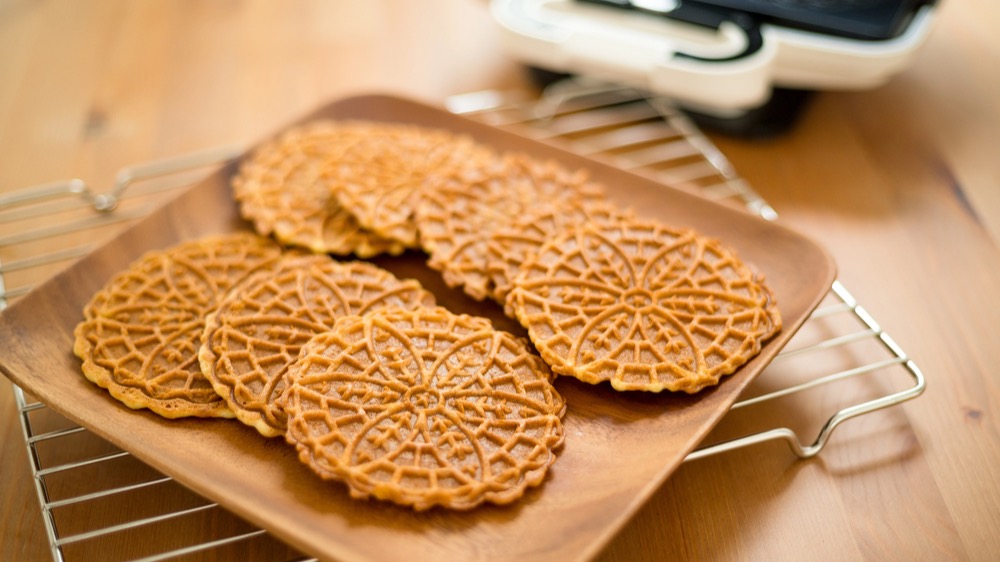
1. Pizzelle
Pizzelle are thin, crisp Italian waffle cookies with a lacy pattern pressed into both sides. They’re made with a special pizzelle iron, which works like a small waffle maker with decorative plates. Older irons were held over a gas flame by hand, while newer ones plug into the wall.
The classic flavor is anise, though many families make vanilla or lemon versions too. Pizzelle are a Christmas and wedding tradition in many Italian American homes. Grandmothers often made hundreds of them, stacking them in tins between sheets of wax paper and dusting them with powdered sugar.
2. Krumkake
Krumkake is a delicate Norwegian cookie baked on a special iron with an intricate pattern, then rolled into a cone while still hot. The iron looks a bit like a pizzelle iron, but the cookies are even thinner and more fragile. A wooden cone is used to shape them before they cool and harden.
Norwegian American grandmothers in the Upper Midwest often made krumkake by the dozens for Christmas. Some families fill the cones with whipped cream, while others eat them plain. Rolling them quickly without burning your fingers was a skill that took years to master.
3. Rosettes
Rosettes are crisp, lacy fried cookies made with a rosette iron, a metal form shaped like a flower or snowflake attached to a long handle. The iron is heated in hot oil, dipped into a thin batter and then lowered back into the oil, where the cookie fries and slips off.
Scandinavian families especially love rosettes, which are dusted with powdered sugar once they cool. Making them takes patience, since the iron has to be just the right temperature for the batter to stick and then release. Many grandmothers kept a set of rosette irons with different shapes, from stars to butterflies.
4. Springerle
Springerle are German anise cookies with detailed pictures pressed into the top using carved wooden molds or rolling pins. The designs might show animals, flowers, birds or Christmas scenes. The dough is pressed into the mold, cut into squares and left to dry overnight before baking.
Springerle have been made for centuries, and some families own molds that are more than 100 years old. The cookies are hard and crunchy at first and soften as they age. German American grandmothers often baked them weeks before Christmas and stored them in tins to mellow.
5. Spritz Cookies
Spritz cookies are buttery cookies made by pushing dough through a cookie press, which shapes it into wreaths, trees, stars and other designs. The press is a metal or plastic tube with a plunger and a set of interchangeable discs. Grandma would load the dough, click the press and create perfect shapes on the baking sheet.
The cookies have Scandinavian and German roots, and they’re one of the most common Christmas cookies in America. Many families tint the dough green or red and decorate the cookies with colored sugar or sprinkles. A well-used cookie press is a prized family heirloom for many bakers. Older aluminum presses from the 1950s and 1960s are still sought after at estate sales because many bakers say they work better than newer plastic ones.
6. Sandbakkels
Sandbakkels are Norwegian butter cookies pressed into small fluted tins, which give them the shape of tiny tart shells. The dough is pressed thinly into each tin by hand, baked and then carefully tapped out. They can be served plain or filled with jam or whipped cream.
Pressing the dough into dozens of tiny tins is time-consuming, and many grandmothers enlisted their grandchildren to help. The tins themselves were often passed down through generations. Sandbakkels are still a favorite in Norwegian American communities at Christmas.
7. Aebleskiver
Aebleskiver are round Danish pancake balls cooked in a special cast iron pan with several half-sphere wells. Cooks fill each well with batter, then turn the balls with a knitting needle or skewer as they cook, creating fluffy spheres. They’re often served with powdered sugar and jam.
Aebleskiver are a holiday favorite in Denmark and in Danish American towns like Solvang, California. Many families make them on Christmas morning or for holiday gatherings. Some fill the centers with a small piece of apple, which is how the treat got its name, meaning apple slices in Danish. Turning them just right takes practice, and kids love trying to flip them.
Tools That Became Family Heirlooms
Many of these tools have been passed down for generations. A pizzelle iron or springerle mold might have traveled across the ocean with a great-grandmother, wrapped carefully in a trunk. For many families, the tools are as precious as the recipes themselves.
Some grandchildren have found these tools in boxes after a grandparent passed away and had no idea what they were. Others grew up watching their grandmothers use them and learned the techniques by heart. Families often still keep Grandma’s handwritten recipe cards right next to the old irons.
Bringing Back Old Traditions
In recent years, many people have rediscovered these old-fashioned treats. Pizzelle irons, cookie presses and aebleskiver pans are easy to buy again, and home bakers share tips and family recipes online. Some families hold cookie-making days so younger generations can learn.
If you have one of these special tools in your cabinet, this might be the year to bring it out. The first few cookies may not turn out perfectly, but that’s part of the tradition. Grandma probably burned a few too, and she’d be thrilled to know her favorite holiday treats are still being made.