Dirty Little Secrets: 40% of Americans Are Embarrassed by Their Toilet Cleaning Habits, 56% by the Fridge
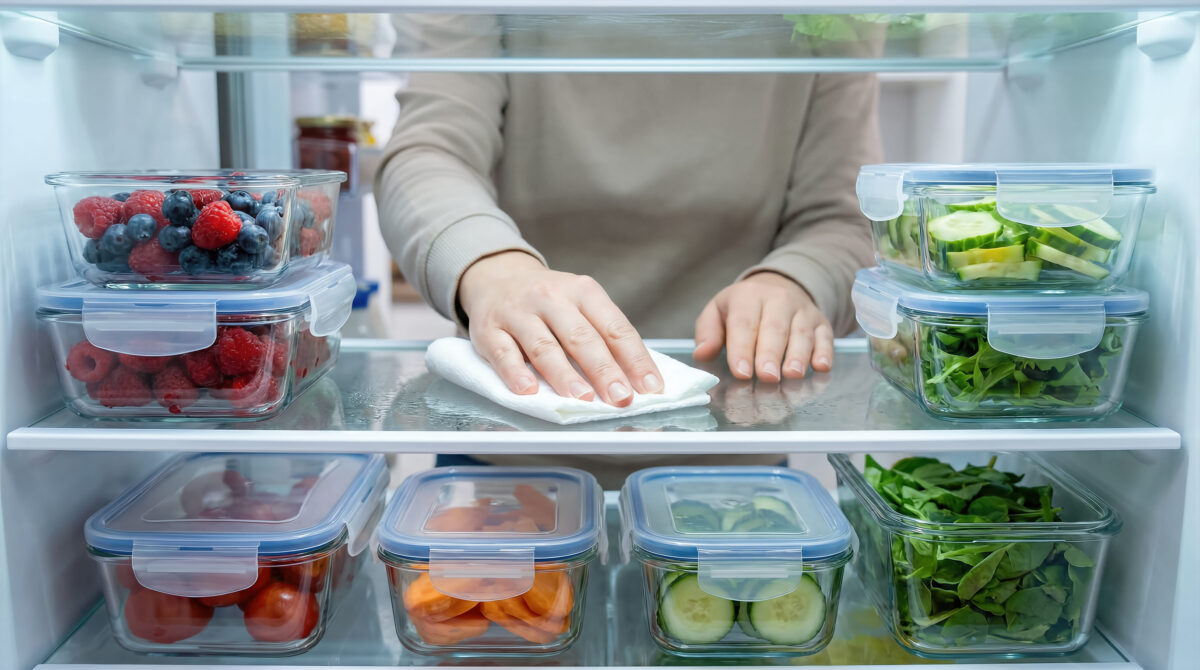
The refrigerator may be the household chore Americans are most reluctant to admit they have put off.
A new national survey found that 56% of respondents said they would be most embarrassed to reveal when they last cleaned out their refrigerator. By comparison, 40% selected cleaning the toilet.
The numbers come from the American Cleaning Institute’s 2026 Spring Cleaning Survey. Importantly, the question measured embarrassment about discussing a chore, not how long people actually went between cleanings.
In other words, the findings do not show that 56% of Americans have neglected their refrigerators. They show that refrigerator cleaning was the chore respondents were most uncomfortable admitting they had delayed.
The refrigerator topped the list
The survey asked respondents which chores they would be most embarrassed to admit the last time they performed, allowing them to select multiple answers.
Cleaning out the refrigerator came first at 56%. Cleaning the toilet followed at 40%.
Other chores also made the list. Washing sheets was selected by 29% of respondents, while 22% chose washing towels, including hand, bath, and dish towels. Washing hands was selected by 17%.
Because respondents could choose more than one answer, the percentages should not be added together.
The gap between refrigerator cleaning and toilet cleaning was 16 percentage points. But that difference should not be interpreted as proof that people clean their refrigerators less often.
The survey did not measure the actual amount of time between cleanings.
The survey looked at 1,000 U.S. adults
Wakefield Research conducted the survey for the American Cleaning Institute among 1,000 U.S. adults ages 18 and older.
The survey took place online between February 4 and February 12, 2026, following an email invitation. ACI said the sample was nationally representative and that the results were weighted to represent U.S. adults.
ACI is a trade association representing the cleaning-products industry. That connection matters when considering the source of the findings, although sponsorship by an industry association does not by itself determine whether the survey results are valid.
The results describe attitudes reported by the people who participated. They are not an inspection of American homes.
Spring cleaning is still a yearly routine for many
There is another interesting contrast in the survey.
80% of respondents said they or someone in their household engages in spring cleaning at least once a year.
The questionnaire defined spring cleaning as a thorough cleaning of a house or room that is typically done in spring.
That suggests that a large household cleaning session remains a familiar routine for many respondents, even as certain individual chores can be awkward to discuss.
The survey does not establish whether the people who spring-clean annually were the same people who selected refrigerator or toilet cleaning as embarrassing. There is no basis in the results for connecting those answers directly.
Decluttering was the biggest spring-cleaning motivation
When respondents were asked what motivates them to spring-clean, the most common answer was wanting to declutter or organize. That response was selected by 57%.
A fresh-start or new-season mindset came next at 47%. Health or hygiene concerns were selected by 46%, while 45% identified an annual habit as a motivation.
These responses offer some context for why people participate in spring cleaning, but they do not explain why a particular respondent might have delayed cleaning a refrigerator or bathroom.
The survey also does not establish that people avoided those chores because they were too busy, disliked them, or had forgotten about them.
People still turn to people they know for cleaning advice
The survey also asked where respondents seek cleaning advice.
Sixty-one percent said they turn more often to people they know, including family, friends or neighbors.
Thirty-nine percent selected digital tools. That category included social media, Google and AI.
The figure does not mean that 39% specifically use AI for cleaning advice. AI was included within the broader digital category, so the survey does not provide a separate percentage for it.
That distinction is important when interpreting the results.
The survey does not tell us how clean American homes are
Perhaps the biggest takeaway is what the survey cannot answer.
It does not establish when a particular respondent last cleaned a refrigerator or toilet. It does not measure whether a home was visibly dirty, whether a household followed a particular cleaning schedule, or whether anyone’s cleaning routine was adequate.
The 56% and 40% figures measure embarrassment about disclosure.
That makes the refrigerator finding more of a social observation than a measurement of household cleaning behavior.
Brian Sansoni, ACI’s senior vice president of communications and outreach, described spring cleaning as an opportunity to refresh homes and habits.
That interpretation comes from the organization that commissioned the survey and should be viewed in that context.
The awkward part may simply be admitting it
The survey paints an interesting picture of household cleaning.
Many respondents report taking part in an annual spring-cleaning routine, with decluttering and getting a fresh start among the leading motivations. Yet when asked which chores they would feel most embarrassed to discuss, refrigerator cleaning ranked above toilet cleaning.
That does not mean Americans are ignoring their refrigerators or that their homes are poorly maintained.
It simply shows that some cleaning questions can feel more uncomfortable to answer than others.
And for the people who would rather not say exactly when they last tackled the refrigerator, the survey suggests they have plenty of company.