ABC, NBC, and CNN Pull Trump’s Election Speech From Main TV Channels
Three major American news organizations made a high-stakes call on July 16: ABC, NBC and CNN declined to place President Donald Trump’s election security address on their primary television channels. Yet this was not a complete blackout. Viewers received at least 3 digital routes through ABC News Live, NBC News NOW, CNN’s website and the subscription-based CNN All Access service.
The timing turned a programming decision into a national political fight. Trump spoke just 110 days before the November 3 midterm elections, when voters will decide control of all 435 voting seats in the House and 35 of the Senate’s 100 seats. That made every claim about ballots, voting machines, or foreign interference more consequential than a routine White House speech.
3 Networks Chose a Distribution Downgrade, Not a Blackout
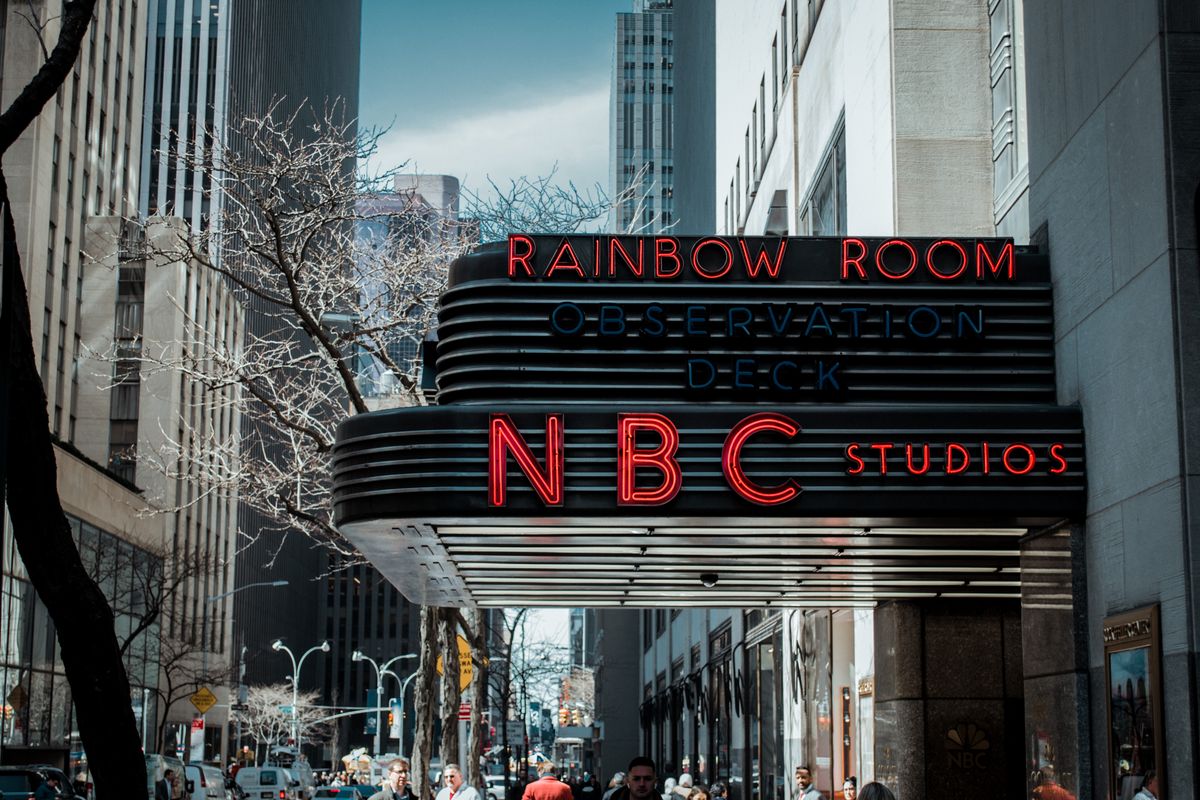
ABC carried the address via 2 secondary services, ABC News Live and ABC News Radio, rather than its main broadcast channel. NBC used 1 free streaming outlet, NBC News NOW, while CNN said it would monitor the event for news and make the live feed available through digital products rather than its regular cable channel.
That distinction matters because the networks did not stop Trump from speaking or prevent Americans from watching. They reduced the speech’s automatic reach by moving it from channels familiar to tens of millions of households onto platforms that require viewers to make 1 additional choice, such as opening an app, visiting a website or paying for a subscription.
We are therefore looking at a distribution downgrade, not censorship in the literal sense. The White House retained its own communications channels, the speech remained available online, and newsrooms were free to interrupt programming if Trump announced something with immediate national consequences.
A 47.5% Streaming Share Makes the Decision More Complicated.
Moving a presidential speech online would have sharply limited its audience 10 years ago, but the television market has changed. Nielsen reported that streaming captured a record 47.5% of total TV viewing in December 2025, compared with 21.4% for broadcast television and 20.2% for cable.
Streaming also exceeded 50% of daily television use twice during December 2025, reaching 54% on Christmas Day as Americans generated 55.1 billion viewing minutes. Those numbers show that digital television is no longer a small side room where networks quietly place unwanted coverage.
Still, the headline percentage can be misleading. Netflix, YouTube, and major sports broadcasts drive a large share of streaming growth, while a specialized live-news service may attract only a fraction of that audience. A speech available on 1 network app cannot be assumed to have the same reach as a program aired on a widely distributed local broadcast station.
The decision therefore carried real consequences even in a streaming-first era. Instead of millions of viewers encountering the speech automatically at the same 9 p.m. hour, interested Americans had to search for it, select a platform and, in CNN’s case, potentially use a paid service.
The $787.5 Million Warning Networks Cannot Ignore
Every major newsroom remembers what happened after the 2020 election. Fox News agreed in 2023 to pay Dominion Voting Systems $787.5 million to settle a defamation lawsuit involving false allegations about election technology.
To put that figure in perspective, $787.5 million is roughly $2.2 million per day for an entire year. That financial shock changed the risk calculation for any broadcaster carrying unverified allegations about voting-machine companies, election workers or identifiable technology providers.
A live presidential speech gives editors approximately 0 seconds to investigate a new allegation before it reaches the public. Even when a newsroom provides corrections 5 minutes later, the original statement may already have been clipped, reposted, and circulated across dozens of digital platforms.
That does not mean networks should hide politically controversial claims. It means they have strong legal and journalistic incentives to distinguish between broadcasting a claim, verifying it, and placing it before the public with enough evidence to judge it fairly.
5 Intelligence Findings Put the China Angle Under a Microscope
Trump’s address was expected to examine whether China had the intention or capability to interfere in the 2020 presidential election. That subject is legitimate, but any new disclosure must be measured against the government’s existing 2021 intelligence assessment, which contained 5 central judgments about foreign threats.
The assessment’s 1st key judgment said intelligence agencies found no indication that a foreign actor altered the technical operation of the 2020 voting process. That included voter registration, ballot casting, vote counting, and the reporting of results.
Its 4th key judgment concluded with high confidence that China did not deploy an interference operation intended to change the presidential outcome. The report said Beijing considered influence activities but largely relied on traditional measures such as economic pressure and lobbying, although 1 intelligence official offered a somewhat different assessment, noting limited Chinese actions directed against Trump’s reelection.
Those distinctions are critical because 3 distinct concepts are often conflated: influence, interference, and vote manipulation. A foreign government can spread propaganda or pressure political figures without changing 1 ballot, entering 1 voting machine, or altering 1 official result.
The same assessment determined that Russia conducted influence operations supporting Trump and damaging Joe Biden, while Iran ran a campaign intended to hurt Trump’s reelection prospects. Yet its central technical finding remained unchanged: intelligence agencies saw 0 successful foreign attempts to alter the mechanics of the vote.
The 58% Partisan Mirror Makes Every Network Choice Explosive.

The network dispute landed in a media environment split almost perfectly along party lines. A 2025 Pew Research Center survey of 9,482 U.S. adults found that 58% of Democrats trusted CNN, while 58% of Republicans distrusted it.
The same survey found that 56% of Republicans trusted Fox News, while 64% of Democrats distrusted it. These numbers help explain why the same editorial decision can be viewed by 2 halves of the country as either responsible journalism or politically motivated suppression.
Audience habits are just as divided. Pew found that 48% of Democrats regularly used CNN for news, 47% used NBC, and 46% used ABC, compared with 20%, 24%, and 27% of Republicans, respectively.
That means keeping the address off those primary channels may have affected Democratic-leaning viewers more in terms of raw exposure, even though Republican viewers were more likely to interpret the decision as hostility toward Trump. A single choice by 3 outlets, therefore, produced different political effects across at least 2 sharply separated media audiences.
8 ABC Stations and 8-Year Licenses Raise the Pressure
ABC’s decision carried an added regulatory dimension because Disney owns 8 ABC television stations and was facing 2 pending FCC inquiries, according to Reuters. One inquiry concerned whether an appearance by a Democratic Senate candidate on The View raised questions under federal equal opportunity rules.
Broadcast licenses are generally granted for 8-year terms, giving federal regulators a role that does not exist for newspapers, podcasts, or most websites. The FCC does not normally dictate an outlet’s daily news judgment, but the possibility of license scrutiny can increase the pressure surrounding controversial political coverage.
FCC Chair Brendan Carr publicly argued that the networks should air Trump’s address, saying Americans deserved to receive it through the public airwaves. His intervention mattered because the agency oversees thousands of broadcast licenses, even though networks retain broad editorial discretion over whether 1 presidential speech displaces scheduled programming.
NBC’s parent company, Comcast, also faced federal examination of its diversity practices, while Trump had repeatedly criticized NBC’s coverage. With 2 major broadcast companies under regulatory attention, a decision that might otherwise appear purely editorial inevitably carried corporate and political consequences.
435 House Races Turned the Speech Into a Midterm Flashpoint
The November 3 election places all 435 House seats before voters, meaning a swing of only a handful of districts could change control of the chamber. Another 35 Senate races will help determine whether Trump has a cooperative Congress or faces stronger opposition during the final 2 years of his term.
Election-security messaging 110 days before voting ends can shape expectations long before officials count the first ballot. If Americans are repeatedly told machines are vulnerable or foreign actors can secretly change results, some voters may enter November prepared to distrust any outcome their preferred party loses.
At the same time, legitimate threats cannot be dismissed. Foreign influence operations were documented in both the 2016 and 2020 cycles, and state election systems remain attractive targets for cybercriminals, intelligence services and disinformation campaigns. The responsible standard is therefore not blind trust or automatic suspicion, but evidence that clearly separates influence attempts from actual changes to votes.
This Was More Than a 1-Night Television Dispute.
The fight over Trump’s speech exposed 3 powerful forces colliding at once: presidential access to the public, network control over editorial decisions and growing public distrust of both political and media institutions.
We are also seeing the end of the old assumption that 1 prime-time White House address automatically belongs on every major channel. Networks now have multiple options, including full broadcast coverage, secondary streaming, delayed excerpts, real-time fact-checking, and post-speech analysis.
The danger is that a country with more than 330 million people may no longer experience major national events through a shared information system. Some Americans receive the full speech, others receive edited clips, and millions more encounter only the angriest 30-second segment selected by an algorithm or political influencer.
ABC, NBC, and CNN did not erase Trump’s message on July 16. They made it less automatic, more fragmented, and easier to surround with context. With 110 days remaining before the 2026 midterms, that choice may become a blueprint for how U.S. networks handle the next disputed claim from the White House.