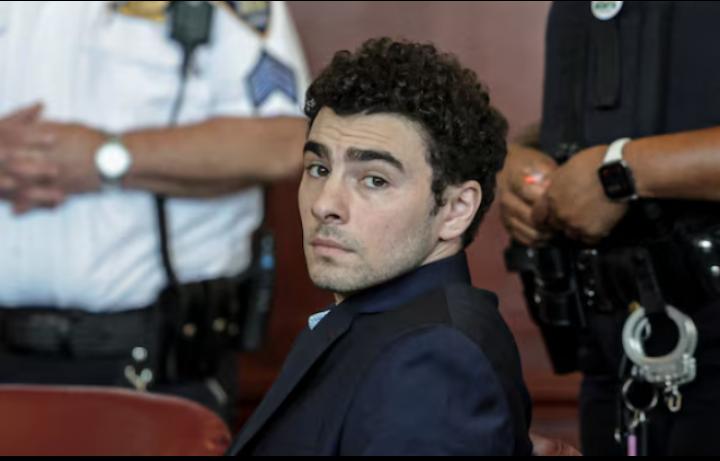
Adam Montgomery Murder Conviction Overturned in Harmony Case as Supreme Court Orders New Trial
A major legal twist has reopened one of New Hampshire’s most closely watched child homicide cases, after the state Supreme Court overturned the second-degree murder conviction of Adam Montgomery in the death of his 5-year-old daughter, Harmony Montgomery. The ruling affects 1 overturned conviction, but leaves 4 other serious felony convictions in place, ensuring Montgomery remains in prison while prosecutors prepare for a retrial.
The court’s decision does not erase the jury’s original findings. Instead, it focuses on how the trial was conducted, finding that the murder charge and a separate assault charge should not have been tried together. According to the justices, combining the two charges created an unfair risk that jurors improperly connected stronger evidence from the assault allegation to the weaker evidence supporting the murder charge.
The result is a partial reversal that reshapes the legal path forward without ending the case, which has now stretched across more than 5 years of investigations, hearings, and appeals.
Supreme Court finds 1 key trial error that changed the outcome.

At the center of the ruling is a single procedural issue concerning how 2 separate charges were presented to the jury in a single trial. The assault allegation, tied to a July 2019 incident, was supported by multiple witnesses who described visible injuries to Harmony and statements allegedly made by Montgomery. In contrast, the murder charge, tied to December 2019, depended more heavily on the testimony of one central witness, Montgomery’s estranged wife, whose credibility had been previously questioned in court.
According to the Supreme Court, Federal Rule of Evidence 606(b) prevents courts from considering juror statements about what occurred during deliberations, including whether jurors may have relied on stronger evidence of assault to conclude guilt for other charges. That type of reasoning, while emotionally compelling, is not permitted under criminal law standards requiring each charge to be proved independently.
The justices ruled that this structure compromised the fairness of the trial. As a result, the murder conviction was vacated, while the remaining convictions were fully affirmed.
Evidence breakdown shows 3 stronger witnesses versus 1 disputed account.
A key factor in the court’s reasoning was the disparity in the strength of the evidence between the two charges. The assault case relied on at least 3 separate witness accounts describing injuries to Harmony and alleged admissions made by Montgomery around mid-2019. These accounts were considered consistent and mutually reinforcing, creating what the court described as strong evidentiary support.
The murder charge, however, was built on a narrower foundation. According to a report from Boston.com, the New Hampshire Supreme Court overturned Adam Montgomery’s murder conviction, noting procedural errors in the trial. While the court upheld his convictions for assault, falsifying evidence, witness tampering, and abuse of a corpse, only the murder conviction was reversed.of the fatal act itself.
That distinction became critical. The court concluded that while concealment evidence may support suspicion, it does not automatically prove causation of death beyond a reasonable doubt.
43.5-year prison sentence remains intact despite partial reversal
Even with the murder conviction overturned, Adam Montgomery remains incarcerated under a separate combined sentence of approximately 43.5 years. That sentence is tied to 4 other felony convictions, including assault, witness tampering, falsifying physical evidence, and abuse of a corpse.
According to a report from Boston.com, the New Hampshire Supreme Court overturned Adam Montgomery’s murder conviction. The status of his other convictions and incarceration was not addressed in the report.
The practical effect is that the ruling changes the legal status of one conviction but does not result in his release or reduction in overall prison time at this stage.
Prosecutors plan 1 new murder trial under stricter legal boundaries.
The New Hampshire Attorney General’s Office has stated it intends to retry the murder charge. That means the case will return to a lower court where prosecutors must now build their argument under revised legal conditions that separate the assault evidence from the murder allegation.
This retrial will likely focus more narrowly on the December 2019 timeline, when prosecutors allege Harmony died. The state is expected to again present circumstantial evidence, testimony from cooperating witnesses, and forensic or behavioral indicators linked to what happened after her death.
However, prosecutors must now avoid the evidentiary overlap that led to the reversal. According to AP News, the Supreme Court unanimously found that combining separate cases in this instance jeopardized the defendant’s right to a fair trial because jurors might have been influenced by stronger evidence from one case when considering another. Legal experts also note that retrials after appellate reversals often require prosecutors to substantially revise their approach, particularly when dealing with multiple charges that have varying levels of supporting evidence. strength.
Harmony Montgomery’s disappearance remains unresolved after 5 years.
Harmony Montgomery was just 5 years old when she disappeared from public view, with the last confirmed sightings around late 2019. According to New Hampshire Public Radio, despite an original conviction and thorough investigations, Elijah Lewis’s remains have not been found, leaving one of the most troubling aspects of the case unresolved. The report notes that authorities did not learn of his disappearance until 2021, and he had last been seen at his home in Merrimack, New Hampshire, sometime within the preceding 30 days, creating a significant gap during which his whereabouts were unknown. That delay has become one of the most heavily scrutinized aspects of the case, raising questions about missed warning signs and gaps in child welfare oversight.
Investigators later concluded that Harmony likely died in December 2019, followed by a period in which her body was concealed and moved before ultimately being disposed of. However, without physical recovery of remains, certain aspects of the case remain dependent on testimony and circumstantial reconstruction.
Child welfare system faces scrutiny after 101-page review.

Beyond the criminal trial, the case has fueled broader criticism of child protection systems in Massachusetts and New Hampshire. A 101-page report from a Massachusetts child welfare oversight agency concluded that institutional decisions prioritized parental rights over child safety in ways that left Harmony vulnerable.
The report highlighted multiple missed intervention opportunities and raised concerns about communication breakdowns between agencies handling custody decisions. It also noted that Harmony, who had known medical and developmental needs, experienced repeated placement instability before ultimately being placed with her father.
The findings have become part of a wider policy debate about foster care monitoring, cross-state coordination, and how agencies respond when children move between jurisdictions with unresolved risk factors.
Legal meaning of the ruling: 1 reversal, not 1 exoneration
The Supreme Court’s decision has been widely misunderstood in public discussion, but legally it does not clear Montgomery of murder. Instead, it reflects a procedural ruling that found the original trial structure unfair under constitutional standards.
In practical terms, the case now stands at 1 murder conviction overturned, 4 felony convictions upheld, and 1 murder charge eligible for retrial. This means the judicial process is still active, and the ultimate question of guilt on the murder charge remains unresolved.
Appellate courts do not determine guilt or innocence in these situations. They evaluate whether the trial itself met legal fairness requirements. In this case, the court determined it did not, specifically because of how the charges were combined and presented to the jury.
A case that continues to evolve without closure
More than 5 years after Harmony Montgomery’s disappearance, the case continues to move through the justice system without a final resolution. With 1 overturned conviction, 1 planned retrial, and multiple remaining felony sentences still active, the legal process remains ongoing.
At the center of it all remains a missing child, a fragmented timeline, and a case that continues to raise difficult questions about evidence, fairness, and systemic failure.
Until the retrial concludes, the case remains legally open and emotionally unresolved, with prosecutors and defense once again preparing to argue over what happened in December 2019, and whether justice has truly been served.