Morocco Says Spain Should Have Anticipated Court Ruling’s Migration Impact as Ceuta Crisis Deepens
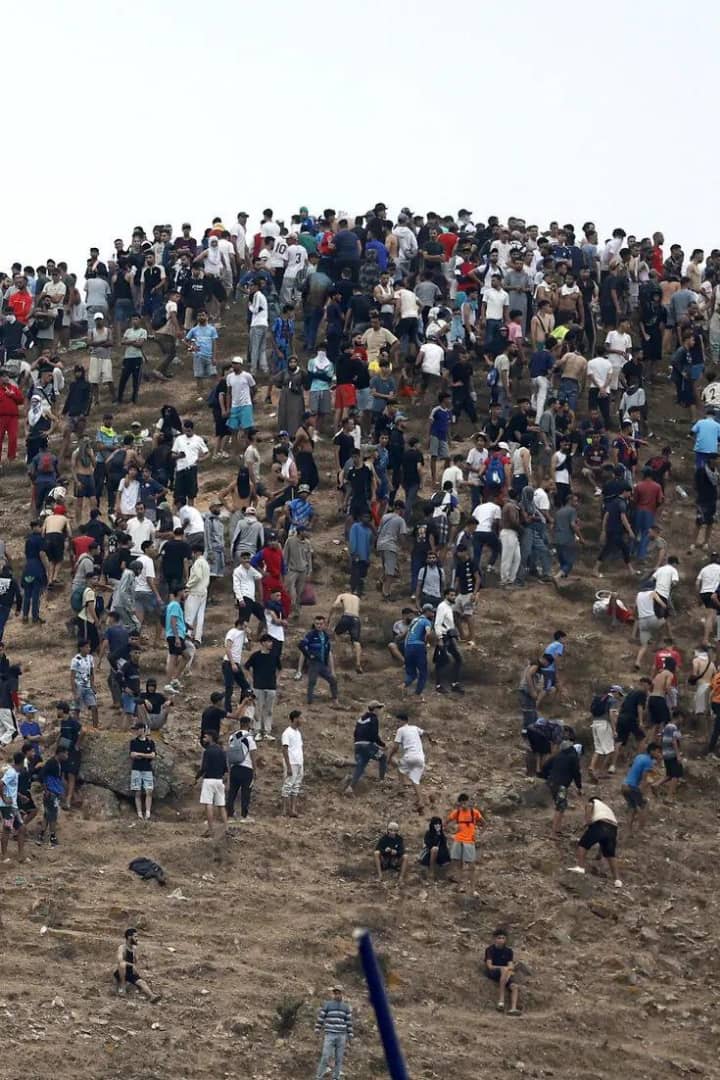
A Spanish court ruling changed one part of the border system. Moroccan authorities say trafficking networks turned that legal change into a promise promoted to prospective migrants. Then tens of thousands of people moved toward Ceuta, leaving both Spain and Morocco struggling with the consequences.
Now Rabat says Madrid should have recognized the danger before the mass crossing began.
A senior Moroccan government official said Spanish authorities failed to anticipate how a July 8 ruling could weaken an important deterrent against irregular migration. The decision limited Spain’s ability to return migrants immediately after they reached its North African enclaves by sea.
The dispute has opened a difficult new chapter between two countries whose cooperation helps control one of Europe’s most sensitive migration routes. It has also triggered questions about misinformation, intelligence gathering and what security authorities knew before crowds reached the border.
Most importantly, the crisis has taken a severe human toll. Spanish authorities reported 72 deaths on their side of the border, while Moroccan authorities recorded 11 deaths, according to Reuters.
Morocco says traffickers exploited the ruling
Morocco’s central argument rests on the practical effect of the Spanish judgment. Before the ruling, migrants who entered Ceuta or Melilla illegally could face rapid return to Morocco. Rabat regarded that possibility as an important deterrent.
The court decision restricted immediate returns involving migrants who arrived by sea. A senior Moroccan official, who was not publicly identified, said trafficking networks quickly presented the legal change as an opportunity.
“The message became just cross and you will be protected,” the official told reporters.
The statement offers Morocco’s explanation for how a legal decision became part of a much larger border emergency. It does not establish that every person who crossed knew about the ruling, but Moroccan authorities say traffickers and misleading social media messages helped spread a distorted interpretation of it.
The official argued that Spain wanted Morocco to prevent crossings while its own legal system made returns more difficult.
“Europe asks us to stop migrants from crossing, but on the other side they roll the red carpet when they cross!” he said.
Rabat denied relaxing border controls or reducing its security presence before the crossing. Morocco says it deploys roughly 24,000 security personnel along its northern coastline as part of its migration strategy.
Official Moroccan figures cited by Reuters show that authorities prevented 79,000 attempted crossings in 2024 and 74,000 in 2025. The government offered those figures as evidence that it has continued to patrol migration routes toward Europe.
The official described Spanish-Moroccan cooperation before the court ruling as “exemplary.” However, he said Spain must now address the gap created by the judgment.
“It is up to Spain to find a solution to restore deterrence,” he said.
At the same time, Morocco rejected a policy that treats migration only as a security threat. The official said the country would never support “a purely security-based approach to migration.”
Ceuta’s overwhelmed shelters reveal the human cost
The exact number of migrants involved remains disputed because Spain and Morocco recorded different stages of the movement.
Moroccan authorities estimated that approximately 40,000 people entered Ceuta. Spain reported that about 69,500 migrants had returned to Morocco after the crossing. Earlier Spanish estimates placed arrivals at roughly 50,000.
Whatever the final count, Ceuta’s emergency system came under extraordinary pressure.
Regional President Juan Jesús Vivas estimated that between 3,000 and 5,000 migrants remained in the enclave several days after the initial rush. He told Telecinco that Ceuta’s reception centers for adults and minors had “collapsed.”
Local authorities were processing 862 migrant children, who receive special legal protections. Their cases cannot be managed through the same return procedures used for adults.
Reuters video from Ceuta showed migrants sleeping on El Trampolín beach while police and military vehicles patrolled nearby. Many reportedly wrapped themselves in towels to stay warm.
Some migrants returned to Morocco after finding closed shops, limited access to food and no clear route to mainland Spain. Ceuta and Melilla sit on Morocco’s Mediterranean coast, but reaching either enclave does not automatically provide free passage to continental Europe.
Vivas placed considerable responsibility on Rabat. He accused Morocco of having “encouraged and permitted” the influx and questioned whether Spain could continue relying on its neighbor.
“Morocco has shown us that it isn’t reliable,” Vivas told El País. He called for measures strong enough to prevent a similar episode.
Morocco firmly disputes that account. Its Interior Ministry blamed trafficking groups, social media misinformation and misunderstanding of the Spanish ruling. Madrid’s official explanation has also recognized the roles played by misinformation and criminal networks.
Reuters reported that El País and Cadena SER, citing officials familiar with the matter, said Spanish intelligence services concluded that Morocco did not organize the crossing but allowed it to happen. Those reports alleged that Moroccan border controls were gradually relaxed during July and removed as crowds approached the Tarajal crossing during the country’s Throne Day holiday.
Morocco denied reducing its security deployment or relaxing its border controls.
The crisis tests trust across Europe’s southern border

European Commission President Ursula von der Leyen warned against attempts to use irregular migration to pressure an EU country. Her remarks reflected Europe’s broader concern that migration flows can become political leverage during disputes with neighboring states.
Spanish Foreign Minister José Manuel Albares said Spain had supported other European countries during their migration emergencies and expected similar backing. He also accused Italy’s government of helping amplify misinformation surrounding the crisis.
Yet Albares acknowledged Morocco’s role in ending the immediate emergency. He said Rabat offered police support without imposing conditions, helping Spain return most of the people who crossed.
That cooperation complicates the blame game. Spanish officials have criticized what happened before and during the crossing while also crediting Morocco with helping restore control afterward.
The crisis has also raised questions inside Spain. Interior Minister Fernando Grande-Marlaska said the CNI intelligence service did not warn him that such a large movement was imminent.
Defense Minister Margarita Robles declined to say whether the intelligence agency had prior information. She said its work remained confidential and praised the response of Spanish security personnel.
Those statements leave a central question unresolved: how did such a large crowd gather and move toward the border without Spanish authorities receiving enough warning to prepare Ceuta?
Spain and Morocco may continue debating whether the court ruling, trafficking networks, misinformation or weakened border controls carried the greatest responsibility. What remains clear is that several pressures collided at once, overwhelming Ceuta’s shelters and costing dozens of lives.
Deterrence may form part of the solution, but it cannot repair lost trust or bring back those who died. Both countries must now build a system that respects the law, disrupts trafficking networks and responds to warning signs before another crisis begins.