America Branded a ‘Disgusting’ Fascist Regime During Progressive Call Featuring Abdul El-Sayed, Cori Bush
A virtual progressive rally intended to promote antiwar candidates has become a political liability after one speaker compared the governments of the United States and Israel to history’s most notorious fascist regimes. Yet the most consequential question is not limited to what was said during the event. It is whether prominent Democrats who briefly enter loosely organized online coalitions should be held responsible for every incendiary statement made on the same broadcast.
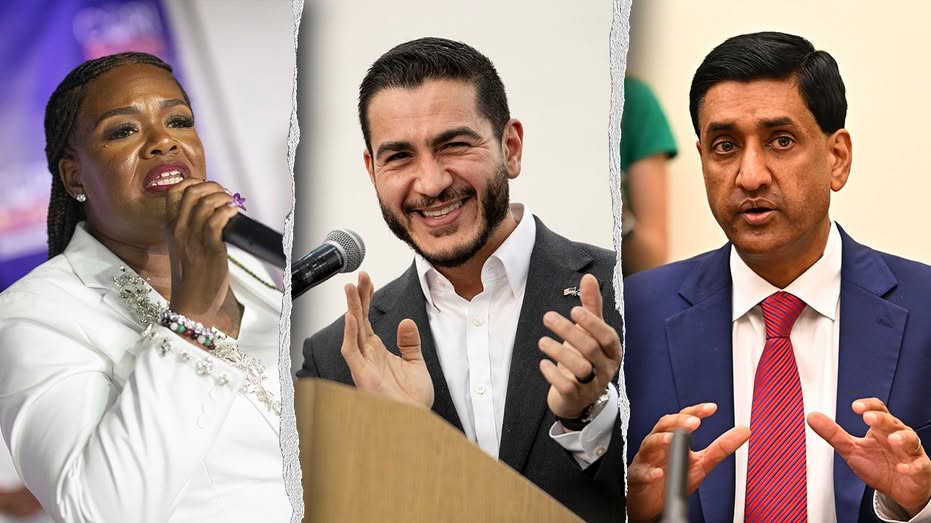
The March 2026 event, titled “Choose Your Fighter,” was organized by Progressive Victory and featured politicians, candidates, podcasters and online personalities opposed to the conflict in Iran. Reported participants included California Rep. Ro Khanna, Michigan Senate candidate Abdul El-Sayed, former Missouri Rep. Cori Bush, candidate Darializa Avila Chevalier and streamer Hasan Piker. The event’s political purpose was clear. Organizers wanted to raise money, build enthusiasm and connect progressive candidates with large digital audiences. The controversy began when podcaster Kyle Kulinski opened his appearance with an attack on American and Israeli leaders that moved far beyond a conventional criticism of foreign policy.
Kyle Kulinski’s Speech Transformed the Progressive Rally
Kulinski accused the United States and Israel of creating what he described as a new version of the Third Reich. He compared unnamed political leaders to Adolf Hitler and Benito Mussolini, declared that America had descended into fascism, and described the country’s leadership as violent imperialists. He also labeled the Make America Great Again movement an “imperialist fascist death cult” and urged opponents to defeat it. His remarks framed the United States and Israeli governments as perpetrators of terrorism rather than as countries responding to regional threats.
Those statements immediately changed the meaning of the event. What had been presented as an antiwar fundraising rally could now be portrayed as a gathering where American officials and progressive candidates shared a platform with rhetoric condemning the United States as a fascist power. However, sharing a digital event does not necessarily mean that every participant heard or approved every statement. Virtual political programs may last for hours, with candidates entering briefly to deliver prepared remarks before leaving. Establishing who was present during Kulinski’s speech is therefore essential before assigning responsibility.
Ro Khanna’s Team Draws a Firm Line
Khanna’s spokesperson, Sarah Drory, told Fox News Digital that the congressman was not connected to Kulinski’s language. She said Khanna appeared for approximately five minutes and was not on the call when the controversial remarks were delivered. Drory added that Khanna believes America is an exceptional country and “obviously disagrees” with Kulinski’s comments. That distinction matters because Khanna has increasingly attracted national attention beyond his California district. His public appearances, town halls and engagement with online political personalities have fueled speculation that he could seek higher office in the future.
Khanna has defended the broader strategy of speaking with controversial internet figures, arguing that Democrats must communicate with audiences outside traditional television and newspaper platforms. That strategy provides access to young voters, but it also creates significant reputational risks. Online political programs rarely operate like carefully controlled campaign events. Guests may be separated by hours, and organizers do not always impose a unified message. A candidate who speaks for five minutes can later appear in promotional material beside personalities whose language the candidate would never publicly endorse. The Khanna episode demonstrates the weakness of guilt by association. His participation is politically relevant, but it does not by itself prove that he accepted Kulinski’s comparisons or even heard them.
Progressive Victory Refuses to Retreat
Progressive Victory did not distance itself from Kulinski. Benjamin Gilbert-Lif, the organization’s deputy executive director, told Fox News Digital that the group stood by the remarks and said they reflected the views of its community and members of its national leadership. Gilbert-Lif also defended the organization’s opposition to states that legally favor one ethnic or religious population. He said Progressive Victory supported a secular, single democratic state where Israelis and Palestinians could live together without legal preferences based on ethnicity. That response ensures the controversy cannot be dismissed as an unscripted comment from an outside speaker. Progressive Victory’s leadership consciously embraced the substance of Kulinski’s message rather than explaining that his language exceeded the organization’s position.
The group describes itself as an online community that converts digital political engagement into real-world action. Its affiliated committee is registered with the Federal Election Commission, and its website lists candidates supported during the 2026 election cycle. The model reflects a broader change in American campaigning. Political influence is no longer controlled exclusively by parties, television networks and traditional advocacy organizations. Streamers and podcasters can mobilize large audiences, collect donations and introduce candidates to voters who rarely consume conventional political news. That power also means their words can follow every candidate who appears beside them.
Cori Bush, Abdul El-Sayed and Other Candidates Face Questions
Fox News identified Bush, El-Sayed and Chevalier as candidates endorsed by the Democratic Socialists of America who appeared during the event. The report said the outlet requested comments from them and Piker but had not received responses at the time of publication. Their silence left an important political question unresolved. Did they agree with Kulinski’s description of America, or did they join only because the event promoted opposition to the Iran conflict? Those positions are not interchangeable. A politician can oppose a war, question presidential authority, criticize Israeli military policy and demand congressional oversight without describing America as a Nazi-style regime.
Clear responses would allow voters to distinguish between shared antiwar objectives and support for the event’s most extreme rhetoric. Without those responses, political opponents can define the meaning of their participation. Piker’s involvement adds another layer. He has become an influential figure among younger progressive voters and has appeared with candidates including El-Sayed. His reach makes him attractive to campaigns, even as his previous statements about the United States and Israel continue to generate condemnation from Republicans and some Democrats.
The Fundraiser Delivered Money and Controversy
Florida congressional candidate Oliver Larkin, whose campaign helped organize the event, said the broadcast raised $40,000 for 20 progressive antiwar candidates. He argued that Congress should reclaim its constitutional authority over war and hold the Trump administration accountable. The fundraising total shows why candidates participate in creator-driven events. A single virtual gathering can connect campaigns in several states, attract thousands of viewers and produce donations without the expense of a traditional national rally. Yet the controversy reveals the cost of that efficiency. Candidates may receive money and exposure, but they also lose control over the wider message surrounding them.
Canary Mission, an organization that describes itself as an antisemitism watchdog, condemned Kulinski’s remarks as hateful and anti-American. Progressive Victory, in contrast, argued that its position was rooted in opposition to imperialism, ethnic nationalism and the ongoing war. These competing reactions illustrate how the event will be used politically. Conservatives are likely to present it as evidence that radical anti-American ideas are entering Democratic politics. Progressive activists will frame the backlash as an attempt to silence forceful criticism of war and Israeli policy.
The Bigger Test for the Democratic Party
The episode is ultimately about more than one inflammatory speech. It exposes a growing struggle inside the Democratic coalition over foreign policy, online political influence and the boundaries of acceptable rhetoric. Progressive candidates increasingly rely on independent creators to reach alienated young voters. Those creators often reject the careful language used by elected officials and established campaigns. Their confrontational style is precisely what builds audience loyalty, but it can also turn a fundraising event into a national controversy.
We should separate three facts. Kulinski delivered the remarks. Progressive Victory explicitly defended them. Several Democratic politicians and candidates participated in the broader event, although Khanna’s representative said he was absent when the statements were made and rejected them afterward. Treating every guest as automatically responsible would ignore how the event operated. Pretending the remarks have no political significance would ignore the organizer’s decision to endorse them. The candidates now face a straightforward choice. They can explain where legitimate antiwar criticism ends and where inflammatory historical comparisons begin, or they can allow a viral clip to answer that question for them.