America’s First Female Serial Killer Aileen Wuornos, Who Killed 7 Men, Is ‘Brought Back From the Dead’ Using AI
More than two decades after Aileen Wuornos was executed in Florida, artificial intelligence is giving audiences an unsettling new way to revisit one of America’s most notorious murder cases.
A forthcoming Investigation Discovery docuseries uses advanced digital replication and visual effects to place Wuornos’ face over an actress’s filmed performance. The result is a synthetic version of the convicted killer that appears to move, speak, and react during reconstructed moments from her life.
Titled Unmasking a Monster: Aileen Wuornos, the three-part production is scheduled to air as a three-hour event on September 30, from 8 p.m. to 11 p.m. ET/PT. It will air on Investigation Discovery and be available to stream on HBO Max.
An Actress Performs Beneath the Digital Face
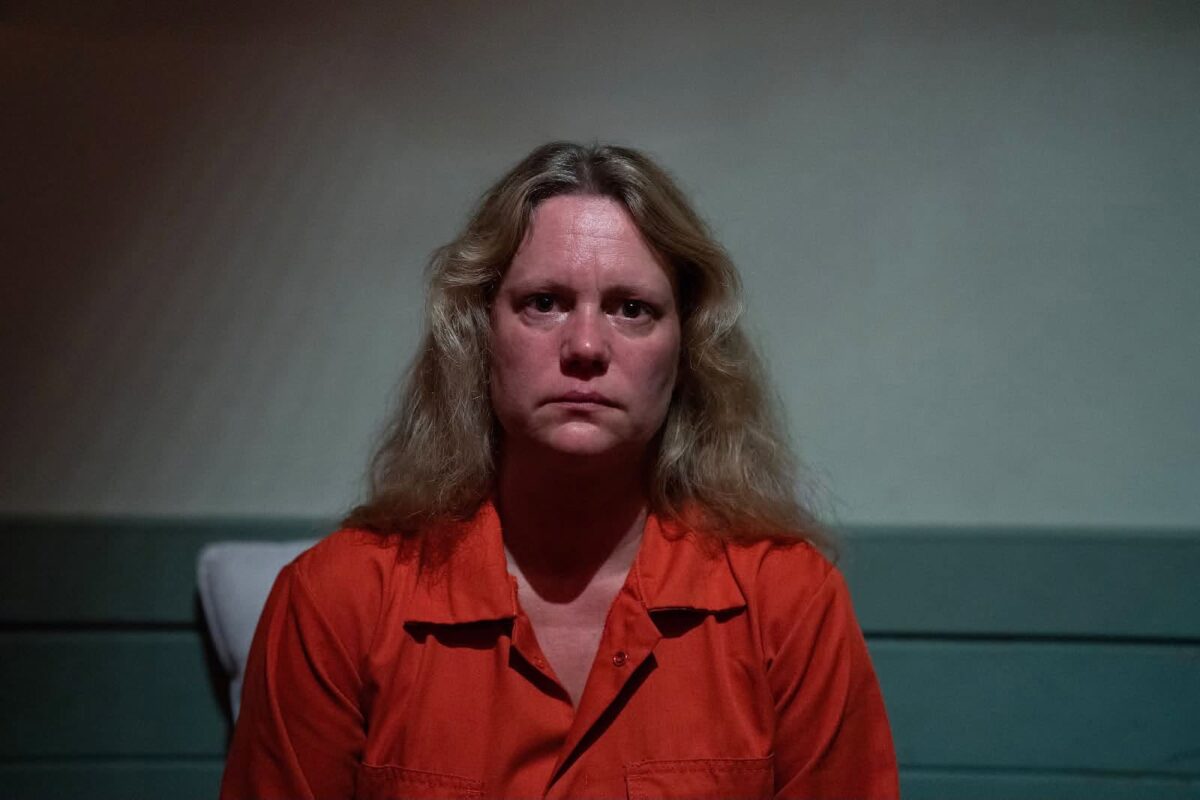
The production did not simply create an entirely computer-generated character and place her into the documentary.
Actress Morag Peacock first performed the reconstructed scenes, studying Wuornos’ speech, facial expressions, mannerisms and physical behavior. Visual-effects specialists then placed a detailed digital model of Wuornos’ face over Peacock’s performance.
Archive photographs and video recordings showing Wuornos from multiple angles were used to construct the three-dimensional model. Artificial intelligence helped align the virtual face with the actress’s movements, leaving Peacock’s physical performance beneath the digital exterior.
The ambitious reconstruction reportedly required three years of work. Peacock described the experience as similar to wearing a costume, although the final transformation made it seem as though Wuornos had returned to life.
The filmmakers say the reconstructed scenes are based on legal transcripts, documented evidence and previously recorded testimony rather than invented conversations. People whose likenesses were digitally reproduced were informed about the process and gave their consent, according to details released about the production.
The Technology Revisits a Brutal Florida Case
Wuornos killed seven men in Florida between 1989 and 1990 after encountering them during her work as a sex worker.
Her first known victim was Richard Mallory, whose body was discovered in December 1989. Six other men disappeared or were found dead during the following year, with investigators gradually connecting the cases through fingerprints, witness information and property taken from the victims.
Wuornos was arrested in January 1991. She was convicted of Mallory’s murder in 1992 and later entered no-contest pleas in five additional cases. Authorities linked her to seven deaths, although she received six death sentences because one victim’s body was never recovered.
Wuornos maintained for years that the men had raped her or attempted to sexually assault her and that she fired in self-defense. Her accounts changed over time, however, creating enduring disputes over her motives, mental condition, and the circumstances surrounding individual killings.
She was executed by lethal injection at Florida State Prison on October 9, 2002, at the age of 46. She was one of the relatively small number of women executed in the United States after capital punishment resumed in the 1970s.
Wuornos Was Not America’s First Female Serial Killer

Wuornos is frequently described as America’s first female serial killer, but that label is historically inaccurate.
Several American women committed serial murders decades before Wuornos. Nurse Jane Toppan confessed to killing numerous patients after her arrest in 1901, while Belle Gunness was connected to bodies discovered on her Indiana property in the early 1900s. Dorothea Puente was also convicted following the discovery of bodies buried at her California boarding house during the 1980s.
Wuornos became unusually prominent because she targeted male strangers, used a firearm, and committed murders that resembled patterns more commonly associated with male serial offenders. The intense television coverage surrounding her trial also helped transform her into a nationally recognized figure.
Criminologist Katherine Ramsland has challenged attempts to call Wuornos either the first or the defining female serial killer, arguing that such descriptions distort the longer history of women who committed repeated murders in the United States.
A more accurate description is that Wuornos became one of America’s most infamous female serial killers, not its first.
A New Line for True-Crime Storytelling
Investigation Discovery says the technology is intended to help viewers visualize important moments for which no original footage exists.
Jason Sarlanis, president of Investigation Discovery, said the production worked with law enforcement officials, members of Wuornos’ inner circle, actors and visual-effects specialists. He said each reconstruction was carefully shaped by transcripts and firsthand testimony.
The series will also include accounts from investigators and people who knew Wuornos, examining the investigation that led to her capture and the years she spent awaiting execution.
That approach places the documentary at the center of a growing ethical debate. Digitally recreating a dead person can make historical storytelling more immediate, but it can also blur the boundary between evidence and dramatization. Even when dialogue comes from genuine records, facial movements, pauses, and emotional reactions still depend partly on an actor’s interpretation.
The production’s disclosures about consent and documented sourcing may help viewers understand how the images were created. Yet audiences will still need to remember that the Wuornos appearing onscreen is not recovered footage. It is a carefully constructed performance enhanced by artificial intelligence.
Why the Wuornos Story Refuses to Disappear
Wuornos has remained a powerful figure in American popular culture because her story resists a simple explanation.
She was responsible for a series of killings that left seven families without their loved ones. She also endured an unstable and reportedly abusive childhood, homelessness, and years of exploitation before the murders began. Those circumstances provide context, but they do not erase the suffering caused by her crimes.
Her life inspired the 2003 film Monster, in which Charlize Theron portrayed Wuornos. Theron won the Academy Award for Best Actress for the physically and emotionally demanding performance, bringing the case to another generation of viewers.
Now, Unmasking a Monster: Aileen Wuornos is taking that fascination into a new technological era. Instead of relying only on archive footage, interviews and conventional reenactments, the series places a digitally reconstructed face at the center of the story.
It does not literally bring Aileen Wuornos back from the dead. What it brings back is her image, rebuilt from old recordings, human performance and artificial intelligence.
That distinction may be the most important part of the documentary’s disturbing illusion.