America’s Most Walkable Cities Revealed, and the Best Way to Explore Each One on Foot
The best way to understand an American city may be to shut the car door, tighten your shoelaces, and start walking. From foggy hills and brick-lined historic streets to sunlit beaches and bustling markets, the country’s most pedestrian-friendly cities reward travelers who slow down long enough to notice the details.
Walk Score evaluates cities based largely on how easily residents can reach restaurants, stores, parks, schools, and other everyday destinations without driving. Its published large-city ranking places San Francisco, New York, and Boston at the front, followed by several cities where memorable neighborhoods, waterfronts, and landmarks can be connected on foot.
Walkability can vary sharply between neighborhoods, so a high city score does not mean every street is equally convenient. Still, these destinations offer some of the most satisfying car-free adventures in America.
San Francisco, California
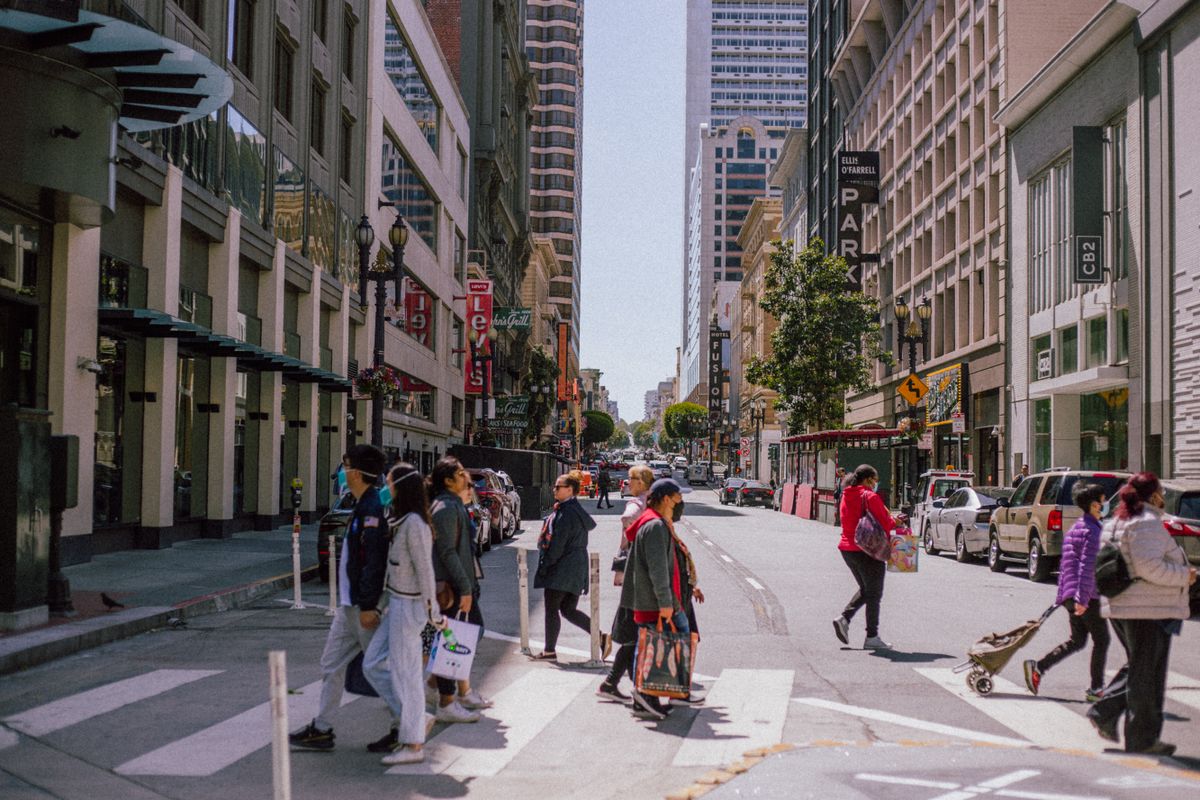
San Francisco tops the published ranking despite hills that can make even an innocent-looking block feel like a workout. Its compact layout places Chinatown, North Beach, Nob Hill, Union Square, and the waterfront close enough for visitors to experience dramatic changes in culture and scenery within a single afternoon.
The best walk: Begin beneath Chinatown’s Dragon Gate, continue along Grant Avenue and explore the neighborhood’s smaller alleys before heading toward North Beach. From there, climb toward Coit Tower or descend toward Fisherman’s Wharf, where the waterfront provides an easier finish after the city’s steeper streets.
San Francisco Travel recommends a self-guided route connecting Chinatown, Nob Hill, and North Beach, three neighborhoods packed with architecture, restaurants, and local history. Travelers should wear shoes with good grip, carry a light jacket, and remember that a cable car is not admitting defeat when the next hill looks vertical.
New York City, New York
New York turns walking into part of the entertainment. Storefronts change every few steps, food carts appear when hunger strikes, and a short detour can lead to a hidden garden, independent bookstore, or street performance.
The best walk: Start near City Hall in Lower Manhattan and cross the Brooklyn Bridge toward DUMBO. After taking in the skyline, continue through Brooklyn Bridge Park, where the waterfront provides views of Manhattan without the Midtown crowds.
The elevated pedestrian walkway across the bridge delivers one of the city’s defining experiences, while nearby cobblestone streets and converted warehouses create an entirely different atmosphere once walkers reach Brooklyn. New York City Tourism also recommends combining Lower Manhattan with the bridge and Brooklyn’s waterfront neighborhoods for a rewarding day on foot.
Travelers seeking a more relaxed route can walk the High Line before wandering through Chelsea and Greenwich Village. In New York, the smartest approach is not trying to walk the entire city but choosing one compact area and allowing its side streets to take over the itinerary.
Boston, Massachusetts
Boston feels designed for travelers who would rather follow history than a navigation app. Narrow streets, brick sidewalks and compact neighborhoods make it possible to move between major landmarks while experiencing the city’s personality along the way.
The best walk: Follow the Freedom Trail from Boston Common toward the North End and Charlestown. The red brick route stretches about two and a half miles and connects sixteen historically significant sites, including meeting houses, burial grounds, and locations linked to the American Revolution.
Allow time to leave the official path for Beacon Hill’s quieter streets and the North End’s bakeries and restaurants. Those seeking a deeper look at the city can also explore the Black Heritage Trail, a roughly one-and-a-half-mile route through Beacon Hill that highlights important homes, schools, and community buildings.
Chicago, Illinois
Chicago’s grid makes the city easier to navigate than its size suggests. Downtown offers famous architecture, parks, museums, and waterfront spaces without requiring visitors to spend the entire day in a vehicle.
The best walk: Begin at Millennium Park, continue toward the lake, and then loop back through the Chicago Riverwalk. The pedestrian-friendly Riverwalk extends about one and a quarter miles along the south bank of the Chicago River, offering close views of towers, bridges, public art, and tour boats.
Walkers with more energy can continue onto the Lakefront Trail, an eighteen-mile paved route following Lake Michigan. A shorter section near downtown still delivers beaches, skyline views, and open green space, making it one of the best ways to see Chicago without feeling trapped between skyscrapers.
Washington, D.C.
Washington offers wide sidewalks, monumental views, and an unusually high concentration of free attractions. The scale of the National Mall can be deceptive, however, because landmarks that appear close together may require longer walks than expected.
The best walk: Start at the U.S. Capitol and move west through the National Mall toward the Washington Monument, World War II Memorial, and Lincoln Memorial. Continue around the Tidal Basin when time and weather allow.
The Mall has stroller- and wheelchair friendly routes, while its broad paths connect museums, gardens and some of the country’s best-known memorials. Beginning early in the morning helps visitors avoid the strongest heat and the largest tour groups.
For a more neighborhood-focused experience, walk the two-mile Embassy Row stretch from Scott Circle through Dupont Circle. The route trades monuments for mansions, diplomatic buildings, galleries, and cafés.
Miami, Florida
Miami may be associated with sports cars and sprawling highways, but several of its most famous neighborhoods are best enjoyed slowly. Downtown, Little Havana, Brickell, and parts of Miami Beach offer concentrated pockets of restaurants, architecture, and public life.
The best walk: Explore Ocean Drive and the surrounding Art Deco Historic District in South Beach. The colorful hotels, curved corners, and geometric details become easier to appreciate on foot than through a car window.
Daily walking tours introduce visitors to Art Deco, Mediterranean Revival, and Miami Modern architecture, while a casual route can continue from Ocean Drive toward the beachfront path and Lincoln Road. Morning and late afternoon are the most comfortable times to walk because Miami’s midday heat can quickly overpower even enthusiastic sightseers.
For a food and culture-focused alternative, walk Calle Ocho in Little Havana, stopping near Domino Park, local cafés, cigar shops, and public art.
Oakland, California
Oakland’s strongest walking experiences are concentrated around downtown, Uptown, and Lake Merritt. These areas combine historic theaters, restaurants, murals, parks, and transit connections with a less polished but deeply local energy.
The best walk: Complete the roughly three-mile loop around Lake Merritt. The mostly level route attracts runners, families, dog walkers, and people simply looking for a calm break within the city.
Extend the outing toward the Oakland Museum of California or head into Uptown for galleries, restaurants, and the Paramount Theatre. Unlike a landmark checklist, Oakland is best approached as a neighborhood experience, where murals, local businesses, and community gathering spaces provide the most memorable moments.
Philadelphia, Pennsylvania
Philadelphia’s compact historic center allows visitors to cover centuries of American history without repeatedly calling a rideshare. Old City, Society Hill, Reading Terminal Market, and City Hall can be connected through a long but manageable day of walking.
The best walk: Begin near Independence Hall and the Liberty Bell, then wander through Old City before continuing west toward Reading Terminal Market and City Hall. A self-guided Historic District route covers about one and a quarter miles and includes more than twenty attractions.
Continue from City Hall through LOVE Park and along the Benjamin Franklin Parkway toward the Philadelphia Museum of Art. The route shifts from colonial streets to grand museums and landscaped public spaces, showing how much of the city’s story can be experienced without entering a car.
Seattle, Washington
Seattle’s hills deserve respect, but the reward comes in waterfront views, market stalls, coffee shops and neighborhood streets framed by mountains and water. Recent waterfront improvements have also created stronger pedestrian connections between downtown attractions.
The best walk: Begin at Pike Place Market, use Overlook Walk to reach the waterfront, and continue along the pedestrian promenade toward Pioneer Square. The renewed route connects the market, Seattle Aquarium, piers, public art, and Elliott Bay viewpoints.
Travelers who want a longer outing can follow the Market-to-MOHAI corridor. The one-way route passes parks, shops, and interpretive displays while linking Pike Place Market with the Museum of History and Industry.
Long Beach, California
Long Beach closes the top ten with something many urban walks cannot offer: miles of flat coastal scenery. Downtown attractions, marinas, beaches, and shopping districts create a relaxed alternative to the traffic associated with much of Southern California.
The best walk: Start around Rainbow Harbor and Shoreline Village, then follow the beachfront route toward Belmont Shore. The mostly flat path runs for more than four miles, with a designated walking lane separated from faster bicycle and scooter traffic.
Finish on Second Street in Belmont Shore, a fifteen-block district filled with restaurants, boutiques, and casual gathering places. The route combines marina views, sandy beaches, and neighborhood energy without requiring visitors to navigate Los Angeles-area freeways.
Why Seeing a City on Foot Still Matters
Driving may get travelers to the headline attractions faster, but walking reveals what happens between them. It exposes the bakery around the corner, the mural hidden beside a parking garage, the small park filled with local families, and the neighborhood restaurant that never appeared in the original itinerary.
America’s most walkable cities are not necessarily free from traffic, hills, weather, or uneven infrastructure. Their real advantage is that they give visitors the freedom to step outside, choose a direction, and discover something meaningful before reaching the next scheduled stop.