Before Fast Food Took Over, Americans Ate These 8 Lunches on the Go
Today, grabbing lunch might mean pulling into a drive-through, ordering a sandwich at a counter, or picking up a meal between errands. But Americans needed convenient food long before national fast-food chains became widespread.
Workers carried meals underground, street vendors sold hot dogs to hungry crowds, and neighborhood businesses served substantial sandwiches that could fit into a busy day.
Some communities developed distinctive foods around the demands of their jobs, while others relied on simple packed lunches or early self-service restaurants.
These traditions weren’t all nationwide favorites, and they didn’t disappear when fast-food chains expanded. Instead, they show how different communities found practical ways to eat when there wasn’t much time to spare.
Michigan Miners’ Pasties
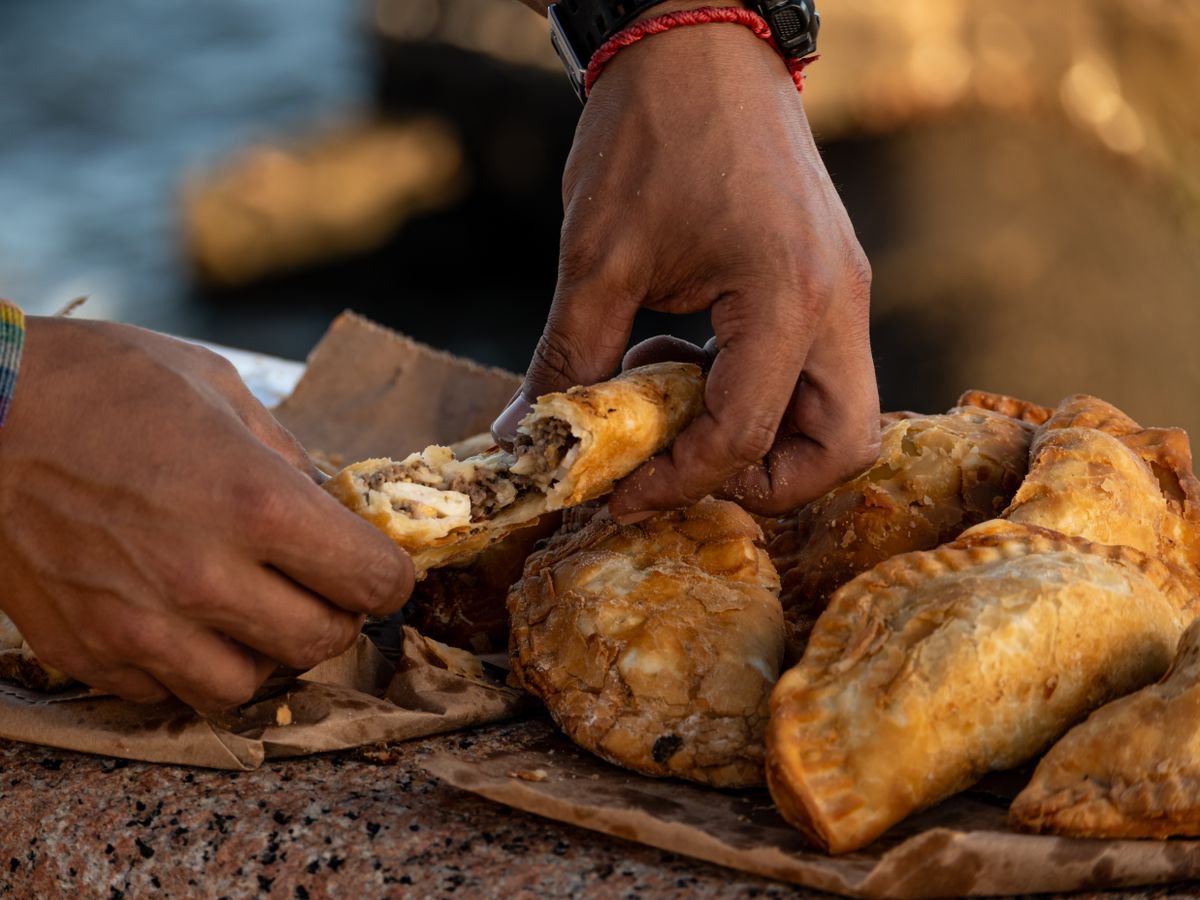
A pasty is a substantial savory pastry filled with meat and vegetables, making it a meal that comes with its own edible container. As NPR’s history of Michigan pasties explains, Cornish miners brought the tradition to Michigan’s Upper Peninsula during the 19th century, where it became closely associated with the region’s mining communities.
For miners working long days underground, a portable meal was especially useful when an ordinary restaurant lunch wasn’t an option. Finnish immigrants later adopted the dish, helping establish it as a regional favorite.
The pasty’s appeal is easy to understand: instead of packing several separate items, workers could carry a filling meal enclosed in pastry.
West Virginia Pepperoni Rolls
West Virginia’s pepperoni roll combines two familiar ingredients: soft white bread and pepperoni baked inside. Its history is closely connected to the state’s coalfields, where miners needed food they could carry to work.
According to Marion County’s tourism organization, miners already took bread and sticks of pepperoni underground. Italian immigrant and former miner Giuseppe “Joseph” Argiro commercialized the pepperoni roll at Fairmont’s Country Club Bakery in 1927.
The idea was practical without being complicated. Baking the pepperoni inside the bread turned separate lunch ingredients into one convenient item that could be carried to work.
The pepperoni roll also demonstrates how a regional specialty can grow from the everyday routines of a working community.
Related: 6 Iconic Fast Food Chains You’ve Probably Never Heard Of
Mississippi Delta Hot Tamales
The Mississippi Delta has its own distinctive hot tamale tradition. These small, seasoned meat-filled portions are commonly made with cornmeal and simmered rather than steamed. Pork is traditional, although recipes vary and other meats are used.
The Southern Foodways Alliance documents the tradition as far back as the early 20th century, including tamales carried warm to cotton fields during the fall picking season. That made them a practical option for workers who needed to eat without returning home.
Exactly how the Delta’s tamale tradition began remains uncertain. One explanation involves Mexican migrant laborers sharing food with African American workers, but the available history does not establish a single definitive origin story.
Unlike a large sandwich, tamales could be carried in several small portions, offering another way to make lunch portable.
New Orleans Muffulettas
In New Orleans, the muffuletta offers a different take on a substantial lunch. The sandwich uses round, Sicilian-style bread filled with meats, cheese, and olive salad.
Central Grocery, a New Orleans institution founded in 1906, credits its founder, Sicilian immigrant Salvatore Lupo, with creating the sandwich. The store’s history connects the muffuletta to the city’s Italian-American food traditions, although its founding date alone doesn’t establish the exact year the sandwich was invented.
The muffuletta also illustrates how a neighborhood grocery could serve more than shoppers stocking their kitchens. Customers could obtain a ready-made sandwich for lunch instead of buying ingredients and preparing a meal at home.
Its distinctive combination of bread, fillings, and olive salad gives the sandwich a regional identity that extends beyond an ordinary deli lunch.
New Orleans Po’boys
The New Orleans po’boy has a history tied to a labor dispute. Louisiana’s 64 Parishes traces the sandwich’s origins to brothers Bennie and Clovis Martin, who operated a French Market restaurant during the 1929 streetcar strike.
The brothers worked with bread supplier John Gendusa on a loaf suited to making large sandwiches economically. Their strike-era sandwiches used inexpensive cuts of meat and were associated with feeding striking workers.
French-bread sandwiches existed before the Martins’ version, so the story isn’t about inventing every sandwich made with that bread. Instead, it shows how a particular sandwich became connected to a specific community and moment in local history.
The po’boy’s story also gives lunch a social dimension: a handheld meal could be part of how a neighborhood supported workers during a difficult period.
Coney Island Hot Dogs
A hot dog offered a straightforward way to grab something to eat during a busy outing. At Coney Island, New York, Nathan Handwerker opened his stand in 1916, selling hot dogs for five cents.
Handwerker entered an existing hot-dog trade rather than inventing the food. His business became part of Coney Island’s broader street-food culture, where customers could purchase something to eat without sitting down for a formal restaurant meal.
A hot dog might serve as lunch or a snack, depending on the customer and the occasion. Its convenience made it a natural fit for people spending time at a busy destination.
The example also highlights a different approach to eating on the go: instead of carrying food from home, customers could buy a ready-to-eat item from a vendor.
Related: The 7 Best Breakfast Foods You Need to Try in 2026
The Worker’s Lunch-Pail Meal
Not every portable lunch depended on a regional specialty or a food vendor. For many workers, the solution was to bring a meal from home in a sturdy container.
Smithsonian’s history of the lunch box describes 19th-century workers carrying food in heavy-duty metal pails to workplaces such as mines and quarries. The National Museum of American History also holds workers’ lunch containers dating from the 1890s onward.
The important detail is that there was no single standard lunch-pail menu. Sandwiches are one reasonable example of packed food, but individual meals depended on what people had available and chose to bring.
Before lunch boxes became familiar pop-culture accessories, durability was the practical priority. A container needed to protect a meal during the working day, allowing people to carry lunch rather than purchase it at lunchtime.
The Automat Lunch
For Americans who wanted to buy a quick meal, the automat offered a different solution. The first U.S. automat opened in Philadelphia in 1902, according to a Smithsonian archival record.
These restaurants displayed food behind small doors. Customers selected an item, used coins to open the appropriate compartment, and collected their food without placing an order with a waiter.
Horn & Hardart became associated with the automat tradition, and baked macaroni and cheese was among its documented dishes. The format provided an alternative for people who wanted a quick meal during a break.
Unlike a pasty carried underground or a lunch packed in a metal pail, an automat meal was purchased at an establishment. It was an early form of quick-service dining, showing that convenient restaurant food was already part of American life before the later expansion of national fast-food chains.
Convenient Lunches Have a Long American History
From Michigan’s pasties to New Orleans sandwiches, Mississippi Delta tamales, workers’ lunch pails, and early automats, these eight examples reveal different ways Americans made time for food during busy days.
Some carried meals from home. Others bought lunch from a street vendor, a grocery counter, or a self-service restaurant. Their histories are rooted in different regions and communities, but they share a practical purpose: making food available when work, travel, or an outing left little time for a leisurely meal.
Fast-food chains later expanded the options available to Americans, but they weren’t the beginning of convenient eating. The desire for a satisfying lunch that fits into an ordinary day is much older than the drive-through.