Bill Gates’ testimony about Epstein sharpens questions about visibility, influence, and elite blind spots.
Bill Gates’ testimony about Jeffrey Epstein does more than revisit a controversial association. It exposes how power, philanthropy, and reputation can overlap in ways that make dangerous figures harder to recognize in plain sight.
The newly released House Oversight Committee transcript shows Gates repeatedly distancing himself from Epstein’s criminal conduct while also acknowledging uncomfortable proximity to Epstein’s social and professional world, including the possibility that he may have been in the presence of Epstein’s victims without realizing it.
That single distinction has become the defining tension of the testimony: not what Gates saw, but what he could not identify.
Gates denies wrongdoing but acknowledges proximity to Epstein’s orbit.
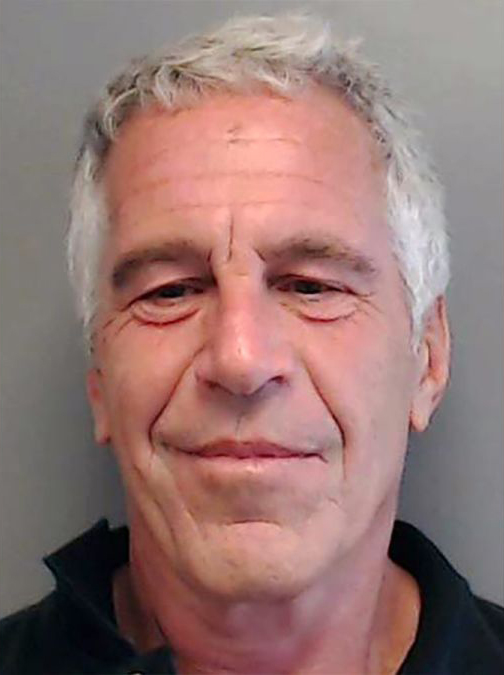
In his closed-door interview, Gates stated he:
- Never witnessed Epstein committing crimes.
- Never engaged in sexual contact arranged by Epstein.
- Never received a massage or sexual services.
- Never visited Epstein’s private island or ranch.
- Ended all contact by 2014
But he also confirmed something more ambiguous: during brief encounters, including meetings, travel, and social interactions, he may have been physically near individuals who were later identified as Epstein victims.
Gates emphasized he did not know their status at the time.
That distinction sits at the center of the broader Epstein narrative: victims often moved through elite environments without visible markers of their exploitation.
The “invisibility layer” inside Epstein’s social world
One of the most overlooked dimensions of the Epstein case is how victims were positioned inside his ecosystem.
They were often described as:
- assistants
- administrative staff
- companions
- guests
- employees tied to his operations
This created a structural invisibility problem. To outsiders, even highly influential ones, these individuals did not appear as victims in real time.
Gates’ testimony unintentionally highlights this gap: presence did not equal recognition.
In elite environments, roles blur. Titles replace context. And exploitation can be concealed behind ordinary social labels.
Epstein’s real currency: legitimacy, not money
While Epstein is frequently described as a financier or fundraiser, Gates’ testimony reinforces a more strategic interpretation of his behavior.
Epstein’s most valuable asset was not capital; it was credibility by association.
By gaining proximity to globally recognized figures, Epstein achieved:
- social validation
- perceived legitimacy in philanthropic circles
- access to elite networks
- Reputational shielding through association
Each meeting functioned as a signal: if powerful people engage with him, he must be credible.
This is why even brief interactions mattered.
The philanthropy gateway Epstein exploited
Gates explained that Epstein presented himself as a connector capable of unlocking major philanthropic funding for global health initiatives.
The promise included:
- introductions to ultra-wealthy donors
- multi-billion-dollar fundraising opportunities
- structured giving vehicles
None of these materialized.
But the offer itself created a gateway effect: philanthropic ambition lowered the barrier to engagement.
This reveals a recurring vulnerability in elite giving networks, access brokers who weaponize good intentions.
The language of uncertainty: what “may have been in their presence” reveals
Gates’ phrasing is legally cautious but socially significant.
The statement does not confirm recognition. Instead, it reflects:
- fragmented memory of brief interactions
- lack of contextual awareness at the time
- uncertainty about identities in fluid social settings
In high-access environments like Epstein’s, individuals were often encountered without introductions or clear role definitions.
This creates what can be called a recognition gap, where people are physically present but cognitively unclassified.
That gap is central to understanding how Epstein operated.
The “legitimacy loop” that sustained Epstein’s access
Epstein’s network functioned through reinforcement:
He gains access to influential people.
Their presence enhances his credibility.
Increased credibility attracts more access.
The cycle repeats
This loop made Epstein appear embedded in respectable circles long after his 2008 conviction.
Gates’ involvement, even limited, became part of that ecosystem, not because of wrongdoing, but because the association itself carried symbolic weight.
The elite blind spot: proximity without perception
One of the most consequential themes in the testimony is the disconnect between proximity and awareness.
Gates’ account reflects a broader structural reality:
- Elite interactions are brief and compartmentalized.
- Individuals are often encountered in curated settings.
- Social etiquette discourages probing questions.
- Roles are assumed rather than verified.
In such environments, visibility is not the same as understanding.
This creates conditions in which serious misconduct can exist alongside everyday professional engagement without detection.
Why this testimony matters beyond Gates
The significance of the transcript lies not in legal exposure but in structural insight.
It highlights three enduring issues:
How reputations are used as shields
Epstein leveraged his association with respected figures to normalize his access.
How victims can be socially erased
Individuals can exist in elite spaces without being recognized as vulnerable.
How philanthropy can become an entry point
Well-intentioned financial goals can create exposure to bad actors who specialize in access.
The reputational equation: influence vs accountability
Gates’ testimony reflects a broader tension in modern elite networks:
- Influence is built through proximity.
- credibility is borrowed through association
- Accountability is often retrospective.
In that structure, individuals may not fully understand the implications of engagement until long after the relationship ends.
Gates’ own conclusion is that the relationship with Epstein should never have occurred, not because of proven criminal involvement, but because it granted legitimacy to a figure who was later revealed to be deeply criminal.
The deeper lesson: visibility is not awareness

The most important takeaway from the transcript is not about what Gates saw.
It is about what elite environments fail to reveal in real time.
Epstein’s world was not hidden in isolation. It was hidden in plain sight inside dinners, meetings, flights, and philanthropic conversations that looked ordinary on the surface.
And in that environment, even powerful individuals could be physically present without ever truly seeing what lay before them.