Retail Shockwave: 5 Major U.S. Stores Feeling the Inflation Squeeze and What Smart Shoppers Are Doing in 2026
Inflation has stopped being a short-term headline and turned into a long-term retail reshuffle. Over the last 48 months, U.S. consumer prices have climbed sharply, forcing both households and retailers to adjust in real time. From grocery aisles to home decor megastores, the pressure is visible in nearly every checkout receipt.
What’s changing now is not just higher prices, but how retailers respond to them. Some are scaling down operations, others are rewriting pricing strategies, and a few are leaning heavily on loyalty programs to keep customers from walking away. At the same time, consumers are becoming more selective, cutting discretionary spending by an estimated 12% to 18% in certain non-essential categories since the inflation surge began.
Here are five major retailers under the most visible strain, along with how shoppers are adapting to keep more money in their pockets.
Costco Holds the Line With Volume Power and a $1.50 Symbol Strategy.
Costco continues to stand out in a retail landscape where even small price changes matter. With more than 130 million memberships worldwide and annual revenues exceeding $250 billion, the warehouse giant still relies on scale, a limited selection, and bulk purchasing to preserve its perception of value.
Even as food and logistics costs have risen by roughly 20% since the early inflation cycle, Costco has managed to keep certain iconic price anchors intact, including its famous $1.50 hot dog combo, a psychological pricing tool that reinforces loyalty even as other categories shift upward.
But pressure is building underneath the surface. Imported goods, fuel, and discretionary items such as electronics and furniture are more exposed to price fluctuations than staple groceries. Analysts estimate that bulk retailers are now operating with margins 5% to 9% tighter in non-food categories than pre-inflation levels.
The strategy is clear: Costco protects essentials, quietly adjusts discretionary pricing, and relies on membership retention rather than aggressive discounting to maintain stability.
Walmart Faces Weekly Price Adjustments Across a 4,600+ Store Network.
Walmart continues to be a leading low-price retailer in the U.S., operating 3,566 supercenter stores and 694 neighborhood markets nationwide as of January 31, 2026, according to Statista. However, even a company of this scale faces challenges from inflation-driven volatility.
Walmart’s latest earnings report does not provide specific information on weekly price changes for imported goods, toys, electronics, or seasonal items.
According to a report from Foreign Policy Journal, while Walmart has traditionally maintained a significant price advantage over many competitors in grocery and household goods, a recent study found that Costco now prices its grocery baskets about 21 percent below Walmart, shifting the competitive landscape. The real challenge for retailers remains maintaining consistency. Customers now see price shifts more frequently across identical products, forcing many to shop more strategically rather than casually.
Target Struggles as Discretionary Spending Drops Nearly 15%
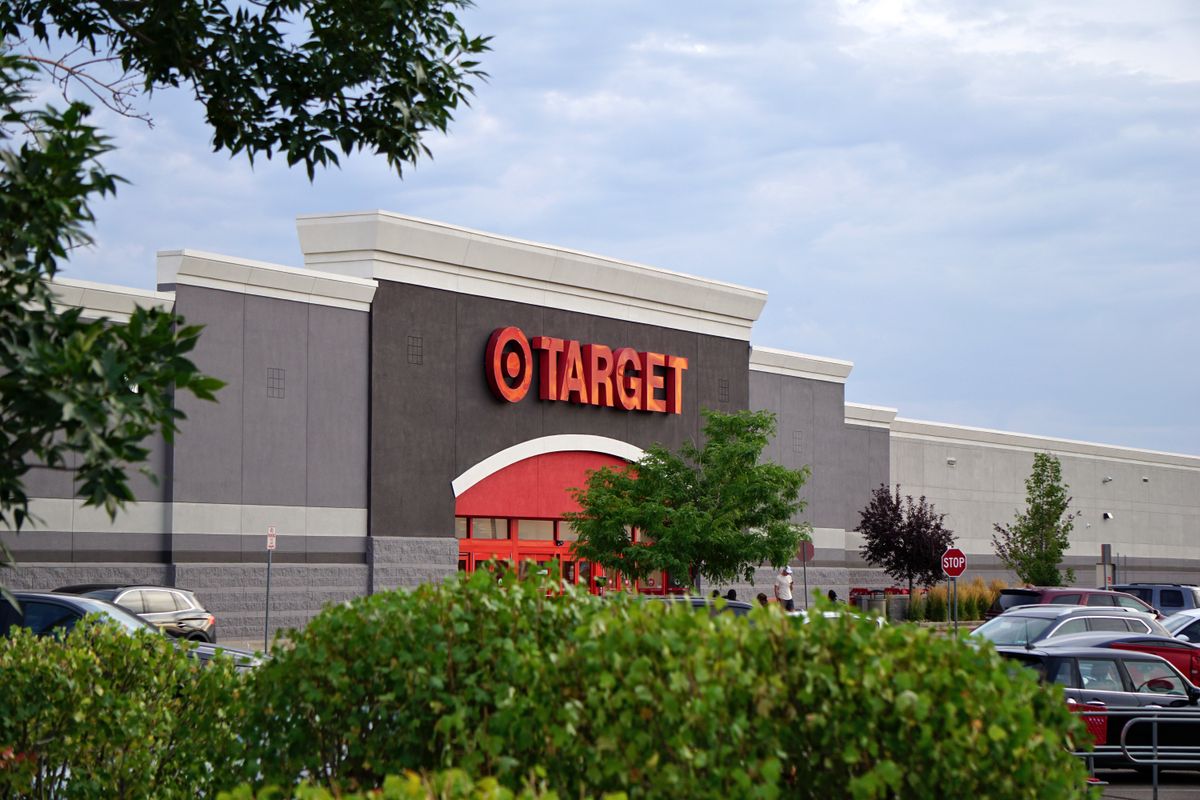
According to a recent report, Target experienced a 2.5 percent decrease in comparable sales in the fourth quarter and a 1.5 percent drop in net sales, bringing total annual revenue down 1.7 percent to $104.8 billion. This decline reflects the challenges Target faces as shoppers cut back on discretionary spending, particularly on items like home decor, clothing, and seasonal products.
According to the NPD Group, U.S. discretionary retail spending in 2022 declined 2% in sales revenue and 7% in total unit sales compared to the previous year. In response to these shifts, the company has adjusted its promotional activity, refined its pricing strategies, and placed more emphasis on its Target Circle program, which now plays an important role in driving repeat purchases.
Target’s challenge is psychological as much as financial. The store experience is designed to encourage impulse buying, but inflation has changed shopper behavior. Consumers are now entering with tighter budgets and leaving with fewer non-essential items.
Even small pricing decisions, such as a $5 increase in home goods baskets or a reduced markdown frequency, can significantly affect perceived affordability.
Macy’s Shrinks Footprint as Department Store Demand Falls Below Pre-Pandemic Levels
Macy’s is one of the clearest examples of how inflation intersects with long-term retail decline. The company has reduced its store base by roughly 20%+ over the last several years, part of a broader restructuring strategy focused on profitability over footprint.
According to Macrotrends, department store retail sales in the United States have steadily declined from $39.31 billion in 2014 to $10.697 billion as of February 2025, with categories such as apparel, jewelry, and home goods recovering more slowly as consumers increasingly favor discount and online shopping alternatives.
According to a report from Macy’s, Inc., the company delivered 3.0 percent comparable sales growth in the first quarter of 2026, its strongest first-quarter performance in four years, with increases across all its brands.
At Home Restructures After Debt Pressures Exceed $2 Billion.
At Home represents one of the most dramatic retail stress cases in the inflation era. The home decor giant, operating around 200+ large-format stores, faced mounting pressure from rising import costs, debt exceeding $2 billion, and weakened consumer demand for large home purchases.
A significant share of its inventory is sourced internationally, meaning tariffs and shipping costs directly impact pricing flexibility. At the same time, inflation caused consumers to delay big-ticket home upgrades by an estimated 15% to 20%, according to retail spending trends in the home furnishings sector.
The company entered financial restructuring in 2025, reflecting how quickly high-overhead retail models can become vulnerable when both costs rise and demand softens simultaneously.
Despite this, liquidation cycles and clearance events continue to offer deep discounts, often reaching 30% to 70% off seasonal inventory, making timing the most important factor for shoppers.
The Bigger Retail Shift: A Market Split Into Essentials and Everything Else
The most important transformation in U.S. retail is no longer just inflation itself, but the way it has permanently divided the market into two clear worlds.
On one side are essential-driven giants like Costco and Walmart, which continue to thrive by focusing on high-volume staples, predictable demand, and disciplined pricing strategies that prioritize groceries, household basics, and everyday necessities. On the other side are discretionary retailers such as Target, Macy’s, and At Home, where performance now depends heavily on timing, promotions, seasonal demand, and the consumer’s willingness to spend on non-essential goods like apparel, home decor, and lifestyle upgrades.
As this divide deepens, consumer behavior is shifting just as rapidly, with more than 65% of shoppers now actively comparing prices across multiple retailers before making significant purchases, a major jump from previous years. The result is a retail environment where loyalty is weakening, calculation is increasing, and every purchase decision is becoming more deliberate, with shoppers increasingly moving between stores based on category strength rather than brand habit.
The New Rules of Retail Survival and Smart Spending
The retailers most impacted by inflation are not simply raising prices; they are rewriting how they operate. Costco leans on scale, Walmart on essentials, Target on experience, Macy’s on restructuring, and At Home on survival-level adjustments.
For shoppers, the shift is just as significant. The winning strategy in 2026 is not about finding one “cheap store,” but about understanding where value actually lives. Essentials belong in bulk or discount ecosystems. Discretionary purchases belong in timing cycles, clearance windows, and comparison shopping.
Inflation has not just raised prices; it has rewritten the rules of how every dollar moves through retail.