Bronx Bus Shooting Raises Questions About Transit Etiquette, Urban Tension, and Sudden Violence in Public Spaces
A Bronx father of seven was fatally shot on a NYC BX36 bus after a dispute over loud phone use, raising concerns about transit safety and urban conflict escalation.
A Routine Bronx Bus Ride That Turned Into a Fatal Urban Flashpoint
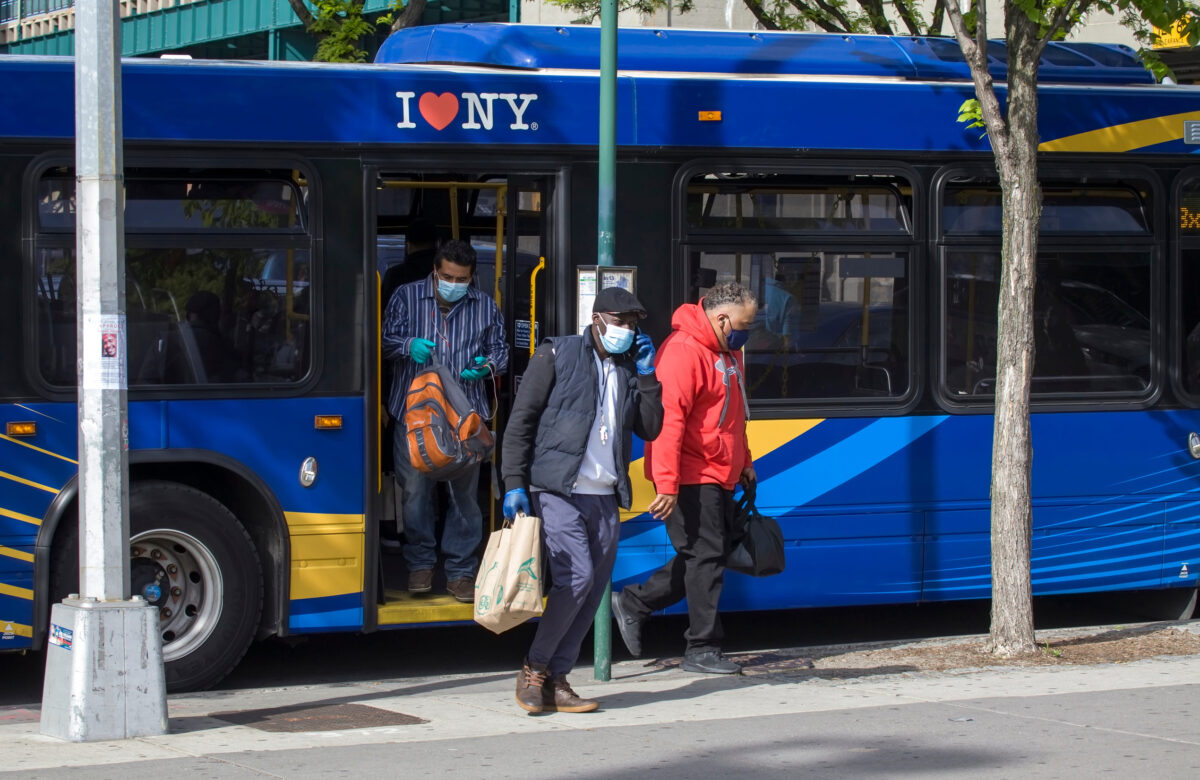
We are examining a case that began inside one of the most ordinary environments in New York City public life: a crowded city bus. According to police reports, 41-year-old Jonathan Pettigrew, a father of seven, was fatally shot aboard a BX36 bus in the Bronx after a dispute that allegedly began over loud cellphone use.
The incident unfolded near the busy corridor of White Plains Road and East Tremont Avenue, an area where daily commuter traffic, school routes, and local businesses intersect. In a city built on constant movement, the bus became the setting for a moment that stopped everything instantly.
What makes this case stand out is not only the violence itself, but the reported trigger. A disagreement over noise, space, and respect in a shared environment escalated into gunfire. We are left with a situation that feels both shocking and disturbingly familiar in modern urban life.
The Unwritten Rules of Transit and How Small Tensions Escalate
Public transportation operates on a system of unwritten rules. Riders are expected to manage volume, respect shared space, and navigate proximity with strangers without direct conflict. These rules are rarely spoken, but they are deeply understood.
In this case, police sources say the dispute began when one passenger was speaking loudly on a phone. Pettigrew allegedly expressed frustration, a reaction many commuters can relate to after long days in crowded, high-stress environments.
But buses are not emotionally neutral spaces. They are compressed environments where stress accumulates quickly. Noise, movement, heat, and proximity all stack together. In such conditions, even a brief exchange can shift tone faster than expected.
We are seeing a broader pattern in urban life where small social friction points become flashpoints. It is not the loud phone call alone. It is the combination of fatigue, overcrowding, and the increasing unpredictability of strangers’ responses to confrontation.
The Fatal Moment Inside the BX36 Bus
The BX36 bus, a key Bronx transit route, became the center of a homicide investigation after the dispute escalated. According to police reports, the argument intensified before a gun was discharged inside the bus, striking Pettigrew.
Passengers reportedly panicked, rushing to exit the vehicle as the situation unfolded. Emergency services transported Pettigrew to Jacobi Hospital, where he was later pronounced dead.
We are dealing here with a scenario that highlights how quickly control can collapse in a confined public setting. A bus driver cannot physically intervene in a violent escalation. Riders are left with seconds to react, often without clarity about what is happening or where danger is coming from.
This is one of the most unsettling elements of the case: there was no warning structure that could realistically prepare passengers for what followed.
One Seat, Two Strangers, One Irreversible Chain Reaction
At its core, this was a proximity story. Two strangers sharing a narrow physical space, separated only by seats, aisle distance, and silence that can break at any moment.
Modern transit environments increase forced proximity. People sit within inches of strangers for extended periods, often after stressful workdays or long commutes. In these spaces, emotional restraint becomes part of survival etiquette.
But restraint is not guaranteed.
We can visualize the progression of events as a chain reaction that escalated in seconds, not hours. Small irritation becomes verbal confrontation. Verbal confrontation becomes emotional escalation. Emotional escalation becomes irreversible violence.
Why Public Confrontations Carry Higher Risk Than Most Riders Expect
A key detail in this case is how ordinary the initial trigger appears. Loud phone conversations are a common complaint across transit systems in major cities. Many riders experience similar frustrations daily.
However, what most commuters do not factor in is the uncertainty of escalation. When a stranger reacts to a minor complaint, there is no reliable way to predict temperament, intent, or access to weapons.
This creates what we can call a “transit safety gap” between expectations and reality. Riders assume social correction is low risk. In reality, even verbal exchanges can carry unpredictable consequences depending on who is involved.
We are not suggesting that passengers should remain silent in all situations. Instead, we are highlighting the growing tension between social norms and safety awareness in shared urban environments.
Suspect Flight and the Challenge of Transit-Based Investigations
Police say the suspect fled the scene after the shooting, leaving investigators to reconstruct the event using surveillance footage, witness statements, and transit monitoring systems.
Buses like the BX36 operate within a network of external cameras, street-level surveillance, and digital transit records. These tools often become crucial in identifying movement before and after an incident.
However, transit-based crimes present a unique challenge: suspects can disappear into dense urban environments within minutes. Unlike isolated crime scenes, buses are mobile, fragmented spaces where evidence disperses quickly once doors open.
We are left with an active investigation where timing, footage clarity, and witness reliability will determine how quickly accountability can be established.
The Ripple Effect on Riders, Families, and Children

Gustavo Fring via Pexels
Beyond the investigation, the emotional impact of this case extends far beyond the bus itself. Pettigrew was a father of seven, and his death has created a lasting absence within his family structure.
For children, sudden loss carries a different kind of weight. It is not only grief but also the disruption of routine, identity, and emotional stability. School days continue, birthdays still arrive, and daily life moves forward in ways that feel disconnected from internal loss.
For commuters, the impact is psychological. Many riders will not have been present, but they will mentally place themselves into the scenario. This is how public-space violence spreads: through imagined repetition in the minds of everyday people.
Transit Systems and the Question of Passive Safety
Modern transit systems are designed primarily for movement efficiency. They are not always built for rapid behavioral intervention during conflicts between passengers.
Drivers are trained in operations and emergency protocols, not in physical confrontation. Surveillance systems record events but do not prevent escalation in real time. Police response is reactive, not immediate.
This raises an uncomfortable question for urban planners and policymakers: What does “safe transit” actually mean when most safety tools activate after an incident, not during one?
A City Built on Proximity Now Confronts Its Limits
New York City depends on shared space. Subways, buses, sidewalks, and crowded intersections define its identity. But shared space only functions when unspoken rules are respected and emotional escalation remains contained.
This case disrupts that assumption. It shows how quickly shared environments can shift from structured movement to unpredictable danger.
We are left with a difficult contradiction. The same density that makes urban life efficient also increases the frequency of close-contact conflict. And in rare but devastating moments, those conflicts escalate beyond control.
What This Case Reveals About Modern Urban Risk
The Bronx bus shooting is not only a criminal investigation. It is also a case study in how modern cities manage stress, proximity, and conflict between strangers.
We are seeing a world where:
- Small social irritations can escalate unpredictably.
- Shared spaces amplify emotional responses.
- Transit systems are not designed for real-time behavioral conflict.
- Riders increasingly carry invisible anxiety into everyday movement.
Jonathan Pettigrew’s death now sits at the intersection of these realities. A father of seven boarded a bus as part of a normal routine and never returned home.
What remains is a city still moving, still crowded, still connected, but now more aware of how fragile everyday encounters can become when tension meets unpredictability in the smallest of spaces.