Chicago Drivers Face Years of Roadwork as Major Infrastructure Projects Push the City Into a New Era.
Chicago is entering a long stretch of disruption that will reshape how the city moves, works, and connects. For drivers, it means something far less abstract: years of lane closures, shifting detours, and construction bottlenecks that will define daily commutes across neighborhoods and expressways. But behind the orange cones and steel barriers is a far larger transformation underway, one that places Chicago at the center of one of the most ambitious infrastructure rebuilds in its modern history.
Across highways, bridges, rail corridors, and airport networks, major projects are advancing simultaneously. Officials describe it as a necessary modernization. Residents experience it as slow-moving congestion. The truth sits somewhere in between: a city trying to rebuild itself while still functioning at full speed.
A City Where Infrastructure Never Really Stops

Chicago’s road system is not simply old; it is continuously aging under constant use. Built across multiple eras of expansion, the city’s infrastructure reflects decades of layered development, in which new systems were added atop older ones rather than replacing them entirely.
That legacy is now reaching a breaking point. From downtown expressways feeding into suburban corridors to heavily used arterial roads in residential neighborhoods, maintenance needs have multiplied. Bridges require reinforcement, road surfaces need full reconstruction instead of patchwork repairs, and transit infrastructure demands modernization to keep pace with population movement and freight traffic.
What makes Chicago unique is not just the scale of its infrastructure, but its constant demand. It is a logistics hub, a commuter city, and a regional connector all at once. That combination means even minor construction projects can quickly ripple outward into major delays for drivers.s.
The Mega-Projects Reshaping the Region

At the center of Chicago’s long-term transportation strategy are large-scale infrastructure projects designed to address decades of underinvestment and growing demand.
One of the most significant is the CTA Red Line Extension, a long-awaited expansion that broke ground in 2026. The project extends rail service to underserved areas on the Far South Side, aiming to improve access to jobs, education, and healthcare. It is also widely seen as a corrective step in a transit system where accessibility gaps have long mirrored economic inequality.
Supporters argue the extension is more than transportation; it is economic infrastructure. By linking previously isolated neighborhoods to the broader transit grid, the project is expected to unlock long-term development opportunities and reduce commuting burdens for thousands of residents.
However, like most large transit projects in major U.S. cities, the timeline stretches across years, not months. That means drivers will feel the construction impact long before benefits are fully realized.
At the same time, O’Hare International Airport continues to undergo a major modernization and expansion program. The airport, one of the busiest in the world, is expanding terminals, reconfiguring taxiways, and upgrading passenger capacity to maintain its position as a global aviation hub. These upgrades are essential for economic competitiveness and also contribute to sustained construction activity across surrounding road networks.
Roads and Bridges Under Constant Pressure
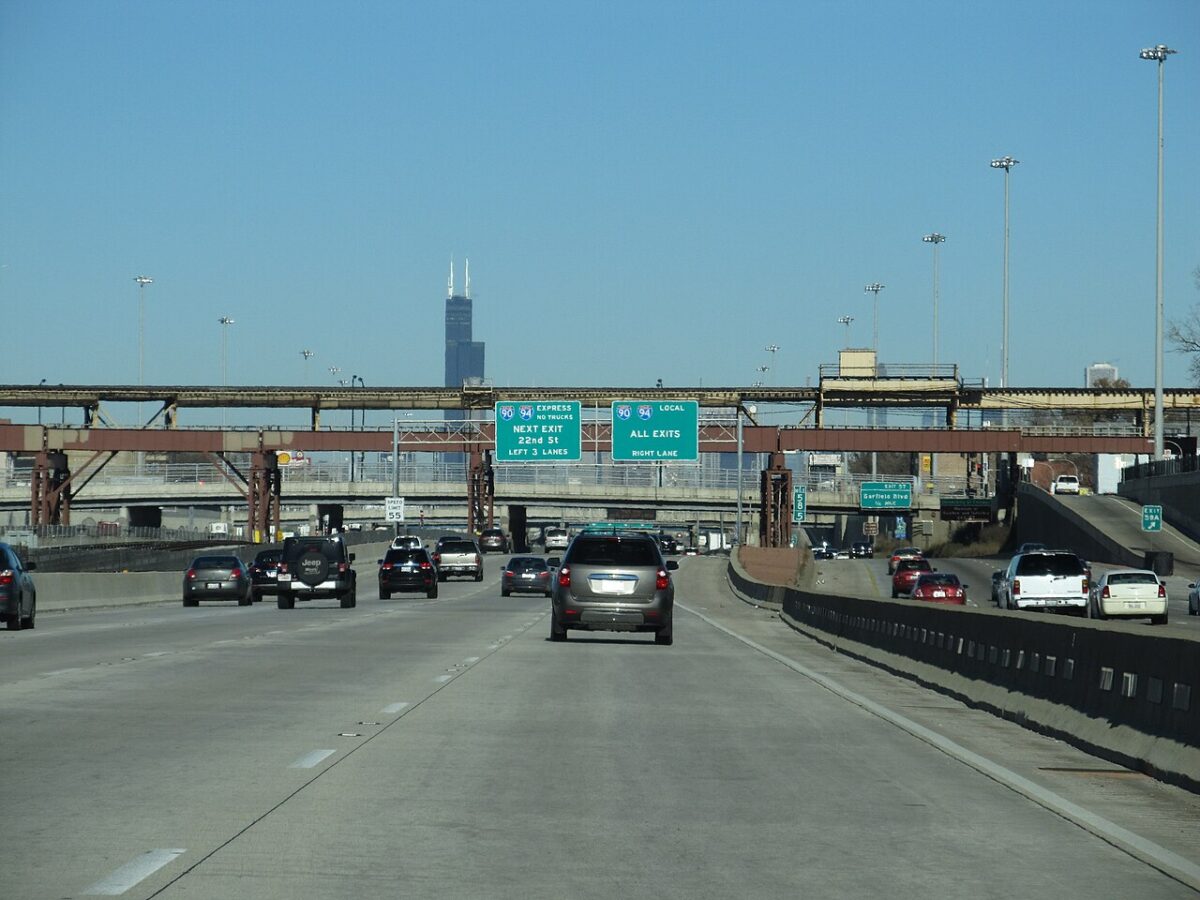
While major headline projects attract attention, much of Chicago’s infrastructure strain is happening at street level.
Expressways such as the Dan Ryan, Kennedy, and Eisenhower corridors frequently undergo resurfacing, ramp reconstruction, and structural reinforcement work. These are not cosmetic upgrades; they are necessary interventions for roadways that carry hundreds of thousands of vehicles daily.
Bridge infrastructure across the Chicago River system adds another layer of complexity. Many bridges require phased rehabilitation to remain operational while repairs take place, meaning partial closures, weight restrictions, and lane reductions can last for extended periods.
For drivers, this creates a familiar pattern: a stretch of normal traffic followed by sudden bottlenecks, shifting lane patterns, and unpredictable delays that change week by week.
City engineers argue that this phased approach is the only practical way to keep traffic moving while maintaining safety standards. But for commuters, it often feels like there is no clear end in sight.
The Real Cost of Deferred Maintenance
One of the underlying drivers of Chicago’s current construction surge is deferred maintenance from previous decades. Infrastructure experts frequently point out that delaying repairs often significantly increases long-term costs, as minor issues can evolve into structural failures that require full reconstruction.
In practical terms, this means that a bridge or roadway that could have been repaired with limited disruption years ago may now require full-scale rehabilitation, longer closures, and higher budgets.
This cycle has pushed Chicago into a catch-up phase, where multiple systems are being addressed simultaneously rather than gradually over time.
It is one of the reasons why so many projects are happening at once: the backlog of infrastructure needs is being cleared in clusters rather than spread evenly across years.
Funding, Politics, and the Pace of Construction
Infrastructure in Chicago is not just an engineering challenge; it is a financial and political one.
Large projects depend on a mix of federal funding, state support, and municipal investment. That layered funding structure often introduces delays, approvals, and revisions that stretch timelines even before construction begins.
When funding cycles shift or allocations are delayed, local agencies must adjust schedules, renegotiate contracts, or temporarily halt work. These disruptions add uncertainty to already complex projects.
At the federal level, infrastructure funding programs have increasingly emphasized large-scale modernization and climate resilience, encouraging cities like Chicago to pursue ambitious long-term upgrades. But the gap between funding approval and actual ground-level progress can still span years.
Why Drivers Feel the Impact First
For residents, infrastructure policy becomes real in one place: the road. Every construction project, no matter how strategic, ultimately intersects with daily life through traffic. That is why Chicago drivers are experiencing the most immediate effects of the city’s infrastructure transformation.
Commutes are lengthening not just because of population density, but because of simultaneous construction zones that overlap across multiple corridors. A single closure can redirect traffic into already congested routes, creating ripple effects that extend far beyond the original project site.
Navigation apps can reroute drivers, but they cannot eliminate congestion; they can only redistribute it.
This is why many residents describe the current phase not as a temporary disruption, but as a prolonged adjustment period.
Economic Growth Built on Disruption
Despite the frustration, infrastructure investment remains one of the most powerful economic drivers in the region.
Construction activity supports thousands of jobs across engineering, labor, transportation, and materials supply chains. Large-scale projects also generate long-term economic benefits by improving mobility, reducing travel time, and increasing regional competitiveness.
Chicago’s role as a national transportation hub depends heavily on maintaining and upgrading its infrastructure. Freight movement, airport connectivity, and commuter rail systems all feed into the city’s broader economic performance.
In that sense, every road closure is both a short-term inconvenience and a long-term investment.
A City in Transition

What Chicago is experiencing is not a single project; it is a structural phase shift. The city is simultaneously repairing what is old, expanding what is necessary, and reimagining what mobility should look like in the coming decades. For drivers, that means patience will remain essential. The next several years are likely to bring continued construction across major corridors, phased bridge work, transit expansion, and airport modernization efforts that will keep commutes affected.s.
But for planners and policymakers, this moment represents something different: an opportunity to reset a transportation system that has been under pressure for decades.
The Road Ahead
Chicago’s infrastructure story is still unfolding, but its direction is clear. The city is moving into a period where rebuilding is not occasional; it is constant. And for the people behind the wheel each day, that reality is already here.
Traffic lights will continue to shift. Lanes will continue to narrow. Detours will continue to change. But the main takeaway is clear: Chicago is rebuilding the physical foundation of a city that never stops moving.
The transformation will take years. The disruption is happening now.