Donald Trump’s Approval Among Christians Splits as Catholic Support Falls and Born-Again Protestants Hold Firm
For years, Donald Trump’s strength with Christian voters has been treated as one of the safest assumptions in American politics. But the latest polling suggests that assumption now needs an important qualification.
Trump is not simply gaining or losing “Christian voters.” Instead, two major Christian constituencies are moving in opposite directions. Across five national Marquette Law School polls analyzed through July, his approval among born-again Protestants rose from 56% in January to 61% in July. Among Catholics, it fell from 54% to 45%. By July, the difference in net approval between the groups had widened to 32 points.
That split offers a more revealing political story than another headline about presidential approval. It suggests that the Christian coalition that helped return Trump to the White House is becoming harder to describe as a single voting bloc.
The Christian Vote Is Starting to Tell Two Stories
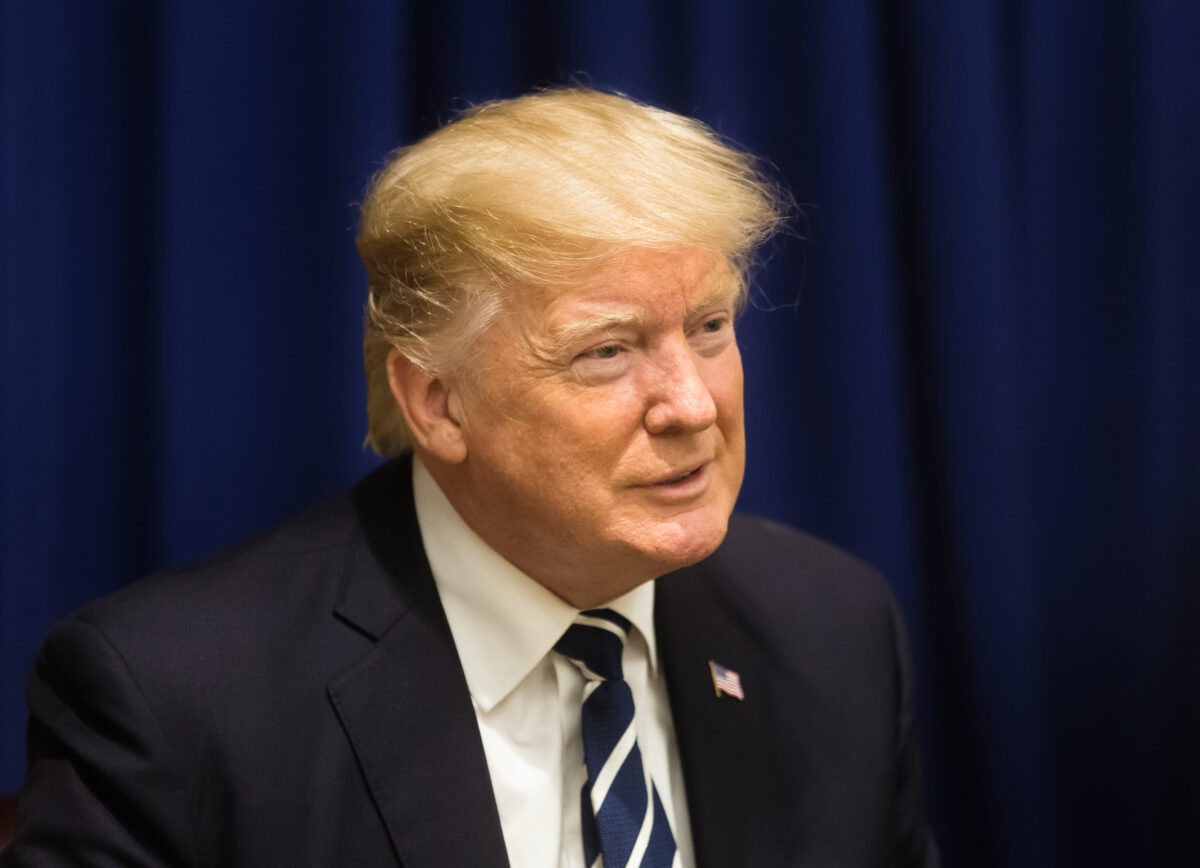
Among born-again Protestants, Trump remains in familiar territory: politically strong and closely associated with a conservative agenda built around abortion, religious liberty and cultural issues.
The Trump administration has reinforced that relationship during his second term. The White House has established a Faith Office, a Religious Liberty Commission and a task force aimed at what the administration describes as anti-Christian bias in the federal government.
Catholics, however, are giving the president a very different report card.
Trump’s Catholic approval fell nine points between January and July, including a drop to 43% in June before recovering slightly to 45% the following month. Born-again Protestant approval moved upward over the same stretch.
The contrast is striking because Trump’s national numbers changed far less dramatically. Marquette’s July 22-29 national survey found his overall approval at 40%, after readings of 38% in May and June.
In other words, the Catholic shift cannot simply be explained as Christians following the national mood in lockstep.
Pope Leo XIV Adds a Complication Trump Never Faced Before
There is another figure hovering over the Catholic numbers: Pope Leo XIV.
The first American pope has emerged as a powerful religious voice on issues that have placed him at odds with Trump, particularly immigration and the war with Iran. Their differences became unusually public in 2026, creating a political situation almost without precedent in modern America: an American president and an American-born pope confronting questions of war, migration and morality from dramatically different positions.
Polling shows why that matters.
PRRI found in May that 71% of Catholics viewed Pope Leo favorably, compared with just 37% who viewed Trump favorably. The divide was especially large among Catholic independents and Democrats, although Republican Catholics remained considerably more favorable toward Trump.
That does not prove the Trump-Leo dispute caused Catholic approval to fall. Presidential approval is influenced by everything from grocery bills to foreign wars.
But politics is often about competing sources of trust. For Catholic voters, the president is now sharing the national stage with a pope whose views on several major issues sharply challenge the White House.
Trump Still Has Deep Roots Among Evangelicals

Gage Skidmore from Peoria, AZ, United States of America, CC BY-SA 2.0, via Wikimedia Commons
None of this means Trump’s relationship with religious conservatives is collapsing.
White evangelical Protestants were one of the strongest pillars of his 2024 victory. Pew Research Center found that 81% backed Trump, compared with 16% who supported Kamala Harris. Christians overall also made up 79% of Trump’s 2024 coalition.
Yet even here, the picture is more complicated than approval alone suggests.
A June Reuters/Ipsos poll found 54% of evangelicals believed Trump’s use of military force in Iran did not align with their understanding of Christianity. On immigration, 51% said the administration’s approach was inconsistent with their Christian values. Trump still held substantially stronger approval among evangelicals than among Americans overall.
That creates an intriguing political paradox: some evangelical voters can disagree with Trump on whether individual policies reflect Christian values and still approve of his presidency.
That distinction may help explain why born-again Protestant support has remained so durable.
Catholics Matter Because Trump Won Them in 2024
For Republicans, the Catholic numbers deserve attention for another reason: Trump recently won these voters.
Catholics accounted for about 20% of the 2024 electorate and 22% of Trump’s coalition, according to Pew. Trump carried Catholics 55% to 43% against Harris, a major improvement from 2020, when Catholic voters were almost evenly divided between Trump and Joe Biden.
Losing some approval among a group that already strongly opposed a president is one thing. Losing ground among voters who helped put that president in office is politically more consequential.
It does not mean those Catholics will automatically vote Democratic in November. Approval ratings are not ballots, and candidates and local conditions shape congressional races.
But midterm elections are often powered as much by enthusiasm as persuasion. A voter does not need to switch parties to hurt one. Staying home can be enough.
The Bigger Warning Is Hidden Inside the Word “Christian”
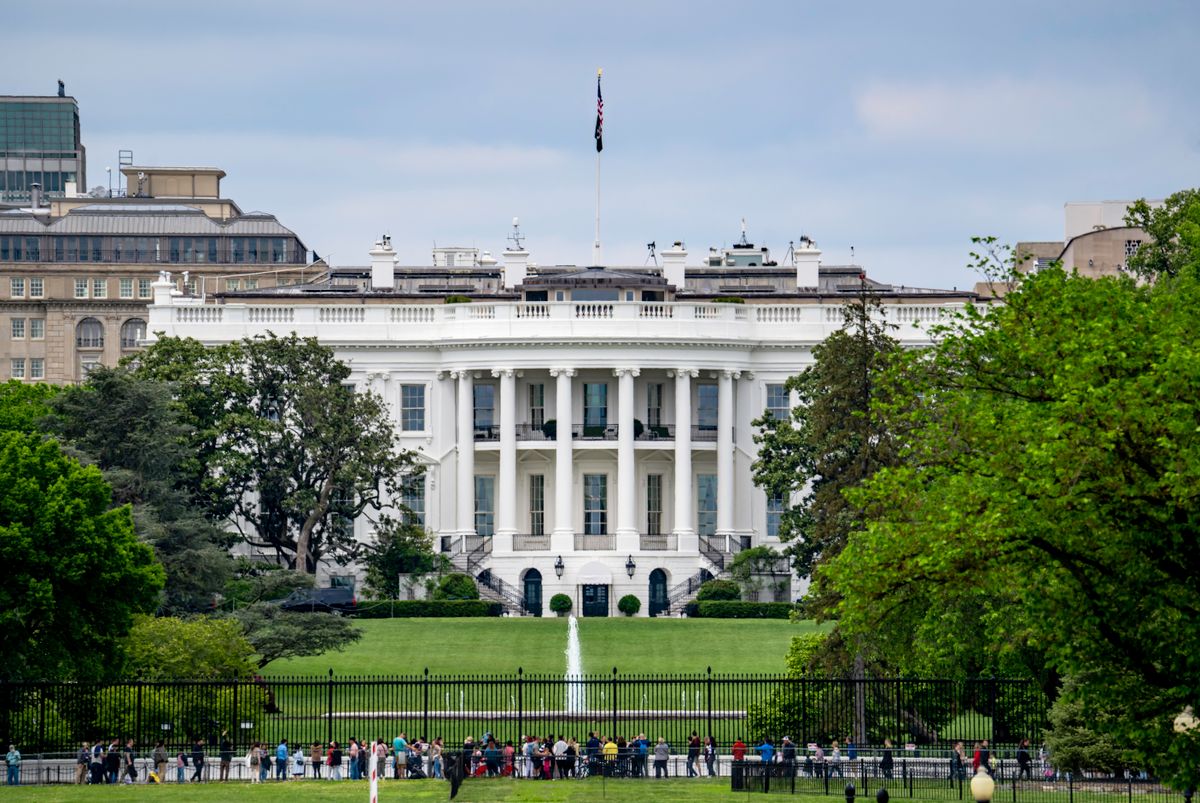
The White House has pushed back against suggestions that Trump is weakening with religious voters, arguing that his record on religious liberty and conservative social policies makes him an exceptional defender of Christian Americans.
The polling does not erase that argument. It complicates it.
The most important lesson may be that “Christian voters” is becoming too broad a political category to explain what is happening.
Born-again Protestants are moving toward Trump. Catholics have moved away. Mainline Protestants have shown considerably less change. Even within evangelical communities, voters who approve of Trump can question whether some of his policies reflect their faith.
That is what makes this more than another approval-rating story.
The 2026 political battle over Christian America may no longer be about whether Trump can keep “the Christian vote.” It may be about which Christian voters still see his political priorities as their own, and which have begun drawing a line between faith and loyalty to the president.