9 Strange Things People Blamed for Natural Disasters Before Science Changed the Story
Natural disaster scapegoats have ranged from giant catfish and witchcraft to lightning rods, 5G towers, CERN, skyquakes, and women’s clothing. This detailed guide examines how fear, folklore, religion, technology, and misinformation have shaped the complex history of disaster blame.
When the ground splits, the sky burns, or a wall of water swallows a town, people rarely sit calmly in the face of uncertainty. We want a villain. We want a cause with a face, a body, a machine, a sinner, or a mistake we can point to and say, “That did it.” Long before seismographs, satellite forecasts, volcanic monitoring, and climate science gave us better answers, communities often built explanations from fear, faith, rumor, and whatever felt most threatening at the time.
That is why the history of natural disaster scapegoats reads like a strange courtroom where catfish, witches, lightning rods, fashion choices, dams, particle accelerators, and cell towers have all stood accused.
Modern science gives us a clearer frame. Earthquakes usually happen when stress along faults overcomes friction, and the crust releases energy in waves, according to the U.S. Geological Survey. Human activity can sometimes induce earthquakes through reservoirs, mining, fluid withdrawal, or underground injection, but that is very different from blaming disasters on moral panic, mythical animals, or misunderstood machines.
Benjamin Franklin’s Lightning Rods and the Cape Ann Earthquake
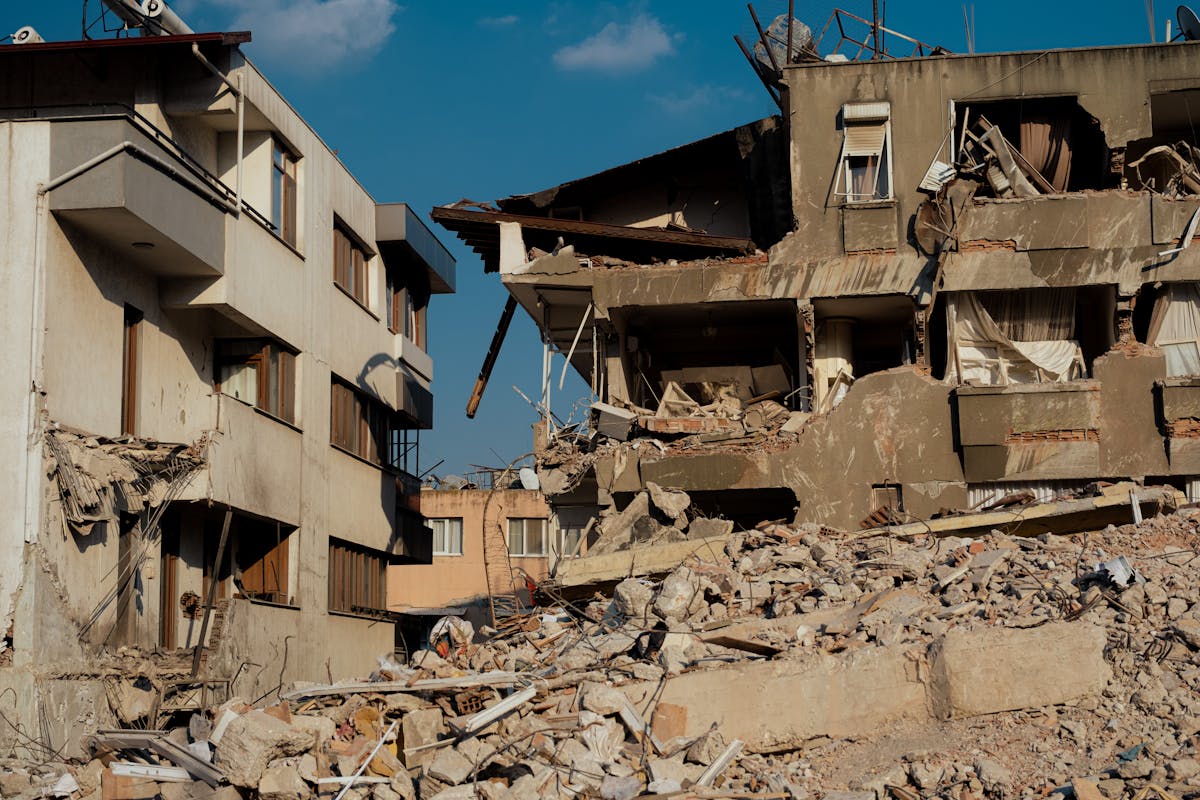
New technology often becomes suspicious when disaster follows close behind. In colonial New England, Benjamin Franklin’s lightning rod faced exactly that kind of fear. After the Cape Ann earthquake of 1755, many people interpreted the shaking through religion, punishment, and divine warning. The Massachusetts Historical Society describes how sermons and public writings after the quake framed the event as a sign of God’s displeasure, while more scientific explanations also circulated. It also notes that another explanation blamed lightning rods as a contributing factor.
The argument had a strange logic. If lightning was seen as a divine weapon, then drawing lightning safely into the ground looked like interference. Some critics feared that iron points pulled “electrical substance” out of the air and into the Earth, charging the ground and making earthquakes more likely. The Adams Papers at the Massachusetts Historical Society preserve a discussion of Rev. Thomas Prince’s 1755 appendix, where he took a dim view of Franklin’s invention and connected iron points with earthquake risk.
This episode matters because the lightning rod was not a fantasy machine. It was useful, practical, and protective. Yet fear transformed protection into suspicion. We still see the same reaction when complex technology becomes common faster than public understanding can catch up. A new device appears, a disaster happens, and coincidence begins masquerading as causation. The lightning rod panic reminds us that innovation often needs more than evidence. It also needs public trust.
The Giant Earthquake Catfish Beneath Japan
One of the most vivid disaster myths comes from Japan, where earthquakes were long linked to a giant catfish known as Namazu. According to popular belief, the creature lived beneath the islands and had to be restrained by a deity using a sacred stone. When divine control slipped, the catfish thrashed, and the surface world shook. The myth gave people a memorable image of a terrifying force they could feel but could not see. It turned invisible tectonic motion into a living monster with whiskers, muscles, and a temper.
The story became especially powerful after the Ansei Edo earthquake of 1855. In the rubble, artists produced woodblock prints called Namazu-e, showing the catfish being punished, worshipped, mocked, or treated as an agent of social change. Caltech’s archival description notes that these prints appeared immediately after the 1855 earthquake in Edo and served as a form of information and reassurance for the affected population. Public Domain Review also notes that hundreds of these prints appeared in the weeks after the disaster, before officials banned them later that same year.
The deeper lesson is not that people were foolish. The Namazu myth worked because it gave emotional shape to chaos. Earthquakes arrive without warning, move the solid world under our feet, and leave survivors asking how safety could vanish in seconds. A giant catfish may sound strange now, but it did what many disaster stories still do today. It gave fear a body, gave grief a symbol, and gave a shaken society a way to talk about power, punishment, inequality, rebuilding, and survival.
Mount Merapi’s Volcanic Spirits and the Cost of Waiting for a Sign
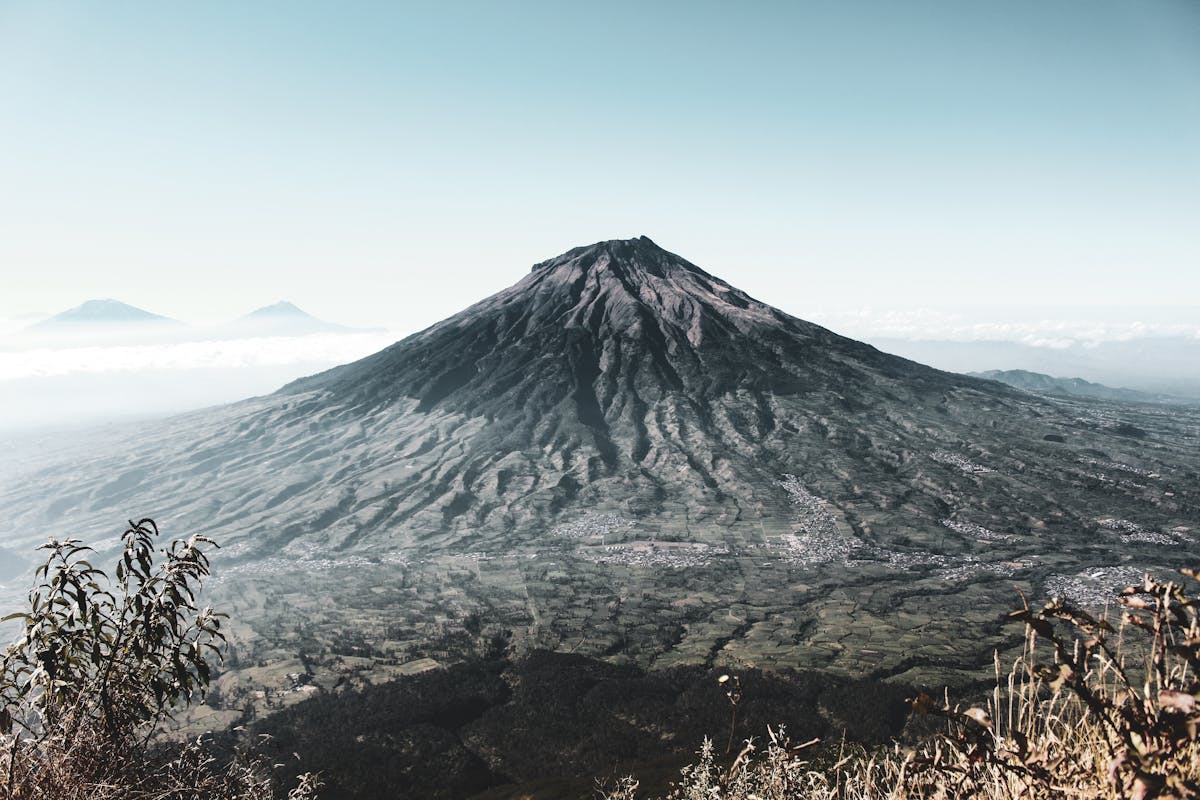
Mount Merapi in Java is one of Indonesia’s most active and dangerous volcanoes. For communities near its slopes, it is also a sacred landscape wrapped in spiritual meaning, ritual responsibility, and inherited tradition. The mountain is not simply a cone of rock and magma. It is part of a cultural world in which ceremonies, offerings, guardianship, and respect shape how people understand volcanic danger. That relationship can offer identity and continuity, but it can also become dangerous when spiritual interpretation conflicts with evacuation orders.
The 2010 Merapi eruption showed how tragic that conflict can become. An Indonesian Journal on Geoscience article describes Merapi as Indonesia’s most active and dangerous volcano, with eruptions often involving lava domes and pyroclastic flows. It also reports that the October 26, 2010, blast killed about thirty people, including Mbah Marijan, the volcano’s spiritual gatekeeper, who was found dead at his home about four kilometers from the crater.
We should treat this story with respect, not ridicule. Cultural beliefs can help people live with risk across generations, but volcanic hazards are governed by physics. Pyroclastic density currents do not pause for status, faith, courage, or ritual authority. They race downhill with lethal heat, ash, gas, and force. The strongest disaster systems work when scientific monitoring and local belief leaders cooperate. If trusted cultural figures support evacuation, people are more likely to move before the mountain makes the decision for them.
Cursing, Blasphemy, and the Fear of Polluted Air
In medieval and early modern Europe, spoken words carried heavier moral weight than they do in most modern public life. Profanity, blasphemy, curses, and oaths were often treated as spiritual offenses, not just rude habits. Some communities saw bad language as a kind of moral pollution that could invite divine punishment or social disorder. When storms, frost, crop failure, disease, or hunger arrived, people could connect public misfortune to private sin.
This belief grew in a world where the weather could destroy survival overnight. One hard frost could ruin vines. One hailstorm could smash grain. One failed harvest could push families toward famine, debt, or migration. During the Little Ice Age, colder and unstable weather affected Europe’s agriculture and social life, and historical scholarship has linked adverse weather with higher witch-hunt activity in parts of Switzerland and Germany.
The idea that foul words could foul the atmosphere sounds poetic, but it also reveals a harsh social reflex. Communities under pressure often monitor speech, clothing, worship, sexuality, and behavior because those things feel controllable. The weather is not. So instead of saying, “We cannot control frost,” people say, “We can punish blasphemy.” That substitution may comfort authority, but it does nothing to protect crops, homes, or lives.
Witchcraft as an Explanation for Storms, Frost, and Failed Harvests

Few natural disasters scapegoats became as deadly as witchcraft. In early modern Europe, storms and crop failures could trigger accusations against neighbors, healers, widows, children, clergy, political rivals, and outsiders. The idea was simple and brutal: if hail destroyed the vineyard, someone must have summoned it. If frost killed the harvest, someone must have cursed the fields. If livestock died, if a child became ill, if rain came too hard or not at all, someone could be accused of malefic magic.
The Historisches Lexikon Bayerns explains that social and economic tensions around 1600 contributed to major witch hunts, especially in ecclesiastical territories and border regions. It notes that deteriorating conditions during the Little Ice Age, crop failures in the 1610s and 1620s, rising wine and grain prices, inflation, famine, plague, and mortality all helped create conditions where people found explanations in the actions of witches. It also states that in Bamberg and Würzburg, roughly 900 to 1,200 people were executed during the intense persecutions of 1626 to 1630.
This is where disaster blame becomes more than strange. It becomes deadly. A myth about a catfish can become art. A rumor about lightning rods can become a public debate. But witchcraft accusations turned weather anxiety into torture, execution, and family destruction. The victims were not controlling the sky. They were trapped in a legal and religious machine that rewarded denunciation and treated confession under torture as truth. Natural disasters became a weapon in human hands.
Women’s Clothing as a Scapegoat for Earthquakes
Few disaster-blame claims reveal social control as clearly as the idea that women’s clothing can cause earthquakes. In 2010, a senior Iranian cleric claimed that women who dressed immodestly and behaved promiscuously contributed to earthquakes. The claim gained international attention because it turned a geological hazard into a moral accusation. It also showed how disasters can become an excuse to police women’s bodies, behavior, and visibility rather than address real risks such as unsafe buildings, poor emergency planning, and seismic vulnerability.
This kind of blame has an old pattern. When a community believes disaster is punishment, it often searches for people whose behavior already appears suspicious, disobedient, foreign, modern, or socially inconvenient. Clothing becomes a symbol. Hair, makeup, jeans, dancing, public confidence, and women’s independence can be turned into evidence in a moral trial that has nothing to do with tectonic plates. The disaster becomes a stage, and the accused become props in a story about obedience.
Science gives no support to the idea that fashion causes earthquakes. Earthquakes are linked to physical stress in the Earth’s crust, fault movement, and sometimes documented human activities that change underground pressure or stress. The danger of blaming clothing is that it distracts from the real work of disaster preparedness. We reduce deaths through building codes, public alerts, evacuation planning, hazard mapping, and emergency response, not by turning survivors or women into symbols of cosmic guilt.
Skyquakes, Mystery Booms, and the Sound of Uncertainty
Skyquakes are strange booming sounds that seem to come from the sky or horizon. People have reported them near lakes, coasts, cities, and rural areas, sometimes describing them as cannon fire, metallic thunder, distant explosions, or trumpet-like blasts. Since the source is often unclear, the phenomenon attracts speculation. Some people link skyquakes to earthquakes, secret technology, portals, weather manipulation, or coming disasters.
Science has more grounded possibilities. The USGS explains that unidentified booms have been reported around the world for hundreds of years. Some are caused by human activity, including explosions, construction, large vehicles, and sonic booms. Others may be linked to natural phenomena, including small shallow earthquakes, lightning, storm waves, meteors, and dunes. Small shallow earthquakes can generate high-frequency vibrations that people hear as rumbling or booming, even when little or no shaking is felt.
Recent science reporting has also discussed possible causes such as bolides, gas escaping from lake sediments, shallow earthquakes, underwater cave collapse, avalanches, and military aircraft. BBC Science Focus noted in April 2026 that no single explanation covers every reported skyquake, especially because reports appear in different environments and across long periods of history.
5G Towers and the Misinformation Machine

5G became one of the modern era’s favorite scapegoats because it arrived at the perfect time for fear. It was new, invisible, technical, and surrounded by confusing language about radiation, frequencies, towers, and networks. During the COVID-19 pandemic, conspiracy theories falsely linked 5G to illness. Similar claims later stretched into environmental disasters, bird deaths, wildfires, drought, and weather manipulation. The pattern is familiar. A new technology spreads, public understanding lags, and fear fills the gap.
The U.S. Environmental Protection Agency explains that wireless technology uses radiofrequency energy, a form of non-ionizing radiation. Non-ionizing radiation is not strong enough to directly affect atomic structure or damage DNA, though very strong RF energy can cause heating at high exposure levels.
The World Health Organization states that, after much research, no adverse health effect has been causally linked with exposure to wireless technologies, and current radiofrequency exposure levels produce negligible temperature rise in the body.
That does not mean every question about infrastructure, regulation, or exposure limits is foolish. Responsible public health review matters. But there is no credible basis for claims that 5G towers dry forests into wildfire fuel, steer storms, kill birds en masse, or trigger earthquakes. These claims survive because they are emotionally efficient. They turn complex disasters into a simple villain made of metal, signal, and corporate suspicion.
The Three Gorges Dam and the Difference Between Real Effects and Wild Claims
The Three Gorges Dam deserves a more careful discussion than most disaster scapegoats because large reservoirs can influence local seismicity. That does not mean every dramatic online claim about the dam is true. It means we must separate real geophysical effects from exaggerated stories about planetary imbalance. Large dams redistribute enormous amounts of water, and that mass can have tiny measurable effects on Earth’s rotation. Popular Mechanics reported that NASA scientist Benjamin Fong Chao showed the full Three Gorges reservoir could slow Earth’s rotation by about 0.06 microseconds, or 60 billionths of a second.
That number sounds dramatic until we understand its scale. A change measured in billionths of a second does not throw the planet into disaster. It does not cause global weather chaos. It does not turn Earth into a broken spinning top. The more serious question is local reservoir-induced seismicity.
Saint Louis University reported on research linking reservoir water to a 2013 magnitude 5.1 earthquake in the Three Gorges Reservoir region. The researchers described how higher water levels increased pore pressure in rocks, which can trigger movement on stressed faults. That is real science, but it is not the same as saying the dam caused every major earthquake or unbalanced the world.
This is the kind of nuance misinformation hates. The truth is neither “dams do nothing” nor “the dam controls global disaster.” The truth is more precise. Reservoirs can affect local stresses and seismic patterns under certain geological conditions, but viral claims often inflate small, technical findings into apocalyptic storytelling.
Why Natural Disaster Scapegoats Keep Returning
Natural disaster scapegoats return because they serve several human needs at once. They reduce uncertainty. They offer someone or something to blame. They make random loss feel morally ordered. They help leaders redirect public anger. They allow frightened communities to perform control, even when real control requires slow, expensive work such as infrastructure upgrades, land-use planning, flood defenses, fire management, early-warning systems, and public education.
Scapegoats also follow the anxieties of their age. In folklore-rich societies, disaster blame might fall on spirits, monsters, omens, or witches. In religiously strict communities, it might fall on sin, clothing, blasphemy, or social rebellion. In technological societies, it falls on antennas, particle accelerators, dams, satellites, chemicals, or secret experiments. The costume changes. The pattern remains.
The better response is not to strip disasters of meaning. People need meaning after a catastrophe. We need mourning rituals, community memory, art, faith, public accountability, and stories that help survivors endure. But meaning must not replace evidence. When blame moves faster than facts, it can punish the innocent, weaken preparedness, and pull attention away from the real conditions that turn hazards into disasters.
Conclusion
The strangest natural disaster scapegoats in history are not just amusing footnotes. They show how the human mind behaves under pressure. A giant catfish helped Edo residents process earthquake trauma. Lightning rods frightened people who did not yet understand electricity. Witchcraft accusations turned weather disasters into human persecution. 5G and CERN conspiracies show that modern technology can still become a monster in public imagination when science feels distant, and fear feels close.
We do not need to mock every old belief to learn from it. Many of these stories came from grief, confusion, and the urgent need to survive in a world that gave few warnings. But we also cannot pretend all explanations are harmless. Some stories comfort. Some distract. Some kill.
The stronger path is disciplined curiosity. We can ask hard questions after a disaster, but we must test the answers. We can respect culture, but we must listen to hazard science. We can hold institutions accountable, but we must not turn coincidence into proof. Natural disasters already do enough damage on their own. We should not add misinformation, scapegoating, and fear-driven blame to the wreckage.