Florida Approves USF Sarasota-Manatee Campus Transfer to New College in Expansion Plan, Will Local Programs Survive?
A major decision in Florida higher education is now reshaping the future of a local university campus, leaving students and faculty uncertain about what comes next for one of the Sarasota region’s key public education hubs.
State leaders have approved a plan that would transfer the University of South Florida’s Sarasota-Manatee campus to New College of Florida, a small liberal arts institution that has become a centerpiece of Gov. Ron DeSantis’ push to reshape higher education in the state. The move is expected to significantly expand New College and, after a transition period, effectively end USF’s long-term presence at the location.
For students, many of whom chose the campus specifically for its affordability and proximity, the decision has triggered concern, confusion, and frustration about the future of their degrees and academic programs.
A Campus at the Center of a Political and Educational Shift
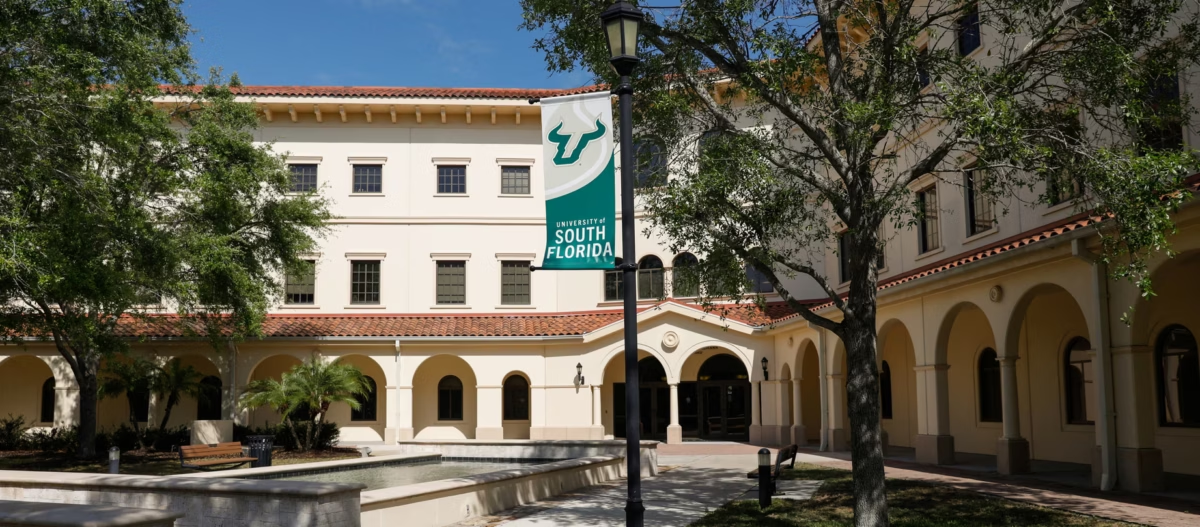
The Sarasota-Manatee campus has long served as a regional access point for higher education in southwest Florida. With roughly 2,000 students, it offers programs in nursing, hospitality, tourism, business, and health-related fields—areas closely tied to the local economy.
Under the new plan, the campus will be absorbed by New College of Florida, which currently enrolls about 900 students. The acquisition would more than triple New College’s footprint, adding a 32-acre campus with modern facilities, including a six-story residence hall and a multimillion-dollar student center.
According to USF officials, students currently enrolled at Sarasota-Manatee will be able to complete their degrees through a “teach-out” period lasting several years, ensuring no immediate disruption for those already studying there.
However, the campus’s long-term future remains uncertain once the transition period ends.
Students and Faculty Voice Growing Concern
Student leaders have expressed deep concern about how the change could affect local families’ access to education.
Many students at the Sarasota-Manatee campus commute long distances or balance jobs while attending classes. For them, the campus is not just a university location, it is a practical pathway to earning a degree without leaving their community.
Some student representatives say the transfer raises fears that future students may lose access to programs that directly support local industries, especially in healthcare and hospitality, which are major employers in the region.
Faculty and education advocates have echoed similar concerns, warning that shifting the campus away from its current structure could disrupt established academic pathways that have served working adults, first-generation college students, and local high school graduates.
How the Decision Moved Through State Government
The campus transfer did not move through a simple, single-vote process. According to reporting on the state legislative process, the proposal initially passed the Florida House earlier this year but stalled in the Senate, leading many observers to believe the plan had been abandoned.
However, the measure later reappeared during budget negotiations and was included in the final state spending package with limited public debate, a move critics say bypassed normal legislative scrutiny.
Fentrice Driskell, who leads Florida’s House Democratic caucus, has been among the most vocal opponents of the decision. She has previously described the broader restructuring efforts around New College as deeply concerning and questioned the transparency of the approval of the campus transfer.
Opponents argue that placing the decision into the budget process reduced opportunities for public input, particularly from students and local residents who rely on the campus.
The Transformation of New College
New College of Florida has undergone significant changes in recent years as part of a broader political effort to reshape its identity and governance.
Gov. DeSantis appointed a new board of trustees in 2023, leading to major administrative and curriculum changes. Since then, the institution has drawn national attention for eliminating diversity programs, revising campus policies, and shifting its academic direction.
Supporters of the transformation argue that New College is being rebuilt into a stronger, more focused liberal arts institution. Critics, however, say the changes have disrupted its previous identity and created instability in the state’s higher education system.
New College President Richard Corcoran, a former Florida House speaker, has defended the institution’s direction and leadership. According to his public statements, the college is prepared to manage the transition and work with regional partners to ensure a smooth integration of the Sarasota-Manatee campus.
What Happens Next for Students and the Region
The transition is expected to begin as early as the next state fiscal cycle, with USF maintaining operations during a multi-year teach-out period. During this time, enrolled students will be allowed to complete their programs in accordance with existing USF guidelines.
After that period, the campus is expected to fully operate under New College governance.
Local leaders and education experts say the most immediate impact will be felt in program continuity and student recruitment. Questions remain about whether existing USF programs in nursing, hospitality, and health sciences will continue in the same form under the new structure.
Why This Decision Matters Beyond Campus Borders
For Sarasota and Manatee counties, the campus has served as more than a university—it has been a direct pipeline into the region’s workforce.
Hospitals depend on nursing graduates. Hotels and tourism businesses rely on hospitality programs. Local employers count on a steady flow of trained workers who can study locally and stay in the region after graduation.
Critics of the decision warn that altering or removing those programs could have long-term economic consequences for the area, especially in industries that already face staffing shortages.
At the same time, supporters of the move argue that expanding New College will strengthen Florida’s higher education system and create a more unified academic model under a single institution.
As the transition moves forward, students and residents are left waiting for answers about what the campus will become and who it will ultimately serve.
For now, the message from USF leadership is that students currently enrolled will not be left behind. But beyond that promise, uncertainty continues to shape the future of one of Florida’s most closely watched higher education decisions.