7 Food Safety Mistakes You Might Be Making in Your Kitchen
Preparing dinner often involves several small routines that happen almost automatically. You rinse chicken, slice vegetables, check whether the meat looks done, and put away leftovers when the kitchen is finally clean. But some of these familiar habits are worth reviewing against official food-handling recommendations.
The good news is that the suggested changes are practical and easy to work into everyday cooking. From thawing frozen ingredients to checking your refrigerator’s temperature, here are seven kitchen habits worth a closer look.
Rinsing Raw Chicken Before Cooking
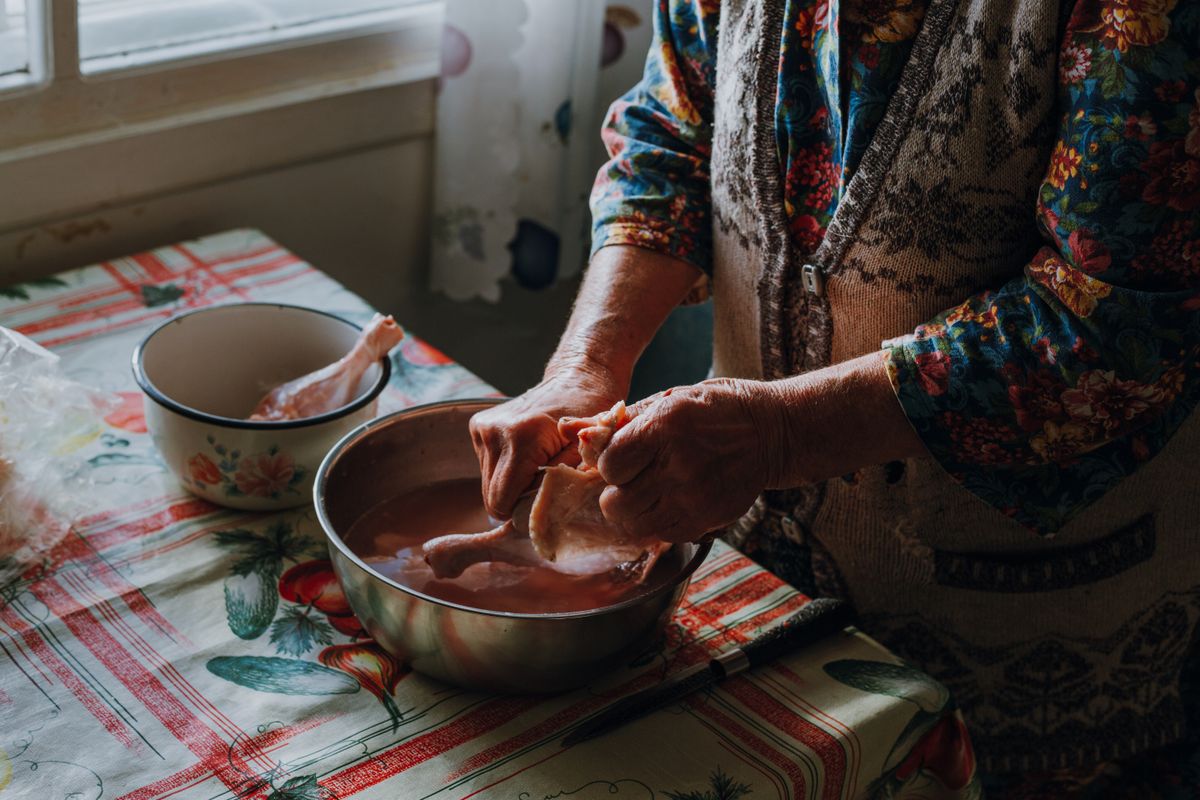
If rinsing raw chicken before seasoning it is part of your usual routine, you may want to reconsider that step. FoodSafety.gov advises against washing raw poultry because water can spread germs around the sink and nearby kitchen surfaces. Instead of rinsing the chicken, focus on handling it carefully and cleaning anything that comes into contact with it.
Wash your hands after handling raw chicken, and clean contaminated utensils and surfaces with hot, soapy water. Skipping the rinse does not replace proper cooking, either. The FDA recommends cooking poultry to a minimum internal temperature of 165°F, which you can check with a food thermometer.
Peeling Produce Without Washing It First
Peeling a cucumber or cutting into a melon might seem like a reason to skip washing the outside. After all, you probably do not intend to eat the rind or skin. However, the FDA recommends rinsing fruits and vegetables under running water before cutting or peeling them because dirt and bacteria on the outside can transfer during preparation.
For firm produce, including melons and cucumbers, scrub the surface with a clean produce brush. Avoid using soap, detergent, or commercial produce washes. There is an exception for produce labeled pre-washed or ready-to-eat, which can be used without further washing. Rinsing is a recommended preparation step, not a guarantee that every bacterium will be removed.
Reusing the Same Plate or Cutting Board Without Washing It
Dinner preparation can get busy, especially when raw meat, vegetables, and cooked food all need attention at once. That is when it becomes easy to put cooked chicken back on the plate that held it before cooking or slice vegetables on a board that has not been washed after handling raw meat.
A simple change in your kitchen routine can help keep these steps separate. Use different cutting boards for fresh produce and raw meat, poultry, or seafood, and serve cooked food on a clean plate. If you need to reuse a plate, utensil, or cutting board that touched raw food, wash it thoroughly with hot, soapy water first.
Related: 7 Foods You Should Never Store in the Fridge Door, According to Food Safety Experts
Thawing Frozen Food on the Counter
Taking frozen meat out of the freezer and leaving it on the kitchen counter may feel like the easiest way to prepare for dinner. However, the FDA identifies three recommended thawing methods: in the refrigerator, in cold water, or in the microwave.
The method you choose matters because the instructions are not identical for every approach. Food thawed in cold water or in the microwave should be cooked immediately afterward. The same immediate-cooking instruction does not apply to food thawed in the refrigerator.
If you regularly forget to take ingredients out ahead of time, consider which recommended method fits your cooking schedule.
Judging Whether Meat Is Done by Its Color Alone
A browned steak or a burger that no longer looks pink might appear ready to serve. But color, texture, and appearance alone are not reliable ways to determine whether meat has reached the recommended internal temperature. The FDA’s safe food-handling guidance recommends using a food thermometer instead.
The correct temperature depends on what you are cooking. Poultry should reach 165°F, while ground beef should reach 160°F. Beef, pork, veal, and lamb steaks, chops, and roasts should reach 145°F, followed by a three-minute rest.
Rather than relying on appearance or applying one temperature to every meat, check the specific recommendation for what you are cooking.
Waiting for Leftovers to Reach Room Temperature
After a large dinner, leaving pots and serving dishes on the counter until everything has cooled completely can seem like a convenient routine. But official recommendations call for refrigerating perishable leftovers promptly rather than waiting for them to reach room temperature.
FoodSafety.gov advises refrigerating perishable food within two hours under ordinary room-temperature conditions, or within one hour when exposed to temperatures above 90°F. These are maximum limits, not suggested waiting periods. For large quantities of leftover food, divide the food into shallow containers to help it cool more quickly.
Instead of leaving an entire pot out to cool, portion the leftovers into suitable containers and put them away promptly.
Related: 7 Dangerous Myths About Cooking and Food Safety You Should Never Believe
Assuming Your Refrigerator Is Cold Enough
You might turn the refrigerator dial to your usual setting and assume everything is fine. However, the setting alone does not tell you the appliance’s actual temperature. The FDA recommends using an appliance thermometer to check that your refrigerator stays at 40°F or below and your freezer stays at 0°F or below.
An appliance thermometer has a different job from the food thermometer you use while cooking. One checks the temperature inside your refrigerator or freezer, while the other measures the internal temperature of food.
If you have never verified your refrigerator’s temperature, checking it is a practical place to start rather than relying entirely on a dial.
You do not need to overhaul your entire kitchen to review how you handle food. Start with one or two habits, such as checking meat with a food thermometer, washing produce before cutting it, or refrigerating leftovers promptly. Work those checks into your usual routine, then review the others as you go.