Give Cauliflower the Steak Treatment And Watch It Steal the Dinner Show
Cauliflower doesn’t need to hide beneath a blanket of cheese to earn a spot in the middle of the plate. Cut into thick slabs and roast until golden, it becomes a knife-and-fork centerpiece with browned edges and room for a flavorful finish. Cookbook author Kathryne Taylor’s roasted cauliflower steak recipe keeps the foundation simple: one large head, olive oil, salt, and pepper. The transformation happens in a 425°F oven, not through an elaborate ingredient list or a complicated cooking routine.
The word “steak” describes the presentation, not a promise that a vegetable will taste or nourish you exactly like beef. Taylor makes that distinction clear on Cookie and Kate: “Think of it more as a side dish or meal component than a protein-rich steak.” That is useful guidance, not a reason to abandon the idea. Pair the roasted cauliflower with lentils, chickpeas, grains, and a vibrant sauce, as she suggests, and you have a meal built around the vegetable rather than a vegetable expected to do everything alone.
Start With the Right Head and Expect a Few Loose Florets
The first step happens in the produce aisle. Taylor recommends a large, dense cauliflower that looks fresh and feels heavy for its size. She doesn’t choose a loose, airy head for this preparation because cutting substantial slabs depends on the cauliflower’s structure. Her advice is refreshingly practical: if the available heads look fluffy around the edges, save the steak treatment for another day. Buying the right cauliflower gives you a better starting point than trying to rescue an unsuitable one with careful knife work.
At home, remove the surrounding green leaves and trim the protruding base just enough to create a flat surface. Set the cauliflower flat-side down on a cutting board, then use a sharp chef’s knife and a gentle back-and-forth motion to cut parallel, 1-inch-thick slices. Taylor’s recipe yields about three intact steaks plus pieces, although the exact result depends on the head’s size. That matters when planning dinner: one cauliflower does not automatically translate into four impressive, perfectly matched portions.
Some outer slices will fall into florets, and that is part of the process not evidence that you have ruined dinner. Taylor explicitly tells readers to roast those pieces alongside the intact slabs. The practical takeaway is to work gently and not chase an impossible tray of identical steaks. Keep the attractive center slices for the main presentation, and let the smaller pieces join them on the plate. They get the same oil, seasoning, and roasting treatment, so you don’t need to discard them.
Related: 10 Unhealthy Condiments and Their Healthier Substitutes
Let the Oven Build the Golden Edges
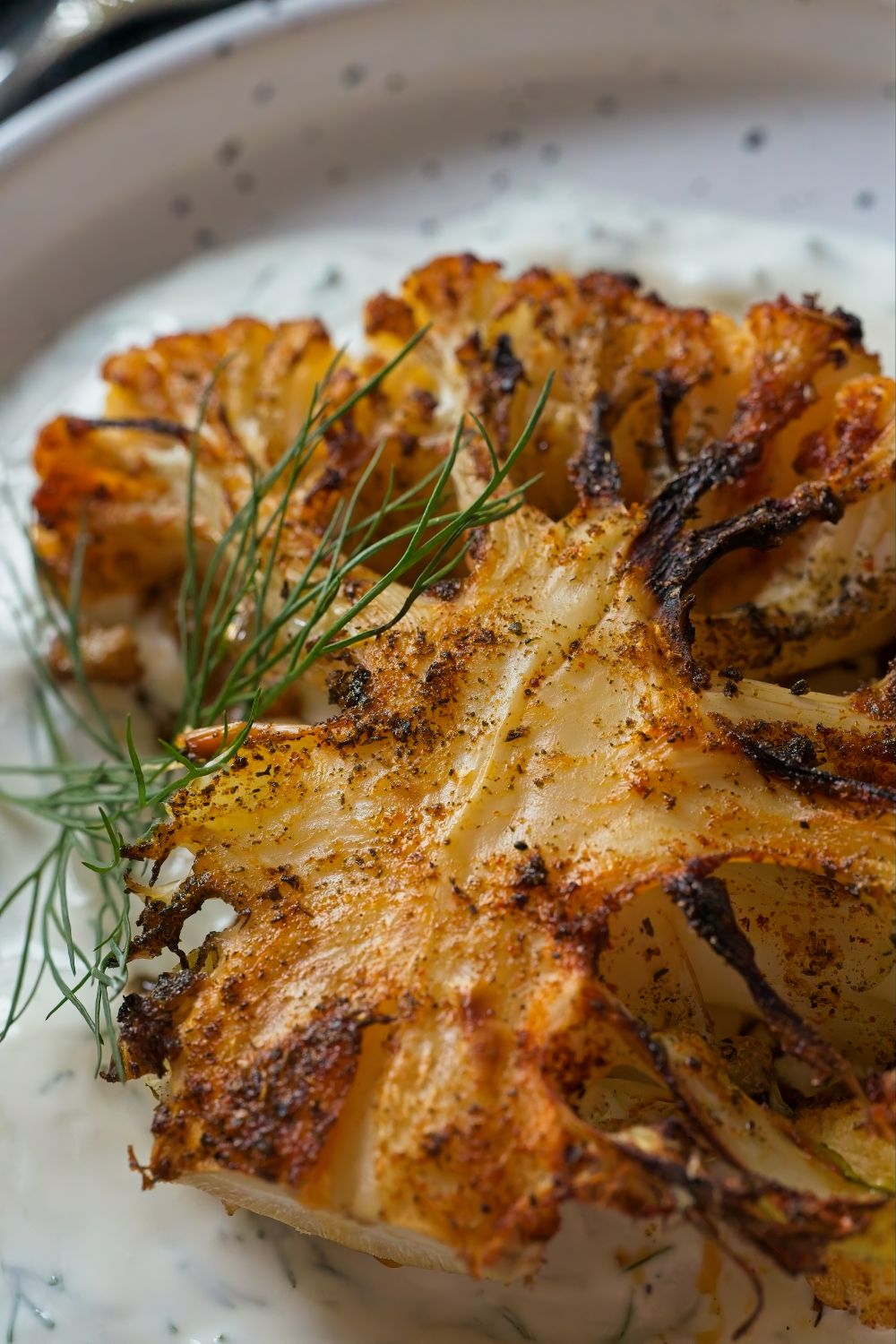
For Taylor’s basic recipe, you need one large, dense head of cauliflower, 1 to 2 tablespoons of extra-virgin olive oil, ¼ teaspoon of fine salt and freshly ground black pepper to taste. Preheat the oven to 425°F, place a rack in the upper third, and line a large, rimmed baking sheet with parchment paper. Gently brush both sides of the slabs, along with the loose florets, with oil before arranging them on the prepared sheet and adding the seasonings.
The instruction worth remembering is patience: Taylor’s method does not call for flipping. She explains that the slabs are delicate and can break when turned, so her recipe uses the upper oven rack to encourage browning without extra handling. Roast for approximately 30 to 35 minutes, looking for golden edges on top and deeply golden undersides. Let the cauliflower cool for a few minutes before lifting it with a spatula. The color cues matter as much as the clock; this isn’t a recipe for pale, barely roasted cauliflower.
Other published methods do call for turning, but their measurements and timing belong together. Valerie Bertinelli’s Food Network recipe, for example, uses thinner, ½-inch steaks at 425°F and cooks them for 20 to 25 minutes, flipping after the first 10 minutes. Taylor’s thicker, no-flip version takes longer. Neither method needs to become a kitchen argument; the useful point is to choose one complete approach rather than combining thin slices, a longer cooking time and handling instructions borrowed from somewhere else.
Give Your Cauliflower a Supporting Cast Worth Eating
To turn the basic roasted steaks into dinner, Taylor suggests starting with cooked farro, brown rice, wild rice, pasta or fresh greens. Add chickpeas or lentils for extra heartiness, or spread hummus underneath the cauliflower. Then choose a sauce such as tahini, chimichurri, pesto, zhoug or romesco. This is where the dish moves beyond “a large piece of vegetable on a plate.” The cauliflower serves as the roasted centerpiece, while the base, legumes, and sauce add substance and variety.
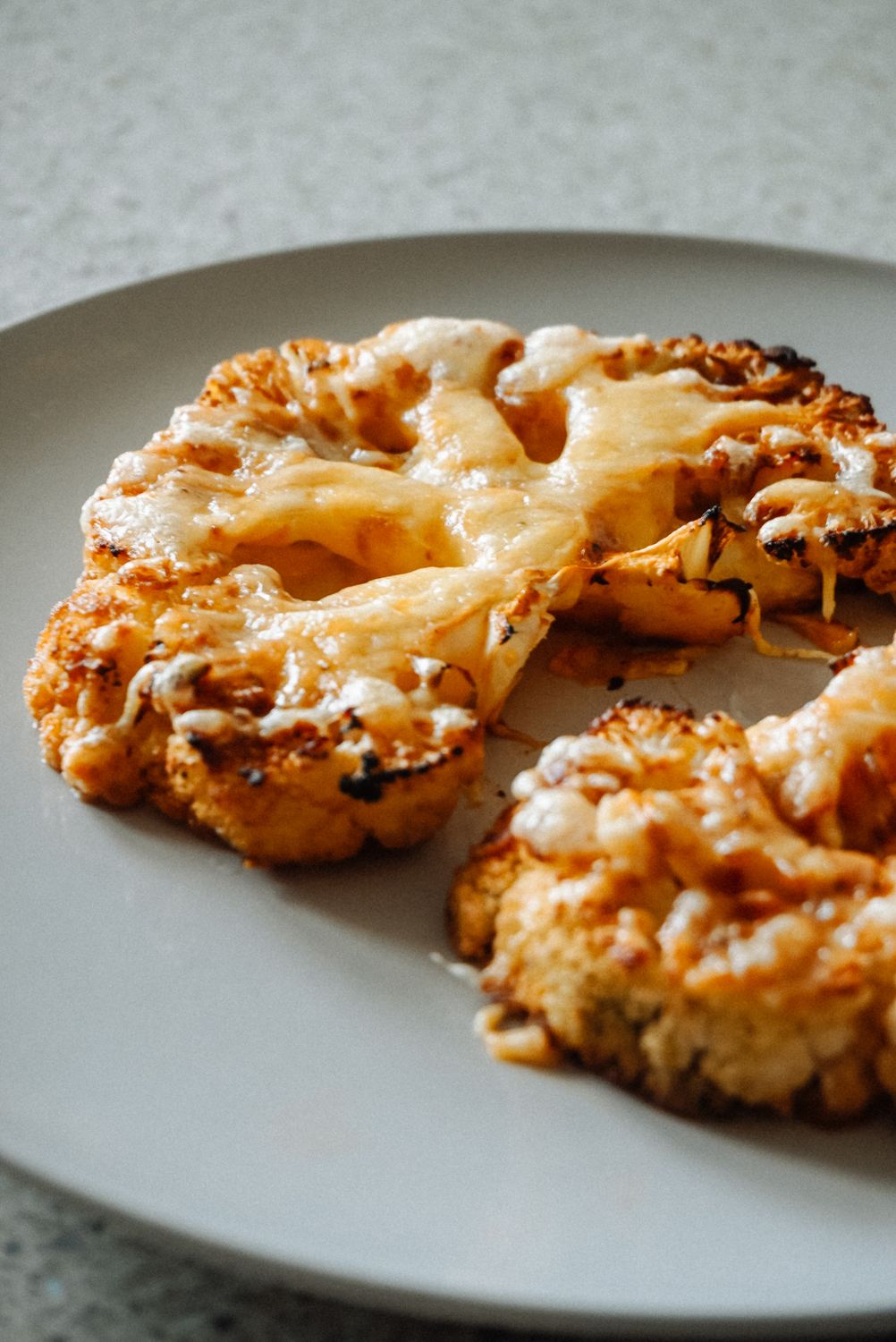
For a comfort-food direction, Taylor also publishes a separate Parmesan-crusted version served over whole-grain spaghetti and marinara. That four-portion recipe uses one large cauliflower, 2 to 3 tablespoons of olive oil, 1 ounce of finely grated Parmesan, 8 ounces of spaghetti and 25 ounces of marinara. Roast the seasoned, 1-inch cauliflower slices at 425°F for 20 minutes, carefully flip, add the Parmesan and roast another 18 to 20 minutes. Serve over the cooked pasta and warmed sauce, with optional pepper or red pepper flakes.
Bertinelli offers another finish that trades tomato sauce for a buttery topping of pine nuts, golden raisins and parsley. Her recipe toasts 2 tablespoons of pine nuts in a dry pan, then adds ¼ cup of golden raisins and 1 tablespoon of butter before stirring in the parsley off the heat. Spooned over the roasted cauliflower, it provides a distinctly different route from the pasta version. Choose the finish that suits your dinner, but give the vegetable the same careful attention underneath: substantial slices, deliberate seasoning and enough roasting time to develop those golden edges.
Other Post You Might Also Like
.7 Foods You Should Never Store in the Fridge Door, According to Food Safety Experts
.You’re Probably Not Refrigerating These 10 Foods, and It Could Cost You Your Health