Iowa’s wind energy boom in 2026: How the Hawkeye State built one of America’s most wind-powered electric grids.
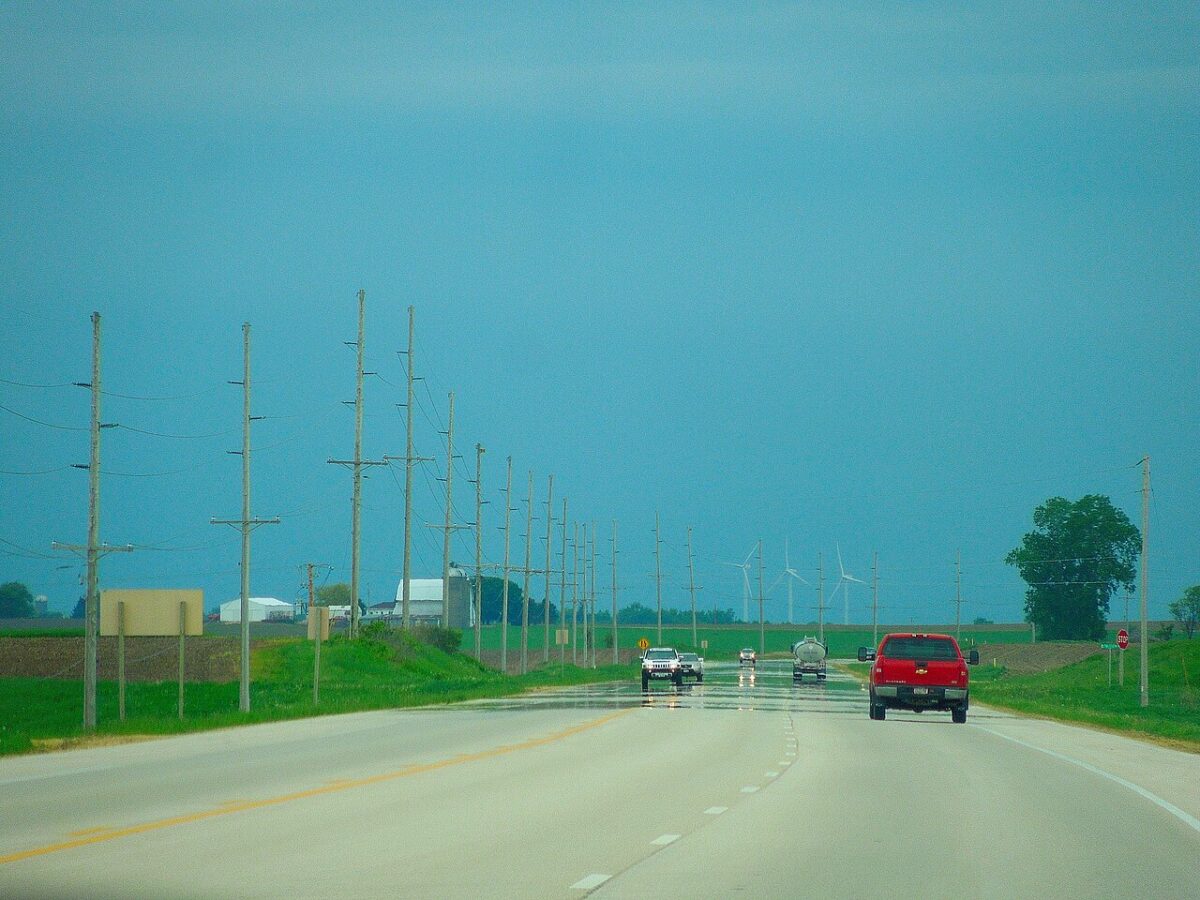
Across rural Iowa, wind turbines now rise above cornfields, grain bins and county roads like monuments to economic transformation. They produce dependable income for landowners, strengthen local tax bases, support skilled jobs and help Iowa compete for some of the largest technology investments in the country.
By 2026, Iowa’s wind industry is no longer an emerging experiment. It is central to the state’s electric system.
Wind produced 62.84% of Iowa’s electricity in 2024, the latest complete annual figure available, giving the state the highest wind-generation share in the nation. Iowa’s 13,016 megawatts of installed wind capacity generated more than 44.2 million megawatt-hours during the year.
Iowa’s rise to this position rests on favorable geography, early government action, sustained utility investment and a practical alliance between energy companies and rural communities.
Iowa embraced wind before it became politically divisive.

Iowa’s advantage began decades before massive turbines became a familiar part of the Midwestern landscape.
In 1983, the state adopted one of America’s earliest renewable energy requirements. The law obligated regulated utilities to purchase electricity associated with 105 megawatts of alternative energy capacity. That figure appears small beside Iowa’s modern wind fleet, but it gave renewable developers something essential: a guaranteed market.
The policy also arrived at a crucial moment. Iowa was struggling through the agricultural crisis of the 1980s and searching for industries that could diversify its economy without displacing farming.
Wind energy offered an unusually good fit. Turbines could be built on working agricultural land, utilities could generate electricity without purchasing fuel, and farmers could earn lease income while continuing to grow crops or raise livestock around the equipment.
Support continued under leaders from both major political parties because Iowa’s wind debate was rarely limited to climate policy. It also reflected construction jobs, manufacturing, electricity costs, tax revenue and keeping money in rural communities.
The numbers reveal a dramatic shift in Iowa’s power supply.
Iowa’s wind fleet has grown rapidly even in recent years. Installed capacity increased from 11,407 megawatts in 2020 to 13,016 megawatts in 2024. Annual generation rose from approximately 34.2 million megawatt-hours to more than 44.2 million during the same period.
The expansion has steadily reduced coal’s role in the state’s electricity mix. Wind supplied 42% of Iowa’s net generation in 2019 and climbed to 63% by 2024 because it kept growing while coal moved in the opposite direction, falling from 35% to 21% over those five years. Wind first generated more Iowa electricity than coal in 2019 and has widened its lead since then.
This does not mean every Iowa customer receives wind-generated electricity during every hour. Electricity moves through an interconnected regional system, and some power produced in Iowa is exported to neighboring states.
It does mean that wind has become Iowa’s dominant electricity source rather than a small addition to a fossil-fuel grid.
Wind turbines gave farms a second source of income.

The ability to combine energy production with agriculture is one of the most important reasons Iowa wind power grew so quickly.
A turbine foundation, access road and electrical equipment take some acreage out of production, but farmers can generally continue planting crops or grazing livestock around the project. One property can therefore produce both food and electricity.
For landowners, turbine agreements provide income that is less vulnerable to crop failures, livestock prices and commodity-market swings. Long-term leases and easements can offer predictable payments for decades.
MidAmerican Energy paid approximately $45.7 million in wind-project lease and easement payments during 2025. The company works with more than 4,000 primary and neighboring landowners across Iowa.
It also paid about $60 million in property taxes on wind turbines located in 35 counties. That money supports schools, roads, bridges, county health programs and emergency responders.
Across Iowa’s utility-scale wind, solar and storage industries, projects now generate nearly $135 million annually in land-lease and tax revenue. The sectors support 5,469 jobs and represent almost $25 billion in private investment.
Those figures explain why wind energy became deeply connected to Iowa’s rural economy. For many communities, turbines are not abstract environmental projects. They are taxpayers, employers and sources of household income, linking energy development to local prosperity.
Major utilities turned wind into essential infrastructure.
MidAmerican Energy has played a defining role in Iowa’s wind expansion. The utility has invested approximately $15.8 billion in wind and solar projects and operates more than 3,500 turbines across the state. Its renewable generating fleet exceeds 7,800 megawatts and can produce electricity equivalent to the annual needs of more than 2.4 million average households.
This scale transformed wind from a promising technology into everyday infrastructure. Large utility projects created demand for engineers, turbine technicians, construction workers, equipment operators, land agents and long-term maintenance crews, showing how expansion reached beyond generation alone.
Another major expansion is now advancing. In March 2026, the Iowa Utilities Commission approved a settlement allowing Alliant Energy’s Interstate Power and Light subsidiary to develop up to 1,000 megawatts of additional wind capacity.
Utility modeling identified new wind generation as the lowest-cost option for meeting future electricity demand. The proposed capacity could generate enough electricity for more than 350,000 homes.
The approval shows that Iowa utilities still view wind as an economically competitive resource, even after decades of rapid construction. It also signals that the state’s next phase of growth may come from adding more capacity.
Affordable renewable power helped attract data centers.
Iowa’s wind industry has also become an important part of the state’s strategy for attracting technology companies.
The statewide average retail electricity price was 9.34 cents per kilowatt-hour in 2024, placing Iowa among the lower-priced states. Wind cannot receive all the credit for those prices. Utility regulation, transmission expenses, industrial demand and the wider generation mix also affect customer bills.
However, wind has one major advantage: it requires no purchased fuel. Once turbines are operating, utilities are less exposed to the sudden coal and natural gas price increases that can drive up electricity costs elsewhere.
That combination of competitive electricity prices and abundant renewable generation has strengthened Iowa’s appeal to energy-intensive data centers because it supports their power needs and cost goals.
QTS announced plans for a $10 billion data center campus in Cedar Rapids, described as the largest economic-development investment in the history of both Iowa and the city. Google also announced another Cedar Rapids facility and plans to invest an additional $7 billion in Iowa cloud and artificial-intelligence infrastructure over two years.
These projects could create construction work, tax revenue and technology-sector growth. They also create an enormous new challenge because data centers consume electricity around the clock, even when wind production falls.
Iowa’s wind success is creating pressure on the grid.
Generating electricity is only part of the job. Iowa must also transport it. The state operates within the Midcontinent Independent System Operator, a regional network that moves electricity across much of the central United States. The system allows Iowa to export excess wind power and import electricity when local production is insufficient.
As the number of turbines grows, transmission capacity becomes more important because new power lines and substations can take years to approve and build. They are expensive and often face the same local resistance as generation projects.
Without sufficient transmission, wind farms may occasionally be told to reduce output because the grid cannot safely carry all the electricity available.
Iowa will also need a more varied collection of resources. Wind generation changes with weather, while homes, hospitals, factories and data centers need uninterrupted service. Solar power, batteries, natural gas plants, demand-response programs and regional electricity trading will remain important for balancing supply.
County opposition is challenging Iowa’s old consensus.
The political cooperation that helped build Iowa’s wind fleet is becoming more fragile as local concerns rise. Residents in several counties have raised concerns about turbine noise, shadow flicker, aviation lights, wildlife, road damage, equipment height, property values and the cost of removing turbines at the end of their operating lives.
By mid-2025, more than half of Iowa’s 99 counties had introduced moratoriums or tighter restrictions affecting wind development.
The risk for developers became clearer in April 2026, when the Iowa Supreme Court ruled that a company planning a 165-megawatt Worth County wind farm did not have a vested right to continue after the county adopted new restrictions. The developer had already spent several years and millions of dollars studying the project but had not obtained formal approval or a construction permit.
The decision strengthened local authority while increasing uncertainty for future developments, because energy companies may hesitate to spend heavily on planning when county regulations can change before construction begins.
Iowa’s next wind boom will be harder to build
Iowa has already demonstrated that a state can generate nearly two-thirds of its electricity from wind while supporting agriculture, manufacturing and major industrial customers. The next challenge is sustaining that model as the state’s wind boom becomes harder to build.
The question in 2026 is no longer whether wind energy works. It is whether Iowa can preserve the coalition that allowed the industry to flourish.
We will see the answer in how the state handles new transmission lines, county siting disputes, aging turbines and soaring electricity demand from artificial-intelligence infrastructure.
Iowa built one of America’s most wind-powered grids through early action, favorable geography and billions of dollars in sustained investment. Remaining a national leader will require something even more difficult: a renewed agreement between utilities, landowners, neighbors, counties and customers over how the next generation of Iowa’s energy system should be built.